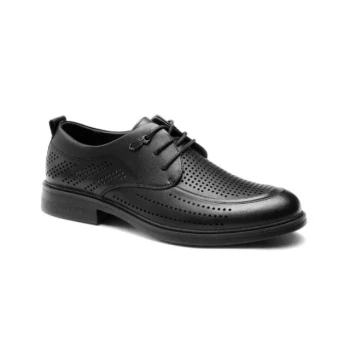
Measuring the "sense of owning large quantities" reveals when consumers accumulate footwear and apparel far beyond their functional needs, such as keeping multiple pairs of unworn shoes. This metric acts as a critical feedback loop for the industry, signaling when high sales figures are actually driving overproduction rather than satisfying genuine utility. By tracking these behaviors, manufacturers can recalibrate inventory strategies to match terminal consumption—what is actually used—rather than simply matching sales velocity.
While sales data shows what customers buy, measuring ownership of excess quantities reveals what they actually use. This insight allows manufacturers to reduce waste, optimize stock for specific categories, and transition to sustainable production models that avoid market saturation.
Aligning Production with Real Demand
Identifying the Accumulation Gap
Standard inventory strategies often rely on Point-of-Sale (POS) data. However, POS data does not account for the "sense of owning large quantities," which tracks items that are purchased but remain unused.
When consumers amass goods exceeding their basic needs, it creates a "false demand" signal. Manufacturers who rely solely on sales volume risk overproducing goods that end up in storage rather than in use.
Mitigating Overproduction Pressures
Quantifying this ownership behavior provides direct feedback on overproduction pressures.
If data shows a high prevalence of unworn inventory in consumer closets, manufacturers can interpret this as a warning sign of saturation. This allows for a proactive reduction in output before the market inevitably cools, preventing costly write-downs of unsold stock.
Optimizing Inventory Strategy
Category-Specific Analysis
The drive to accumulate varies significantly across different product types. The primary reference highlights the importance of distinguishing demand between categories like tactical boots and sneakers.
Sneakers may be hoarded for collection purposes, whereas tactical boots might be purchased for utility. Understanding the specific accumulation behavior for each category allows for precise inventory planning rather than a one-size-fits-all approach.
Transitioning to Sustainable Models
Integrating this data supports a shift toward sustainable production models.
By aligning manufacturing output with actual consumption patterns, companies reduce the environmental impact of producing goods that serve no functional purpose. This strategy moves the industry away from "fast fashion" cycles and toward a model based on necessary utility.
Understanding the Trade-offs
Volume vs. Efficiency
Acting on this data often requires a strategic pivot from maximizing raw sales volume to maximizing efficiency.
Reducing production to match terminal consumption may lower immediate revenue figures. However, this trade-off is often balanced by reduced storage costs and less waste from unsold inventory.
The Complexity of Consumer Psychology
While measuring accumulation helps prevent overproduction, it requires acknowledging that some "waste" is consumer-driven.
Some consumers derive value simply from the act of owning, even without usage. Manufacturers must balance the goal of sustainability with the reality that collector behavior (e.g., in the sneaker market) is a valid, albeit resource-intensive, revenue stream.
Operationalizing Consumption Data
To effectively use this metric, you must determine whether your goal is volume reduction or category optimization.
- If your primary focus is Sustainability: Calibrate your production cycles to align with terminal consumption rates to minimize the creation of goods that are destined to remain unworn.
- If your primary focus is Inventory Efficiency: Segment your data by category (e.g., tactical boots vs. sneakers) to differentiate between utility-driven demand and collection-based accumulation.
By distinguishing between what is bought and what is owned, manufacturers can build a supply chain that is responsive, responsible, and economically sound.
Summary Table:
| Metric Focus | Impact on Manufacturing | Strategic Benefit |
|---|---|---|
| Accumulation Gap | Identifies 'false demand' from unused goods | Prevents market saturation & waste |
| Category Analysis | Distinguishes utility (boots) vs. collection (sneakers) | Enables precise inventory allocation |
| Terminal Consumption | Replaces POS data with actual usage rates | Supports sustainable production models |
| Inventory Efficiency | Reduces storage of stagnant, unworn stock | Minimizes costly year-end write-downs |
Partner with 3515 to Scale Your Production Responsibly
As a large-scale manufacturer serving distributors and brand owners, 3515 understands the delicate balance between high-volume sales and inventory efficiency. We offer comprehensive production capabilities across all footwear types, anchored by our flagship Safety Shoes series. Our extensive portfolio includes work and tactical boots, outdoor shoes, training shoes, sneakers, and Dress & Formal shoes designed to meet diverse bulk requirements.
Whether you are looking to optimize your supply chain for sustainability or need a responsive partner to match terminal consumption trends, we bring decades of manufacturing expertise to your brand. Contact us today to discuss your bulk requirements and see how our production capacity can drive your business forward.
References
- Теофана Димитрова, V. Stanev. I Consume, Therefore I Am? Hyperconsumption Behavior: Scale Development and Validation. DOI: 10.3390/socsci11110532
This article is also based on technical information from 3515 Knowledge Base .
Related Products
- Lightweight Breathable Training Shoes for Wholesale & Custom OEM Manufacturing
- Wholesale Breathable Training Shoes Custom Athletic Footwear Manufacturer
- Wholesale Durable & Breathable Training Shoes for Custom Brands
- Wholesale Breathable Athletic Sneakers - Custom Lightweight Cushioned Footwear Manufacturer
- Durable Leather Tactical Boots Wholesale & Custom Manufacturing for Brands
People Also Ask
- Why are lightweight training shoes often preferred over professional hiking boots in urban walking? Maximize City Comfort
- What is the primary role of specialized training or orthopedic shoes? Enhance Safety in Elderly Balance Training
- Why are professional-grade training shoes essential for physical therapy? Ensure Patient Safety and Gait Stability
- Why are the slip-resistance and stability performance of training shoes critical in gait analysis? Ensure Data Accuracy
- Why is the use of flat-soled or professional training shoes essential for WBV? Maximize Vibration Energy Transfer