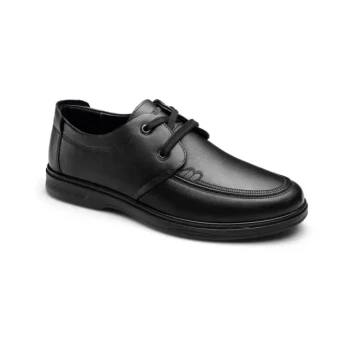
The Master Production Schedule (MPS) acts as the central command for your footwear supply chain, bridging the gap between sales and manufacturing. It translates broad market demand into specific manufacturing instructions, serving as the critical data input for the Material Requirements Planning (MRP) system. By defining exactly which shoe styles to build and when, the MPS dictates precisely when raw materials like leather and outsoles must arrive at the factory.
The Master Production Schedule serves as the operational blueprint that converts abstract volume goals into concrete procurement actions. By feeding the MRP system, it ensures that every component arrives exactly when needed, maintaining a tightly integrated production flow.
From Demand to Instruction
Translating Market Demand
The procurement process cannot begin effectively until vague sales forecasts are converted into actionable data. The MPS serves as the primary timeline that defines specific production volumes.
It breaks down general demand into granular details, specifying exact quantities for specific shoe styles. This clarity allows procurement teams to move from estimating costs to ordering actual units.
Fueling the MRP System
The MPS is the direct driver of the Material Requirements Planning (MRP) system. Without the schedule provided by the MPS, the MRP system lacks the "when" and "how much" data required to function.
You should view the MPS as the "trigger mechanism." Once the production schedule is finalized, the MRP system automatically calculates the requirements for the necessary components.
Synchronizing Material Arrival
Determining Arrival Timelines
The ultimate goal of driving procurement via the MPS is to achieve precision timing. The schedule works backward from the production date to determine exactly when raw materials must be on-site.
This prevents materials from arriving too early (tying up cash in inventory) or too late (stalling the production line).
Coordinating Complex Components
Footwear manufacturing requires a diverse bill of materials, including leather, outsoles, and threads. The MPS ensures that these disparate items, often sourced from different suppliers, converge at the factory simultaneously.
By aligning these arrival times, the MPS creates a tightly integrated production flow where workers have exactly what they need, the moment they need it.
Understanding the Trade-offs
The Risk of Schedule Volatility
Because the procurement process is tightly coupled to the MPS, any change in the schedule has immediate ripple effects. If the MPS is altered frequently, it can lead to "nervousness" in the supply chain, causing expedited shipping costs or excess material stock.
Dependency on Data Accuracy
The efficiency of this process relies entirely on the accuracy of the MPS as a core input. If the translation of market demand into manufacturing instructions is flawed, the MRP will generate incorrect procurement orders, leading to waste or shortages.
Making the Right Choice for Your Goal
To effectively leverage the MPS for procurement, align your approach with your specific operational targets:
- If your primary focus is Just-in-Time (JIT) manufacturing: Ensure your MPS is locked in well in advance to allow the MRP system to calculate precise delivery windows without last-minute changes.
- If your primary focus is bulk material cost reduction: Use the long-term projections within the MPS to aggregate demand for common materials like threads or outsoles across multiple shoe styles.
An accurate Master Production Schedule is the difference between a chaotic warehouse and a streamlined factory floor.
Summary Table:
| Feature | Role in Procurement Process | Impact on Supply Chain |
|---|---|---|
| Demand Translation | Converts sales forecasts into style-specific quantities | Provides clear data for order accuracy |
| MRP Integration | Acts as the primary trigger for the MRP system | Automates calculation of component needs |
| Precision Timing | Works backward from production dates | Ensures JIT delivery and reduces storage costs |
| Component Sync | Aligns arrival of leather, outsoles, and threads | Prevents production line delays and bottlenecks |
Partner with 3515 for Seamless Production Success
At 3515, we understand that a precise Master Production Schedule is the backbone of high-quality manufacturing. As a large-scale manufacturer serving global distributors and brand owners, we leverage advanced production planning to ensure every project stays on track.
Our Value to You:
- Comprehensive Capabilities: From our flagship Safety Shoes and tactical boots to outdoor footwear and formal dress shoes, we handle all footwear types.
- Supply Chain Mastery: We synchronize complex material procurement so your bulk orders are delivered with unmatched consistency and speed.
- Scalable Manufacturing: Whether you are a brand owner or a large-scale distributor, our infrastructure is built to meet your diverse bulk requirements.
Ready to elevate your footwear line with a reliable manufacturing partner? Contact us today to discuss your next project!
References
- Chandra Sukma Adhiyasa, Yanatra Budi Pramana. Implementation of Material Requirement Planning (MRP) in Controlling Raw Materials for Shoes Products at PT.XYZ. DOI: 10.36456/tibuana.6.2.7788.119-126
This article is also based on technical information from 3515 Knowledge Base .
Related Products
- Durable Leather Work Boots for Wholesale & Custom Manufacturing
- Durable Leather Tactical Boots Wholesale & Custom Manufacturing for Brands
- Durable Leather High-Ankle Tactical Boots for Wholesale & Custom Manufacturing
- Durable Leather Work Boots for Wholesale & Custom OEM Manufacturing
- Wholesale Waterproof Tactical Boots Custom Suede & High-Traction Soles
People Also Ask
- What is the difference between full-grain and top-grain leather? Premium Material Guide for Boot Manufacturers
- What are the common workplace hazards that can be mitigated with the right work boots? Protect Your Workforce
- What are the common foot issues workers face due to uncomfortable work boots? Prevent Pain & Deformities
- What are the advantages of leather versus synthetic work boots? A Guide to Choosing the Right Material
- What are the key components of modern work boots? Engineered for Ultimate Durability and Comfort