
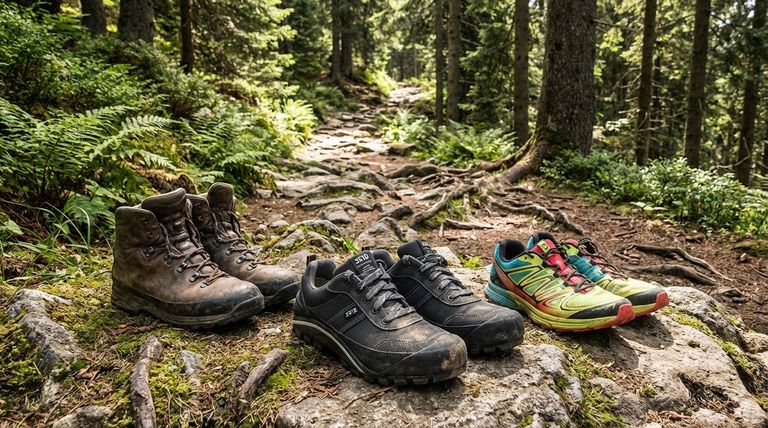
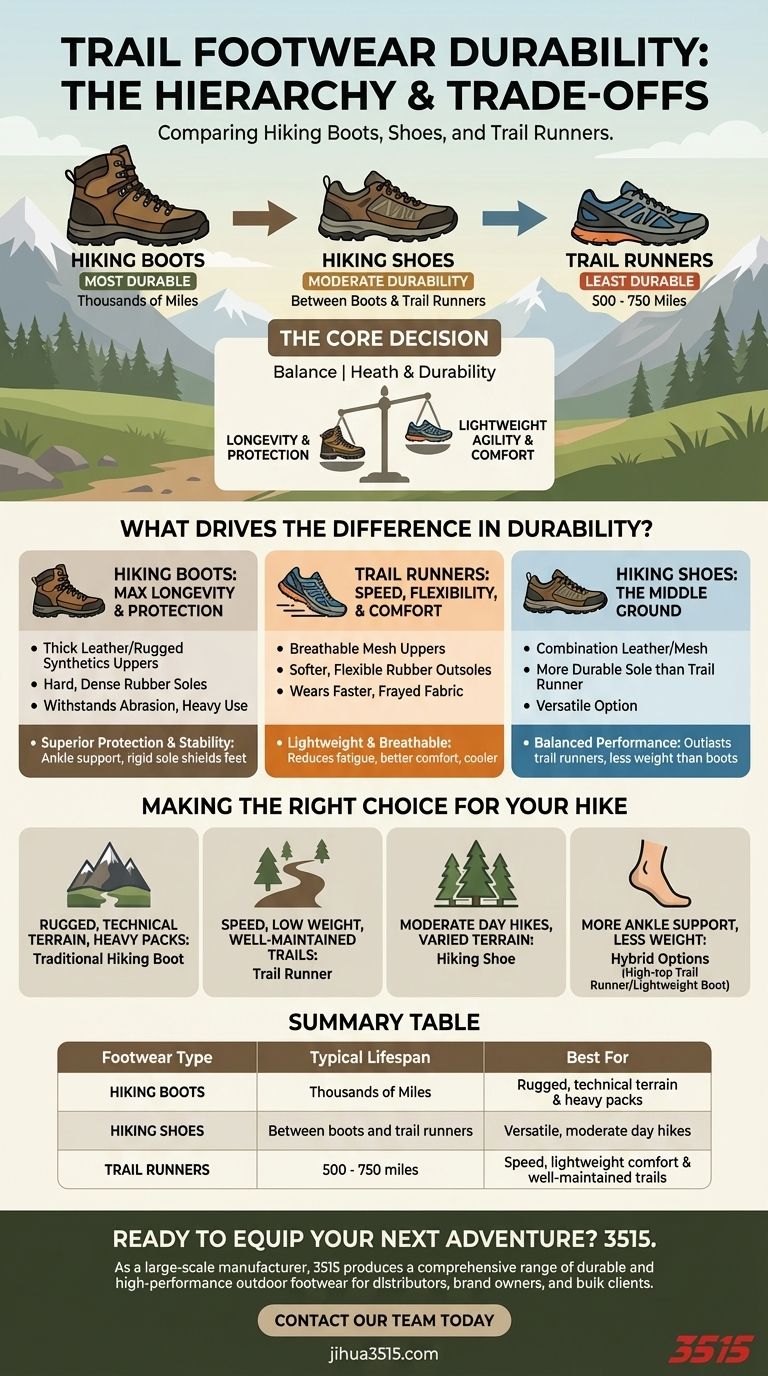
On the matter of durability, there is a clear hierarchy in outdoor footwear. Traditional hiking boots are by far the most durable, often lasting for thousands of miles. Trail runners sit at the other end of the spectrum, typically needing replacement after 500 to 750 miles, while hiking shoes offer a lifespan somewhere in between.
The core decision is not simply about which shoe lasts the longest, but about understanding the fundamental trade-off you are making: choosing between the longevity and protection of a boot versus the lightweight agility and comfort of a trail runner.
What Drives the Difference in Durability?
The lifespan of your footwear is a direct result of its materials and construction philosophy. Each type is purpose-built for a different experience on the trail, which dictates how long it will last.
The Build of a Hiking Boot
Hiking boots are engineered for maximum longevity and protection. They achieve this through heavy-duty materials.
Uppers are typically made of thick leather or rugged synthetics, while the soles are constructed from hard, dense rubber. This robust build is designed to withstand abrasion from rocks, roots, and years of use on demanding terrain.
The Design of a Trail Runner
Trail runners are engineered for speed, flexibility, and comfort. Their construction prioritizes lightweight performance over long-term durability.
They use breathable mesh uppers and softer, more flexible rubber compounds for the outsole. These materials provide an excellent trail feel and require little break-in, but they wear down much faster, leading to frayed fabric and worn-out tread.
The Middle Ground: Hiking Shoes
Hiking shoes occupy the space between these two extremes. They are more substantial than trail runners but less bulky than boots.
They often use a combination of leather and mesh and feature a more durable sole than a trail runner. This makes them a versatile option that outlasts trail runners without the full weight and rigidity of a traditional boot.
Understanding the Trade-offs
Choosing footwear based on durability alone misses the point. The less-durable option, the trail runner, offers significant advantages in other areas that may be more important for your specific needs.
Protection and Stability
The primary benefit of a boot's durable construction is superior protection and stability.
The taller height provides critical ankle support on uneven ground, and the rigid sole shields your foot from sharp rocks. This makes boots the superior choice for carrying heavy packs or navigating rugged, off-trail terrain.
Weight and Fatigue
A shoe's weight has a direct impact on your energy level. The lighter a shoe is, the less energy you expend with every step.
This is the key advantage of trail runners. Their minimal weight reduces fatigue significantly over long distances, allowing you to move faster and more efficiently.
Comfort and Breathability
Trail runners generally offer better out-of-the-box comfort and require little to no break-in period.
Their mesh construction also provides far greater breathability. This keeps your feet cooler and drier in warm weather, which can be critical for preventing blisters.
Making the Right Choice for Your Hike
Selecting the correct footwear requires matching the shoe's design to your intended use and personal preferences.
- If your primary focus is maximum longevity for rugged, technical terrain: A traditional leather or synthetic hiking boot is your most reliable choice.
- If your primary focus is speed, low weight, and comfort on well-maintained trails: A trail runner will deliver the best performance and reduce fatigue.
- If you need a versatile option for moderate day hikes on varied terrain: A dedicated hiking shoe provides an excellent balance of durability and comfort.
- If you want more ankle support without the weight of a full boot: Look into modern hybrid options like high-top trail runners or lightweight hiking boots.
Choosing the right footwear is about aligning its strengths with the demands of your adventure.
Summary Table:
| Footwear Type | Typical Lifespan | Best For |
|---|---|---|
| Hiking Boots | Thousands of miles | Rugged, technical terrain & heavy packs |
| Hiking Shoes | Between boots and trail runners | Versatile, moderate day hikes |
| Trail Runners | 500 - 750 miles | Speed, lightweight comfort & well-maintained trails |
Ready to equip your next adventure with the perfect footwear?
As a large-scale manufacturer, 3515 produces a comprehensive range of durable and high-performance outdoor footwear for distributors, brand owners, and bulk clients. Our production capabilities encompass all types of hiking boots, shoes, and trail runners, ensuring you get the right combination of longevity, protection, and comfort for your market.
Contact our team today to discuss your specific needs and discover how we can support your business with reliable, high-quality footwear solutions.
Visual Guide
Related Products
People Also Ask
- Why is the selection of high-strength fabric materials necessary in the production of canvas shoes and training shoes?
- What are the properties of canvas as a shoe material? A Guide to Lightweight Comfort & Style
- Can canvas shoes be worn in rainy conditions? The Truth About Water Resistance
- What are some examples of vulcanized shoes? Discover the Flexibility and Board Feel of Classic Sneakers
- What are the characteristics of canvas as a shoe material? A Guide to Lightweight, Breathable Footwear
