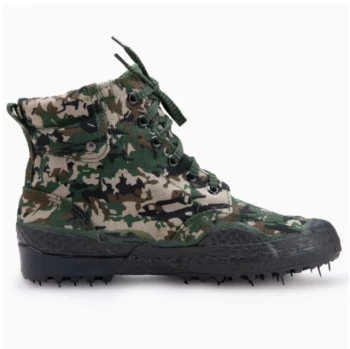
Outdoor hiking and tactical boots provide distinct biomechanical advantages for navigating damaged urban environments. They utilize reinforced toe caps to deflect impacts from buckled pavement and rigid ankle support systems to stabilize the foot against irregularities, significantly reducing the risk of collision injuries and sprains.
By combining impact-resistant structures with high-friction stability, these boots transform unpredictable urban terrain into a manageable surface. They act as a defensive barrier, neutralizing the tripping hazards and sharp irregularities found on neglected city streets.
Engineering for Irregular Terrain
Impact Resistance for the Toes
Urban decay often results in protruding tree roots, raised concrete tiles, or construction debris. Hiking and tactical boots feature reinforced toe protection zones specifically designed to absorb these sudden shocks.
This rigid barrier prevents the direct trauma and bruising that typically occur when a walker accidentally collides with a hard, fixed obstacle.
Stabilizing the Ankle Joint
Uneven ground creates lateral torque on the foot, leading to dangerous rolls and potential injuries. These boots utilize enhanced ankle support systems that mechanically limit excessive sideways movement.
This structure maintains proper joint alignment even when you step on buckled pavement or loose edges, effectively preventing ankle sprains.
Traction on Unpredictable Surfaces
Damaged pavement is frequently slick or covered in loose gravel and sand. High-performance boots employ deep-lug, slip-resistant outsoles to generate maximum friction.
This aggressive tread pattern bites into compromised surfaces to prevent slips. It offers superior traction that standard sneakers cannot match, particularly in wet or humid conditions.
Underfoot Shielding
Standard footwear often offers little defense against sharp gravel or industrial debris found on broken roads. The high-abrasion, wear-resistant materials used in tactical soles act as a physical shield.
This barrier protects the bottom of the foot from punctures and shields the wearer from the discomfort of stepping on jagged stones.
Understanding the Trade-offs
Weight and Fatigue
The durable materials required for reinforced protection add significant mass to the boot. Prolonged walking on flat, safe pavement may lead to faster leg fatigue compared to using lightweight athletic trainers.
Flexibility vs. Stability
The stiffness required for effective ankle support reduces natural foot flexion. This can feel restrictive or "clunky" during quick movements, making these boots less ideal for activities requiring high agility or sprinting.
Making the Right Choice for Urban Environments
When selecting footwear for navigating damaged city infrastructure, consider your specific daily risks:
- If your primary focus is Injury Prevention: Prioritize high-cut boots with rigid ankle bracing and heavy reinforced toe caps to maximize stability against rolls and impacts.
- If your primary focus is Wet/Slippery Surfaces: Prioritize boots with deep-lug, high-abrasion rubber outsoles to ensure grip on slick, uneven tiles.
Selecting the right protective footwear converts a hazardous urban commute into a secure, stable walk.
Summary Table:
| Feature | Protective Benefit | Mechanism |
|---|---|---|
| Reinforced Toe Caps | Impact Resistance | Absorbs shocks from buckled concrete and debris. |
| High-Cut Ankle Support | Sprain Prevention | Limits lateral torque and maintains joint alignment. |
| Deep-Lug Outsoles | Superior Traction | Provides grip on loose gravel, sand, and wet tiles. |
| Durable Midsole/Sole | Underfoot Shielding | Acts as a barrier against sharp stones and punctures. |
Secure Your Global Footwear Supply Chain with 3515
As a large-scale manufacturer serving distributors and brand owners worldwide, 3515 offers comprehensive production capabilities for all footwear types. Our flagship Safety Shoes series and high-performance Tactical & Hiking Boots are engineered to provide maximum stability and protection for any environment.
Whether you need robust work boots, outdoor footwear, or formal dress shoes, we provide the bulk manufacturing expertise and quality assurance to grow your brand.
Ready to elevate your inventory with industry-leading footwear? Contact us today to discuss your bulk requirements!
References
- Anne Meneley. Walking and Perceptions of Danger in Various Cities. DOI: 10.1111/ciso.70010
This article is also based on technical information from 3515 Knowledge Base .
Related Products
- Durable Rubber Sole Outdoor Shoes Wholesale & Custom Manufacturing
- Wholesale High-Traction Camo Boots - Custom Manufacturer for Brands
- Wholesale Waterproof Tactical Boots Custom Suede & High-Traction Soles
- Durable Spiked Camouflage Boots Wholesale & Factory Production
- Wholesale Lightweight Tactical Boots Custom Manufacturer for Desert & Combat Use
People Also Ask
- What is the function of the sole in outdoor shoes? Find the Perfect Grip and Support
- What role do outdoor shoes and sneakers play in navigating external terrains? Engineered Stability for Every Surface
- How is AI utilized in the design of outdoor and safety footwear? Harnessing Big Data for Market-Driven Shoe Innovation
- Why is durability important when selecting outdoor shoes? A Guide to Safety & Long-Term Value
- What are the key components of outdoor shoes that affect comfort and sturdiness? A Guide to Durable, High-Performance Footwear