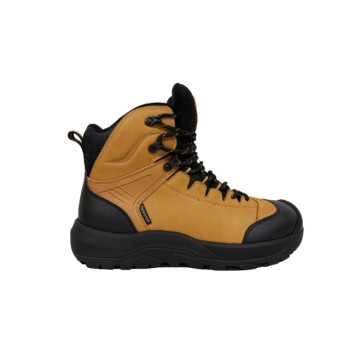
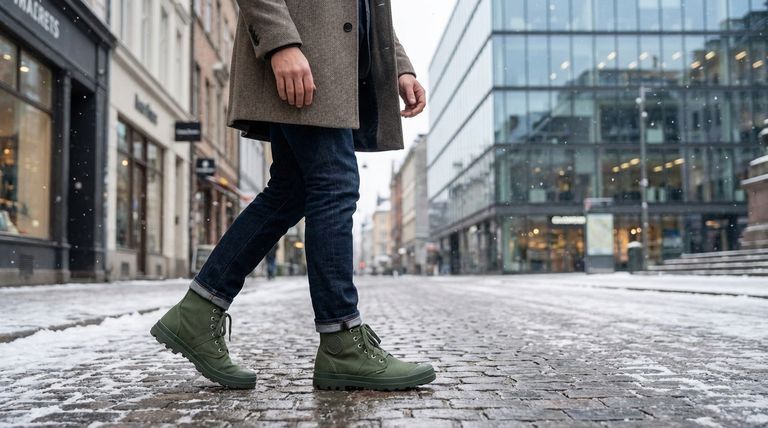
Ultimately, styling is a primary factor in choosing winter boots because their role has expanded far beyond simple utility. Today's winter boots must function as part of a daily wardrobe, suitable for urban commutes, professional environments, and social occasions. This has driven even traditional performance brands to merge technical features with modern aesthetics.
The core challenge is not choosing between style and function, but correctly identifying the balance of style and function required for your specific environment and lifestyle.
A Framework for Choosing: Defining Your Primary Need
The term "winter boot" covers a vast range of footwear. To make an informed decision, you must first clarify the primary problem you need your boots to solve. We can organize them into three distinct categories based on their design priorities.
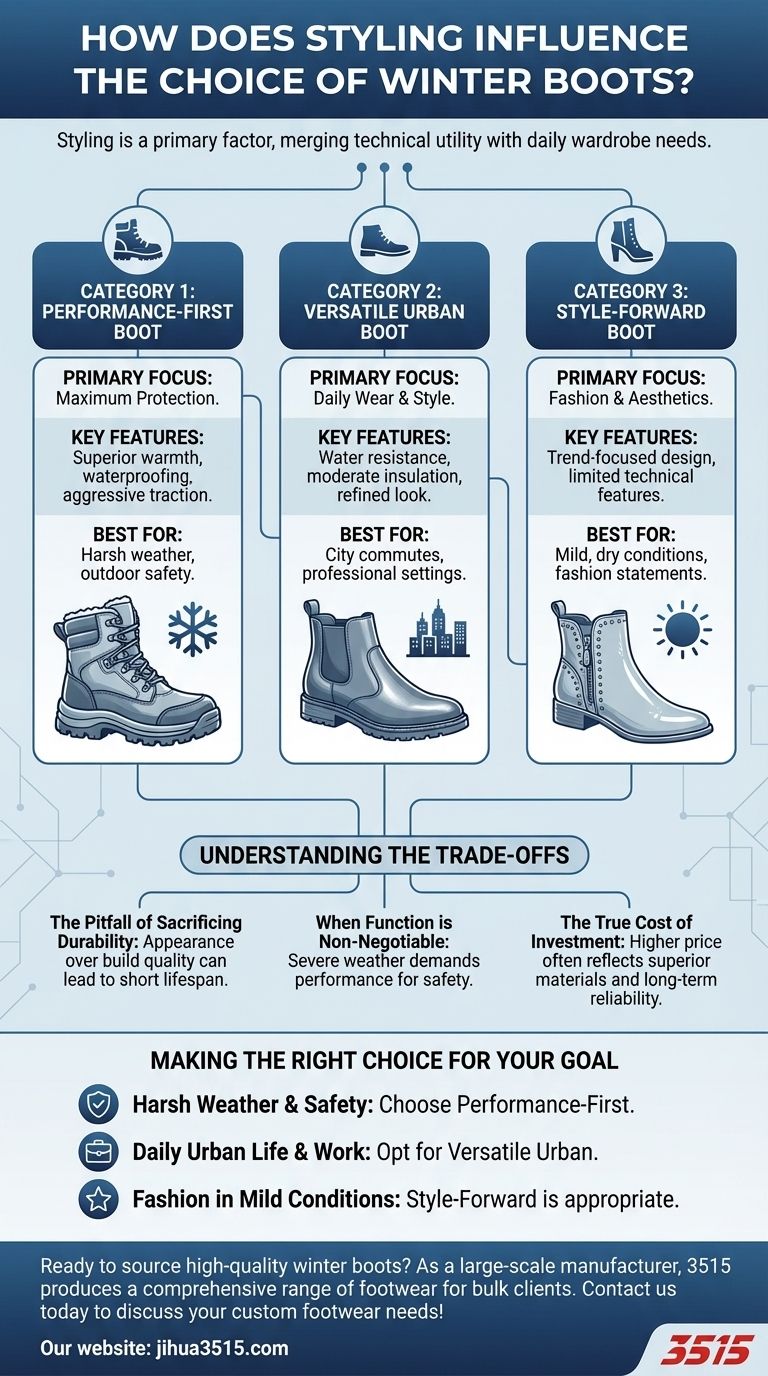
Category 1: The Performance-First Boot
This boot is engineered for maximum protection against the harshest winter conditions. Its design prioritizes warmth, waterproofing, and traction above all else.
Aesthetics in this category are secondary to function, though many brands have improved their styling. Think of this as the 4x4 vehicle of footwear, built for a specific, demanding job.
Category 2: The Versatile Urban Boot
This is the "hybrid" category, designed to bridge the gap between performance and style. These boots are the most common choice for daily wear in cities with moderate winters.
They offer essential winter features like water resistance and insulation but are packaged in a more refined silhouette, often using materials like treated leather that are suitable for an office or casual evening out.
Category 3: The Style-Forward Boot
Here, aesthetics are the leading consideration. These boots adopt the look of winter footwear but may compromise on technical features like deep insulation, aggressive treads, or robust waterproofing.
They are best suited for mild, dry winter days or situations where you are moving from a car to an indoor setting with minimal exposure to the elements.
Understanding the Trade-offs
Choosing a boot is an exercise in managing compromises. Being aware of the inherent trade-offs in any design will prevent disappointment and ensure your investment pays off.
The Pitfall of Sacrificing Durability
Style-forward boots, especially from fast-fashion brands, often prioritize appearance over build quality. This can lead to a short lifespan when exposed to the harsh reality of salt, slush, and moisture.
High-quality materials and craftsmanship are the foundation of a boot that lasts. A well-made boot is an investment that endures for multiple seasons, making it more sustainable and cost-effective over time.
When Function is Non-Negotiable
While a stylish boot is versatile, it can be a liability in severe weather. For icy conditions, heavy snow, or prolonged exposure to cold, a performance-first boot is a matter of safety, not just comfort.
Attempting to use a style-focused boot in these conditions can lead to cold-related injury or dangerous slips and falls.
The True Cost of Investment
A higher initial price often reflects superior materials, construction, and durability. Investing in a reputable brand known for quality often means you are buying a boot that will perform reliably and look good for years, rather than needing replacement after a single season.
Making the Right Choice for Your Goal
Your daily reality should dictate your choice. Use your primary need as the filter to select the right category of boot.
- If your primary focus is navigating harsh weather and prioritizing safety: Choose a performance-first boot where technical features are paramount.
- If your primary focus is daily urban life and professional settings: Opt for a versatile urban boot that delivers a deliberate balance of weather resistance and refined style.
- If your primary focus is making a fashion statement in mild conditions: A style-forward boot is an appropriate choice, but you must accept its functional limitations.
By clearly defining your needs first, you can confidently select a winter boot that serves both its practical purpose and your personal style.
Summary Table:
| Boot Category | Primary Focus | Key Features | Best For |
|---|---|---|---|
| Performance-First | Maximum Protection | Superior warmth, waterproofing, aggressive traction | Harsh weather, outdoor safety |
| Versatile Urban | Daily Wear & Style | Water resistance, moderate insulation, refined look | City commutes, professional settings |
| Style-Forward | Fashion & Aesthetics | Trend-focused design, may have limited technical features | Mild, dry conditions, fashion statements |
Ready to source high-quality winter boots that perfectly blend style and function?
As a large-scale manufacturer, 3515 produces a comprehensive range of footwear for distributors, brand owners, and bulk clients. Our production capabilities encompass all types of shoes and boots, ensuring durability, modern aesthetics, and reliable performance tailored to your market.
Contact us today to discuss your custom footwear needs and elevate your product line!
Visual Guide
Related Products
- Premium Insulated Safety Boots and Shoes for Wholesale & Bulk Orders
- Factory Direct Wholesale Rain Boots Durable Waterproof & Fully Customizable
- Durable Waterproof Rain Boots | Custom Manufacturer for Wholesale & Brands
- Wholesale Waterproof Tactical Boots Custom Suede & High-Traction Soles
- Premium Waterproof High-Cut Industrial Safety Boots for Wholesale and Bulk Orders
People Also Ask
- What are the recommended insulation ratings for mild winter conditions? A Guide for Active & Stationary Workers
- How does insulation thickness correlate with temperature ranges? A Guide to Choosing the Right Warmth
- What insulation level is needed for severe cold and stationary work? 1200g or Higher is Essential
- What safety advantages do insulated boots offer beyond warmth? Dielectric Protection & Superior Grip
- How does fleece lining contribute to the warmth of insulated boots? Trapping Air for Superior Cold Protection