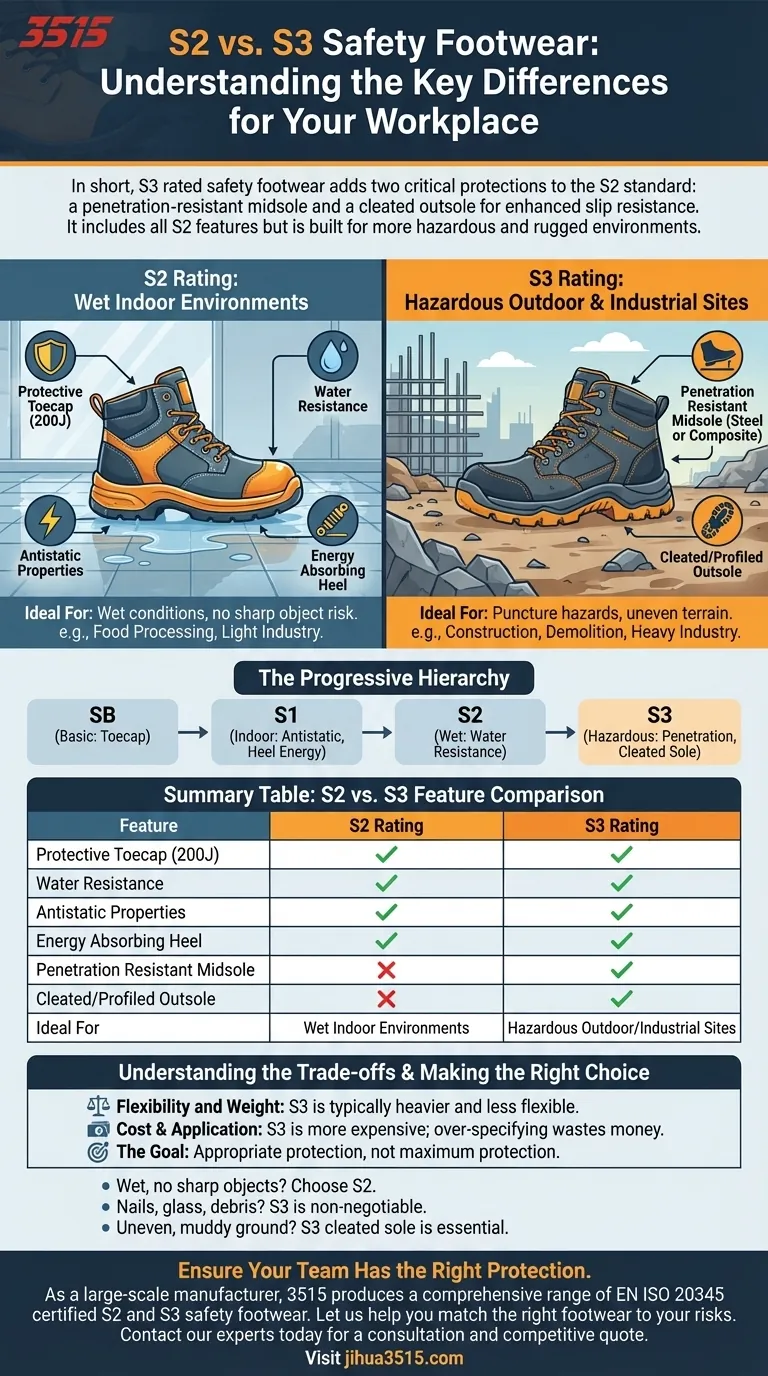
In short, S3 rated safety footwear adds two critical protections to the S2 standard: a penetration-resistant midsole and a cleated outsole for enhanced slip resistance. It includes all the features of an S2 boot, such as water resistance and a protective toecap, but is built for more hazardous and rugged environments.
The decision between S2 and S3 is not about which is "better," but about accurately matching the footwear's specific protections to the risks present in your work environment. S3 is designed for sites with puncture hazards and uneven terrain.
The Foundation: A Progressive Safety Standard
To understand the difference between S2 and S3, it's essential to see them as part of a progressive hierarchy. Each level builds upon the last, adding more specific protections.
SB: The Basic Requirement
All certified safety footwear starts at the SB (Safety Basic) level. This guarantees the most fundamental feature: a protective toecap resistant to a 200-joule impact.
S1: The Indoor Standard
The S1 rating adds features for drier, indoor environments. It includes everything in SB, plus a fully enclosed heel, antistatic properties, and energy absorption in the heel area.
S2: Adding Water Resistance
An S2 rating incorporates all S1 features but adds a critical element: water resistance and absorption. This makes it the standard for work in damp or wet conditions where there is no risk of sharp objects underfoot.
The Key Distinction: S3's Specialized Protections
The move from S2 to S3 introduces protections for physically demanding and hazardous job sites, specifically addressing threats from the ground up.
Penetration Resistance (P)
This is the most significant addition. S3 footwear includes a puncture-resistant midsole, typically made of steel or a composite material. This plate protects your foot from being pierced by sharp objects like nails, screws, or glass on the ground.
Profiled or Cleated Outsole
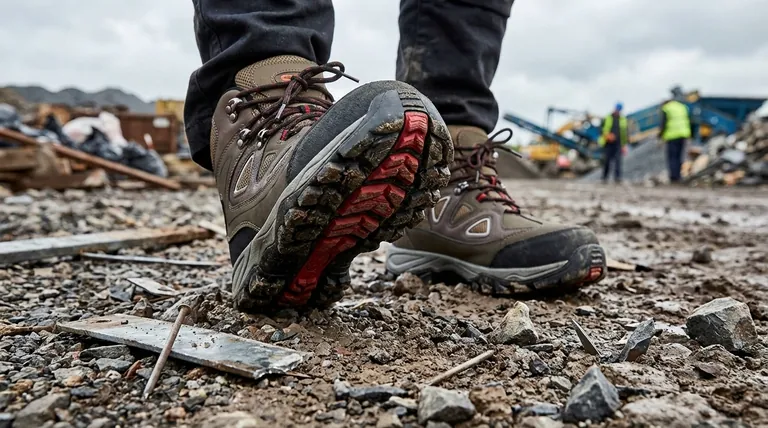
While S2 footwear has a standard slip-resistant sole, S3 specifies a profiled or cleated outsole. This means the sole has deeper lugs and a more aggressive tread pattern, providing superior grip and stability on loose, uneven, or soft surfaces like mud, gravel, and outdoor terrain.
Understanding the Trade-offs
Choosing a higher rating isn't always the best solution. It's vital to consider the practical implications of the additional features.
Flexibility and Weight
The penetration-resistant midsole, particularly if it's steel, can add weight and reduce the overall flexibility of the boot compared to an S2 equivalent. This can impact comfort over a long day if the protection isn't strictly necessary.
Cost and Application
S3 footwear is typically more expensive due to the extra materials and manufacturing involved. An S3 boot in a food processing plant (a wet environment with no puncture risk) would be over-specified, unnecessarily costing more and potentially being less comfortable than a more suitable S2 boot.
The Myth of "Over-Protection"
The goal is appropriate protection, not maximum protection. Wearing a heavy, rigid S3 boot in an environment that only requires S1P (S1 with puncture resistance) can lead to unnecessary fatigue without adding relevant safety benefits.
Making the Right Choice for Your Environment
Your risk assessment should be the deciding factor. Match the boot's rating directly to the hazards you face.
- If your primary focus is working in wet conditions with no risk of sharp objects on the floor: An S2 boot provides the necessary water resistance and safety features without the added weight and cost of S3.
- If your primary focus is working on construction sites, in demolition, or any environment with nails, glass, or sharp debris: The penetration-resistant midsole of an S3 boot is a non-negotiable safety requirement.
- If your primary focus is working outdoors on uneven, loose, or muddy ground: The superior grip from the cleated outsole of an S3 boot is essential for preventing slips and falls.
Choosing the right safety footwear is about matching the specific protections to the real-world hazards you face each day.
Summary Table:
| Feature | S2 Rating | S3 Rating |
|---|---|---|
| Protective Toecap (200J) | ✓ | ✓ |
| Water Resistance | ✓ | ✓ |
| Antistatic Properties | ✓ | ✓ |
| Energy Absorbing Heel | ✓ | ✓ |
| Penetration Resistant Midsole | ✗ | ✓ |
| Cleated/Profiled Outsole | ✗ | ✓ |
| Ideal For | Wet indoor environments (e.g., food processing) | Hazardous outdoor/industrial sites (e.g., construction, demolition) |
Ensure Your Team Has the Right Protection
Choosing the correct safety standard is critical for workplace safety and compliance. As a large-scale manufacturer, 3515 produces a comprehensive range of EN ISO 20345 certified S2 and S3 safety footwear for distributors, brand owners, and bulk clients. Our production capabilities encompass all types of safety shoes and boots, ensuring you get durable, comfortable, and fully certified footwear tailored to your specific hazards.
Let us help you match the right footwear to your risks.
Contact our experts today for a consultation to discuss your requirements and receive a competitive quote.
Visual Guide
Related Products
- Premium Suede Sport Safety Shoes for Wholesale & Bulk Orders
- Premium Lightweight Safety Shoes for Wholesale & Bulk Orders
- Premium Safety Shoes with Rotating Buckle Safety Sneakers
- Wholesale Mesh Steel Toe Safety Shoes with Dial Closure Factory Production
- Advanced KPU Athletic Safety Shoe with Steel Toe Cap Anti-Slip Rotary Lacing System
People Also Ask
- What are the primary functions of professional safety shoes? Maximize Safety in Water Supply Confined Spaces
- What industries have specific OSHA footwear requirements? Ensure Compliance & Protect Your Workforce
- What role do specialized safety shoes play in preventing falls? Engineering Stability in Industrial Environments
- How does professional industrial cleaning equipment maintain the performance stability of safety shoes? Pro Maintenance
- How do complex outsole tread designs in safety shoes work with coated floors? Master Slip Resistance Engineering