In short, PrimaLoft is one of the most effective synthetic insulations used in winter boots. It excels due to its fine, soft fibers that trap heat efficiently while being lightweight and highly water-resistant. This combination ensures your feet stay warm even in damp conditions, without the bulkiness of some traditional materials.
Choosing the right winter boot isn't just about a brand name like PrimaLoft; it's about understanding how an insulation's properties—specifically its reaction to moisture and compression—align with your activity level and climate.
What Makes PrimaLoft Effective in Footwear?
PrimaLoft insulation is engineered from ultra-fine synthetic microfibers. This structure is the key to its performance, especially in a demanding environment like a boot.
Superior Warmth-to-Weight Ratio
The very fine fibers create millions of tiny air pockets that trap body heat, providing exceptional warmth. Because the fibers are so lightweight, PrimaLoft delivers this warmth without adding significant bulk or weight to the boot.
Critical Water Resistance
PrimaLoft fibers are hydrophobic, meaning they inherently resist moisture. This is crucial for footwear, as feet sweat and boots are exposed to snow and slush. Unlike some natural insulations that absorb water and lose their heating ability, PrimaLoft maintains its insulating properties even when damp.
Durability Under Compression
Every step you take compresses the insulation in your boots. PrimaLoft is designed to be soft and compressible for comfort, but also durable enough to rebound and maintain its loft (and thus its heat-trapping ability) over time.
Decoding Insulation Ratings: The "Grams" System
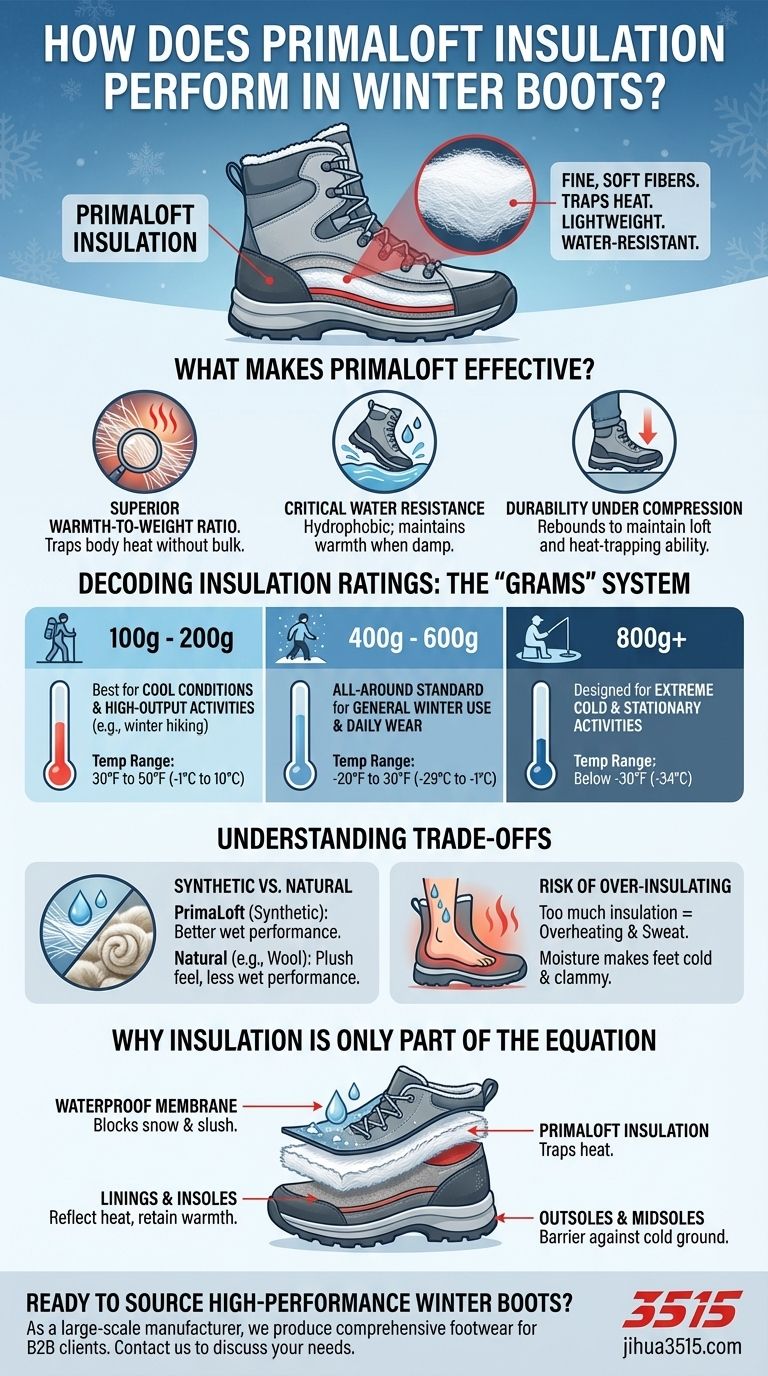
When you see a boot advertised with "200g PrimaLoft," the number refers to the weight of the insulation in grams per square meter. This rating is a direct indicator of the insulation's thickness and warmth.
What Do Grams Actually Measure?
A higher gram rating means a thicker, denser layer of insulation designed for colder temperatures. This rating system provides a standardized way to compare the thermal performance of different boots.
A Practical Guide to Ratings
- 100g to 200g: Best for cool conditions or high-output activities like winter hiking. Suitable for temperatures from around 30° to 50°F (-1° to 10°C).
- 400g to 600g: This is the all-around standard for general winter use, providing solid warmth for cold, snowy days without being excessive. Effective in temperatures from -20° to 30°F (-29° to -1°C).
- 800g and above: Designed for extreme cold or for stationary activities like ice fishing or hunting, where you are generating very little body heat. Ideal for temperatures of -30°F (-34°C) and below.
Understanding the Trade-offs
While highly effective, it's important to understand where PrimaLoft fits in the broader context of boot insulation and its potential limitations.
Synthetic vs. Natural Insulation
Materials like shearling, sheepskin, or pressed wool are also excellent insulators. They are often prized for their plush feel and natural breathability. However, their primary drawback is a significant loss of insulating power when they become wet. PrimaLoft's synthetic nature gives it a clear advantage in wet or slushy conditions.
The Risk of Over-Insulating
More is not always better. Choosing a boot with an insulation rating that is too high for your activity level can cause your feet to overheat and sweat profusely. This moisture can then make your feet feel cold and clammy, defeating the purpose of the insulation.
Why Insulation is Only Part of the Equation
The effectiveness of PrimaLoft is maximized when it works in concert with other components of the boot. The insulation material itself is just one piece of a complete thermal system.
The Role of Outsoles and Midsoles
A thick rubber outsole and a cushy midsole create a physical barrier between your foot and the cold ground. This significantly reduces conductive heat loss, which is a major source of cold feet.
The Importance of a Waterproof Membrane
Insulation can't keep you warm if your foot is wet from the outside. A waterproof layer, often placed just outside the insulation, is essential for blocking snow and slush, ensuring the PrimaLoft can do its job effectively.
Linings and Insoles
Many boots enhance warmth with additional features. These can include reflective foil layers under the footbed to radiate heat back to the foot or insoles made of heat-retaining materials like merino wool.
Making the Right Choice for Your Goal
Select your boot's insulation level based on its intended use, not just the coldest temperature you might encounter.
- If your primary focus is active winter use (hiking, snowshoeing): Opt for a lower rating like 200g to 400g to balance warmth with breathability and prevent overheating.
- If your primary focus is daily wear in a cold, snowy climate: A 400g insulation rating is a versatile sweet spot for warmth during moderate activity like walking or shoveling.
- If your primary focus is stationary activity in extreme cold (ice fishing, spectating): Choose a high rating of 800g or more to provide maximum warmth when you aren't generating much body heat.
Ultimately, a boot featuring PrimaLoft insulation is an excellent choice for warmth, but its performance is unlocked by matching the gram rating to your specific needs.
Summary Table:
| Insulation Rating (Grams) | Best For | Typical Temperature Range |
|---|---|---|
| 100g - 200g | Cool conditions, high-output activities (e.g., winter hiking) | 30°F to 50°F (-1°C to 10°C) |
| 400g - 600g | General winter use, daily wear in cold climates | -20°F to 30°F (-29°C to -1°C) |
| 800g+ | Extreme cold, stationary activities (e.g., ice fishing) | Below -30°F (-34°C) |
Ready to Source High-Performance Winter Boots?
As a large-scale manufacturer, 3515 produces a comprehensive range of footwear for distributors, brand owners, and bulk clients. Our production capabilities encompass all types of insulated shoes and boots, including models featuring advanced materials like PrimaLoft.
We can help you develop the perfect winter boot line that balances warmth, weight, and durability for your target market. Contact our team today to discuss your manufacturing needs and get a quote.
Visual Guide
Related Products
- Premium Insulated Safety Boots and Shoes for Wholesale & Bulk Orders
- Durable Waterproof Rain Boots | Custom Manufacturer for Wholesale & Brands
- Factory Direct Wholesale Rain Boots Durable Waterproof & Fully Customizable
- High Performance Fire-Retardant Waterproof Safety Boots
- Wholesale Waterproof Tactical Boots Custom Suede & High-Traction Soles
People Also Ask
- What are the recommended insulation ratings for mild winter conditions? A Guide for Active & Stationary Workers
- How does insulation thickness correlate with temperature ranges? A Guide to Choosing the Right Warmth
- What insulation level is needed for severe cold and stationary work? 1200g or Higher is Essential
- What safety advantages do insulated boots offer beyond warmth? Dielectric Protection & Superior Grip
- How does fleece lining contribute to the warmth of insulated boots? Trapping Air for Superior Cold Protection