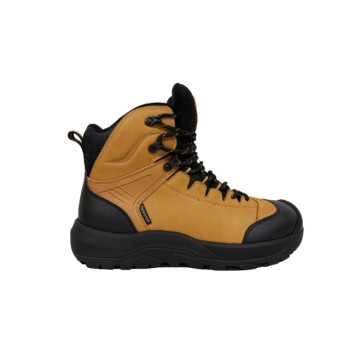
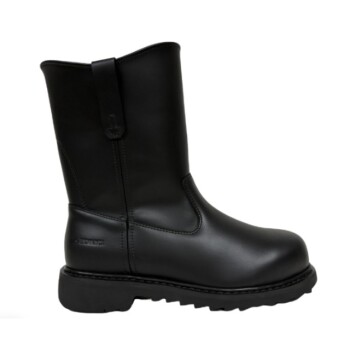
When it comes to winter boot performance, overheating is not a minor inconvenience; it is a primary cause of dangerously cold feet. Overheating triggers sweat, which saturates the boot's insulation. This wet insulation then rapidly pulls heat away from your body, creating the very cold conditions you sought to avoid.
The greatest paradox of staying warm in the cold is that you must first manage heat. A winter boot that traps sweat is fundamentally failing at its primary job, regardless of its insulation rating.
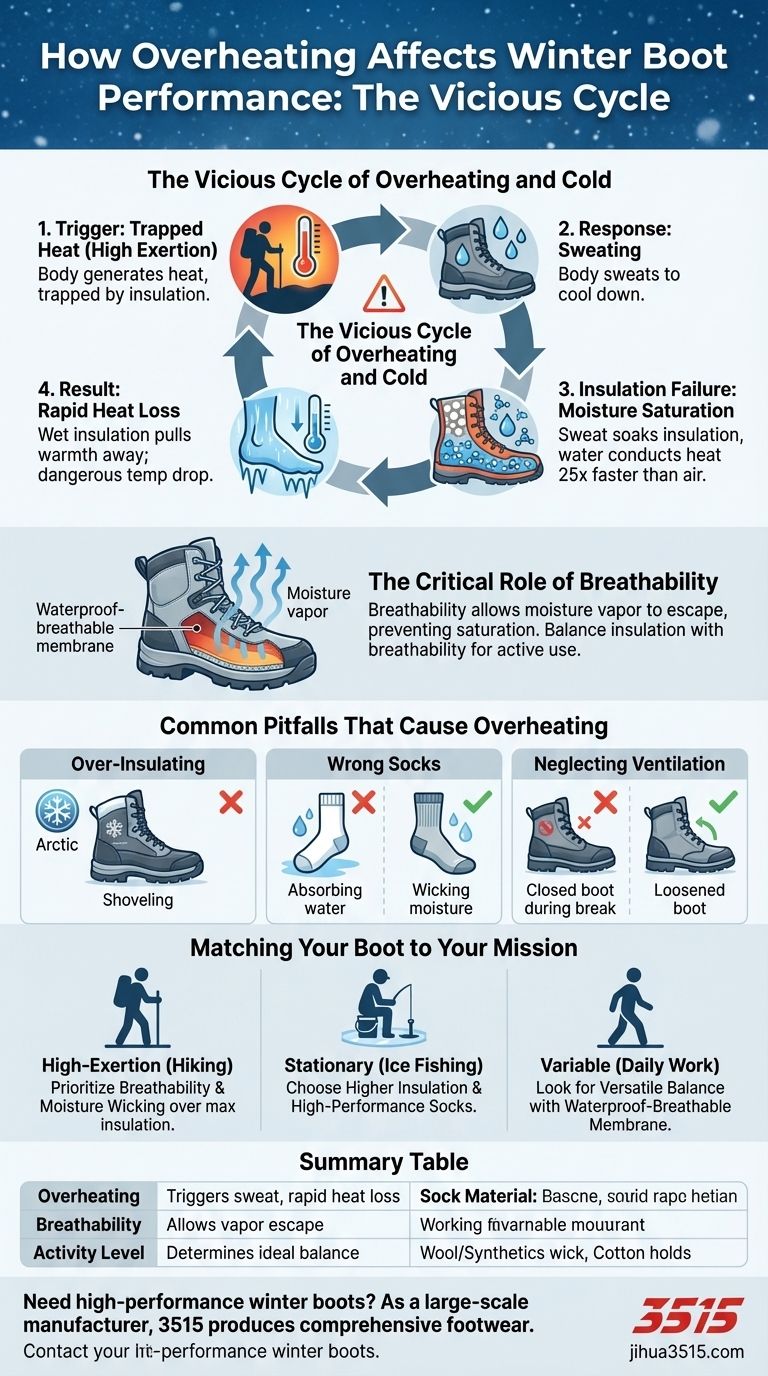
The Vicious Cycle of Overheating and Cold
Understanding how a warm boot becomes a cold one requires looking at a simple chain of events. This cycle can happen surprisingly quickly during physical activity.
The Trigger: Trapped Heat
A boot's insulation is designed to trap air, slowing the transfer of heat from your foot to the cold environment outside. During periods of high exertion, your body generates significantly more heat, which becomes trapped inside the boot.
The Body's Response: Sweating
To regulate this rising temperature, your body’s natural response is to sweat. This is an effective cooling mechanism in normal conditions, but it becomes a liability inside an enclosed boot.
The Insulation Failure: Moisture Saturation
Insulation works by trapping pockets of still, dry air. When sweat soaks into the insulation material, it displaces this air with water.
Water is an incredibly efficient conductor of heat—it transfers heat away from an object about 25 times faster than air.
The Result: Rapid Heat Loss
Once the insulation is compromised by moisture, it stops being an insulator and starts acting as a conductor. The boot now actively pulls warmth from your foot, leading to a rapid and dangerous drop in temperature that can increase the risk of frostbite.
The Critical Role of Breathability
The solution to the overheating cycle is not less insulation, but better moisture management. This is where breathability becomes a critical performance factor.
What Breathability Means
In footwear, breathability is the material's ability to allow water vapor (the gaseous form of sweat) to escape from inside the boot to the outside. It is a one-way street for moisture.
The Insulation-Breathability Balance
The most effective winter boots balance a high insulation value with a high degree of breathability. This is often achieved with waterproof-breathable membranes and lining materials designed to wick moisture away from the skin and push it out of the boot.
Why Your Activity Level is Key
A boot designed for standing still in extreme cold (like for ice fishing) can prioritize maximum insulation. A boot for active use (like hiking or snowshoeing) must prioritize breathability to manage the sweat generated by exertion.
Common Pitfalls That Cause Overheating
Even the best boot can be defeated by user error. Avoiding these common mistakes is crucial for maintaining warmth and comfort.
Over-Insulating for the Activity
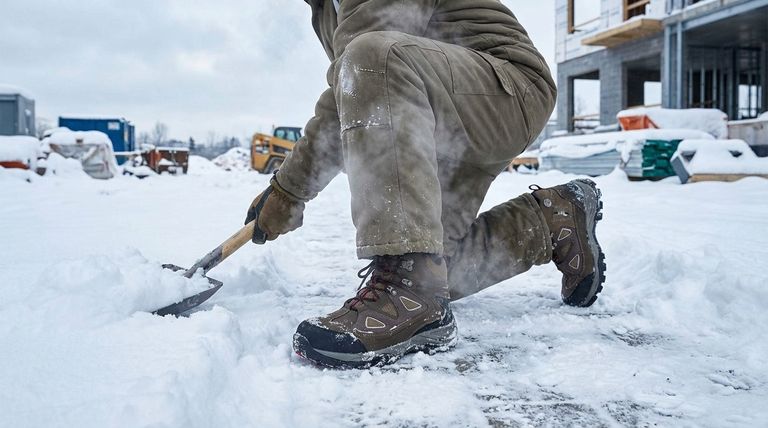
Choosing a boot with a temperature rating designed for arctic expeditions when you're just shoveling the driveway is a common mistake. This guarantees your feet will sweat, starting the vicious cycle of heat loss.
Wearing the Wrong Socks
Cotton socks are the single biggest mistake in cold-weather footwear. Cotton absorbs and holds moisture directly against your skin, chilling your feet. Always choose socks made from wool or synthetics that are designed to wick moisture away.
Neglecting Ventilation
During breaks from strenuous activity, take a moment to loosen your boots or even remove them for a few minutes. This allows the significant amount of trapped, humid air to escape and be replaced with drier air.
Matching Your Boot to Your Mission
To ensure optimal performance, select your footwear based on your intended activity level, not just the outside temperature.
- If your primary focus is high-exertion activity (winter hiking, snowshoeing): Prioritize superior breathability and a robust moisture-wicking system over maximum insulation.
- If your primary focus is stationary activity (ice fishing, spectating): Choose a higher insulation rating but ensure you pair the boots with a high-performance wool or synthetic sock system.
- If your primary focus is variable activity (daily work, casual wear): Look for a versatile boot with a moderate balance of insulation and a proven waterproof-breathable membrane.
Ultimately, managing moisture is the key to mastering warmth in any cold-weather environment.
Summary Table:
| Factor | Impact on Performance |
|---|---|
| Overheating | Triggers sweat, saturates insulation, leading to rapid heat loss. |
| Breathability | Allows moisture vapor to escape, preventing the sweat-to-freeze cycle. |
| Activity Level | Determines the ideal balance between insulation and breathability. |
| Sock Material | Cotton holds moisture; wool/synthetics wick it away for better warmth. |
Need high-performance winter boots that master the balance of insulation and breathability?
As a large-scale manufacturer, 3515 produces a comprehensive range of footwear for distributors, brand owners, and bulk clients. Our production capabilities encompass all types of insulated and breathable boots designed to prevent overheating and keep feet warm and dry.
Contact our team today to discuss your specific needs and discover how our boots can enhance your product line for any cold-weather activity.
Visual Guide
Related Products
- Premium Insulated Safety Boots and Shoes for Wholesale & Bulk Orders
- Factory Direct Wholesale Rain Boots Durable Waterproof & Fully Customizable
- Durable Waterproof Rain Boots | Custom Manufacturer for Wholesale & Brands
- Wholesale Waterproof Tactical Boots Custom Suede & High-Traction Soles
- Premium Waterproof High-Cut Industrial Safety Boots for Wholesale and Bulk Orders
People Also Ask
- What are the recommended insulation ratings for mild winter conditions? A Guide for Active & Stationary Workers
- How does insulation thickness correlate with temperature ranges? A Guide to Choosing the Right Warmth
- What insulation level is needed for severe cold and stationary work? 1200g or Higher is Essential
- What safety advantages do insulated boots offer beyond warmth? Dielectric Protection & Superior Grip
- How does fleece lining contribute to the warmth of insulated boots? Trapping Air for Superior Cold Protection