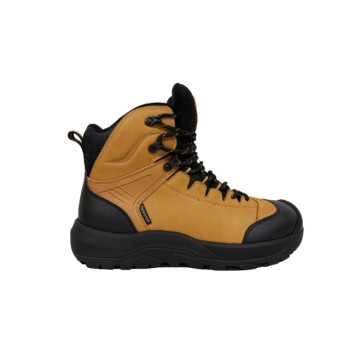
Insulation in Wellington boots works by trapping a layer of still air around your foot, which is then warmed by your body's natural heat. Materials like neoprene and fleece are filled with tiny pockets that hold this air, creating a thermal barrier that dramatically slows the rate at which warmth escapes into the cold environment.
The best cold-weather Wellington isn't just a boot with insulation; it's a complete system designed for heat retention, moisture management, and traction on hazardous surfaces.
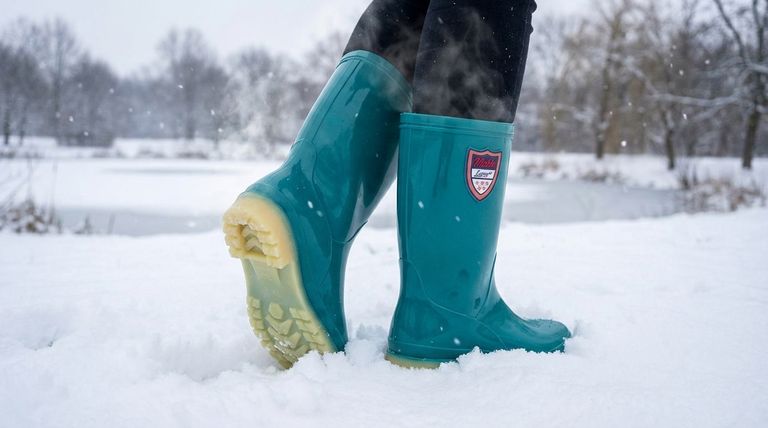
The Core Principle: A Personal Climate Zone
An insulated Wellington boot aims to create a stable, warm, and dry microclimate for your foot. This is achieved through a combination of retaining heat and managing moisture.
How Insulation Retains Heat
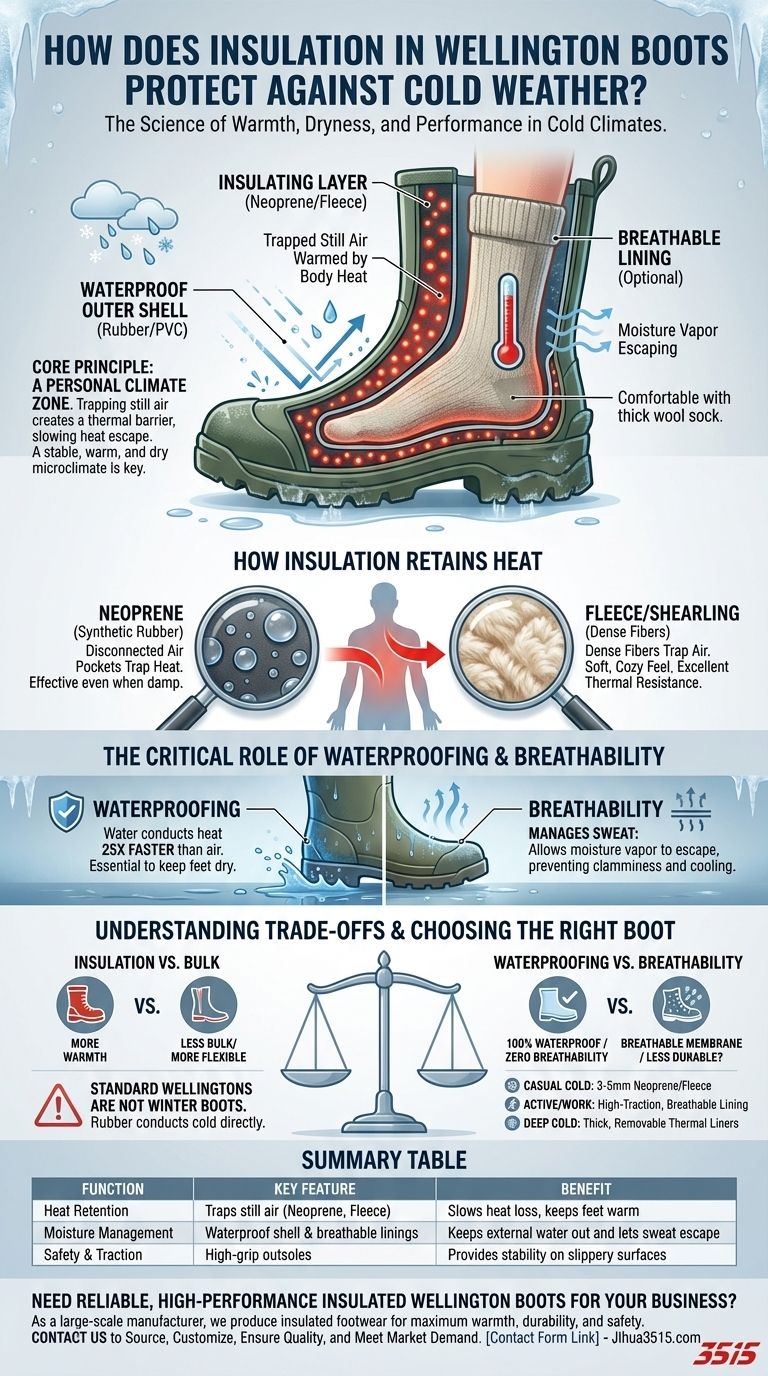
The primary job of insulation is to prevent convective heat loss. Materials like neoprene (the same material used in wetsuits) or fleece are not inherently warm.
Instead, their structure is full of small, disconnected air pockets. Your body warms the air trapped in these pockets, and because still air is a very poor conductor of heat, that warmth stays put.
The Critical Role of Waterproofing
The outer rubber or PVC shell of a Wellington boot provides absolute waterproofing. This is essential because water conducts heat away from the body up to 25 times faster than air.
By keeping your feet dry from external elements like snow, slush, and rain, the boot ensures your insulation can do its job effectively.
Key Materials and Their Function
Different materials are used to achieve the goals of warmth and comfort, each with its own properties.
Neoprene Linings
Neoprene is a synthetic rubber that is highly effective at trapping air. Its key advantage is that it maintains most of its insulating properties even when damp, making it ideal for boots where some internal moisture is inevitable.
Fleece and Shearling Linings
These materials offer a softer, more "cozy" feel. Like neoprene, they work by trapping significant amounts of air within their dense fibers, providing excellent thermal resistance.
The Importance of Breathability
Your feet can produce a significant amount of sweat, even in cold weather. If this moisture is trapped, it will cool and make your feet feel cold and clammy, defeating the purpose of the insulation.
Some high-end insulated boots incorporate breathable linings or membranes that allow water vapor (sweat) to escape while blocking liquid water from entering.
Understanding the Trade-offs
Choosing the right boot involves balancing competing factors. There is no single "perfect" boot for every situation.
Insulation vs. Bulk
More insulation generally means more warmth, but it also leads to a thicker, heavier, and less flexible boot. For active use, a less bulky boot might be preferable, even if it's slightly less warm.
Standard Wellingtons Are Not Winter Boots
It is critical to understand that a standard, unlined Wellington boot is not suitable for cold weather. The rubber shell will conduct cold directly to your foot, making it feel even colder than the ambient temperature.
Waterproofing vs. Breathability
A completely sealed rubber boot is 100% waterproof but has zero breathability. Boots with breathable membranes offer a compromise, but they can be less durable and more expensive. Trapped sweat remains a primary cause of cold feet in non-breathable boots.
Making the Right Choice for Your Goal
Select a boot based on your specific activity and the conditions you expect to face.
- If your primary focus is casual use in cold, wet weather: A boot with a built-in 3-5mm neoprene or a thick fleece lining offers a great balance of warmth and simplicity.
- If your primary focus is extended activity like winter hiking or work: Prioritize a model with a high-traction sole and a breathable lining to manage sweat and prevent slips.
- If your primary focus is maximum warmth in deep cold or snow: Look for boots with thick, removable thermal liners and ensure they are sized to accommodate heavy wool or thermal socks.
Ultimately, the right insulated Wellington boot provides a complete defense system, keeping your feet warm, dry, and secure.
Summary Table:
| Function | Key Feature | Benefit |
|---|---|---|
| Heat Retention | Traps still air (e.g., neoprene, fleece) | Slows heat loss, keeping feet warm |
| Moisture Management | Waterproof shell & breathable linings | Keeps external water out and lets sweat escape |
| Safety & Traction | High-grip outsoles | Provides stability on slippery, cold surfaces |
Need reliable, high-performance insulated Wellington boots for your business?
As a large-scale manufacturer, 3515 produces a comprehensive range of insulated footwear for distributors, brand owners, and bulk clients. Our production capabilities encompass all types of insulated boots designed for maximum warmth, durability, and safety in cold weather.
We help you:
- Source or customize boots with advanced insulation like neoprene and breathable linings.
- Ensure product quality with durable, waterproof construction and superior traction.
- Meet market demand with scalable production for large orders.
Let's discuss your specific needs. Contact our team today to get a quote or request a catalog!
Visual Guide
Related Products
- Premium Insulated Safety Boots and Shoes for Wholesale & Bulk Orders
- Durable Waterproof Rain Boots | Custom Manufacturer for Wholesale & Brands
- Durable Goodyear Welt Leather Work Boots for Wholesale & Private Label
- High Performance Fire-Retardant Waterproof Safety Boots
- Wholesale Waterproof Tactical Boots Custom Suede & High-Traction Soles
People Also Ask
- What are the recommended insulation ratings for mild winter conditions? A Guide for Active & Stationary Workers
- How does insulation thickness correlate with temperature ranges? A Guide to Choosing the Right Warmth
- What insulation level is needed for severe cold and stationary work? 1200g or Higher is Essential
- What safety advantages do insulated boots offer beyond warmth? Dielectric Protection & Superior Grip
- How does fleece lining contribute to the warmth of insulated boots? Trapping Air for Superior Cold Protection