
Using detergent directly on your rubber boots is a common but damaging mistake. The concentrated chemicals in undiluted detergent are far too aggressive for the material. They are formulated to strip grease and oil, and they will do the same to the protective outer layers and essential compounds within the rubber, leading to premature drying and cracking.
The core principle of rubber boot care is to clean the surface without compromising the material's integrity. Undiluted detergents work directly against this, sacrificing the boot's long-term flexibility for a short-term clean.
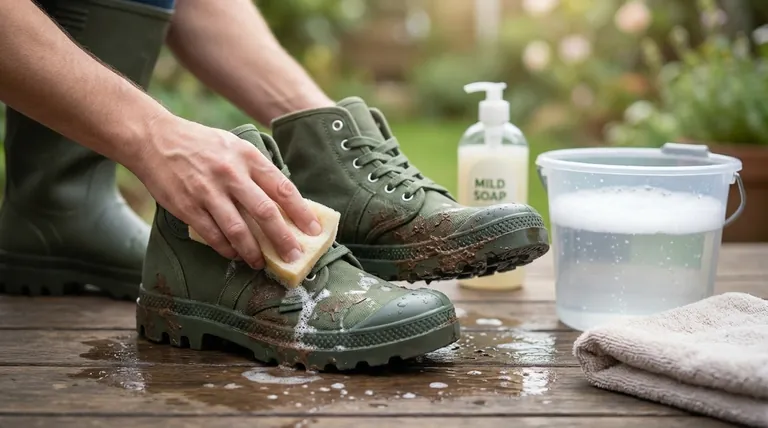
The Science of Why Concentrated Detergent Fails
Using a harsh chemical is counterproductive to preserving your footwear. Understanding the specific ways it causes damage helps clarify why a gentler, diluted approach is necessary for proper maintenance.
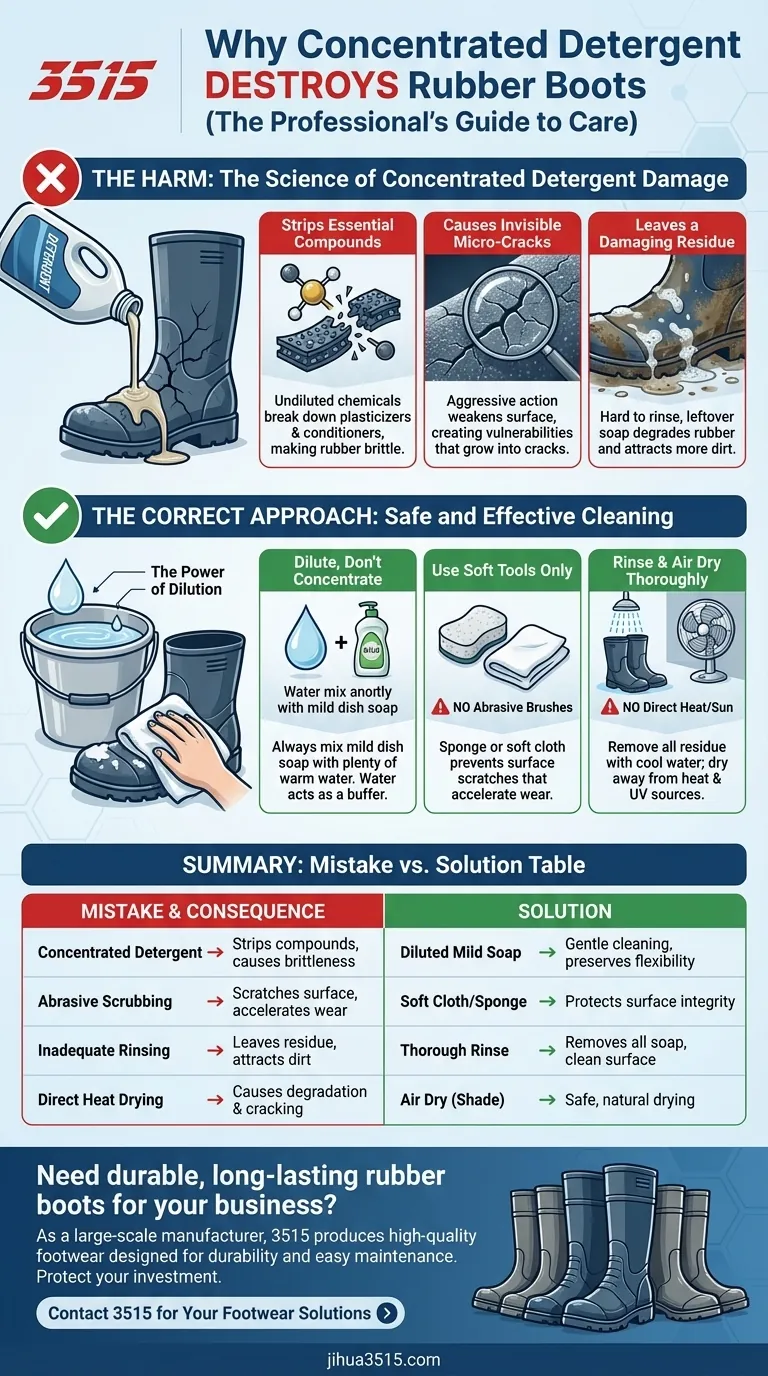
It Strips Essential Compounds
Rubber, whether natural or synthetic, contains plasticizers and conditioning agents that keep it flexible and waterproof. Concentrated detergents are designed to break down oils, and they cannot distinguish between grease from the trail and the beneficial compounds that keep your boots from becoming brittle.
It Causes Invisible Damage
The aggressive chemical action of undiluted soap can weaken the rubber's surface on a microscopic level. This process creates tiny vulnerabilities that grow over time, eventually becoming the visible cracks that ruin a boot's waterproof capabilities.
It Leaves a Damaging Residue
Thick, undiluted detergent is difficult to rinse away completely. Any soap left behind can continue to degrade the rubber long after you've finished cleaning. This sticky residue can also attract more dirt, defeating the purpose of cleaning in the first place.
The Correct Approach: Safe and Effective Cleaning
Proper cleaning is not about power, but about technique. The right method removes dirt and grime while actively preserving the material for future use.
The Power of Dilution
The solution is simple: always mix your detergent with water. A few drops of mild dish soap in a bucket of warm water is more than enough. Water acts as a buffer, reducing the detergent's concentration to a level that is effective on dirt but safe for the rubber.
The Right Tools for the Job
Always use a soft cloth, rag, or sponge for cleaning. Avoid stiff-bristled brushes or abrasive scouring pads, as these can easily scratch and compromise the boot's surface, accelerating wear and tear.
The Importance of Rinsing and Drying
After washing, rinse the boots thoroughly with clean, cool water to remove all soap residue. To dry, leave them in a well-ventilated area away from direct heat sources like radiators or direct sunlight, as high heat and UV radiation are also primary causes of rubber degradation.
A Simple Routine for Long-Lasting Boots
To ensure your boots last for years, adopt the right cleaning and care routine for your needs.
- If your primary focus is routine cleaning: Use a simple solution of mild dish soap and plenty of warm water with a soft cloth.
- If your primary focus is removing stubborn scuffs: Gently rub the area with a paste made from baking soda and water before washing.
- If your primary focus is long-term preservation: Occasionally apply a specialized rubber conditioner or protectant after cleaning to restore flexibility and shield against UV damage.
Proper care is a simple investment that protects the integrity and extends the life of your rubber footwear.
Summary Table:
| Mistake | Consequence | Solution |
|---|---|---|
| Using concentrated detergent | Strips protective compounds, causing brittleness | Dilute mild soap in warm water |
| Scrubbing with abrasive tools | Scratches the surface, accelerating wear | Use a soft cloth or sponge |
| Inadequate rinsing | Leaves damaging residue that attracts dirt | Rinse thoroughly with clean water |
| Drying with direct heat | Causes rubber to degrade and crack | Air dry in a cool, shaded area |
Need durable, long-lasting rubber boots for your business? As a large-scale manufacturer, 3515 produces a comprehensive range of high-quality footwear designed for durability and easy maintenance. Our expertise ensures your footwear investment is protected from the start. Contact our team today to discuss your needs for distributors, brand owners, and bulk clients.
Contact 3515 for Your Footwear Solutions
Visual Guide
Related Products
- Factory Direct Wholesale Rain Boots Durable Waterproof & Fully Customizable
- Durable Rubber Sole Outdoor Shoes Wholesale & Custom Manufacturing
- Wholesale Durable Camouflage Canvas Shoes with High-Traction Cleated Rubber Sole
- Durable Leather Work Boots for Wholesale & Custom Manufacturing
- Wholesale Durable Leather Work Boots | 8-Inch Goodyear Welt Manufacturer
People Also Ask
- What are the characteristics of rain boots? A Guide to Waterproof Footwear for Every Need
- What factors should be considered when choosing rain boots? Find the Perfect Boot for Your Needs
- What are the main differences between rain boots and snow boots? Choose the Right Boot for Your Climate
- How should one decide between PVC and rubber for rain boots? A Guide to Choosing the Right Material
- Why are rain boots more flexible and comfortable than snow boots? The Key Differences Explained















