In short, fabric lamination transforms a simple textile into a structured component that is essential for modern shoe manufacturing. It adds body to prevent wrinkles, makes the material easier to handle during assembly, and masks the shoe's inner components to ensure a clean, high-quality finish.
The core function of lamination is to fundamentally change a fabric's behavior. It turns a flexible, often unpredictable material into a stable, multi-layered composite that solves critical aesthetic and production challenges in footwear assembly.
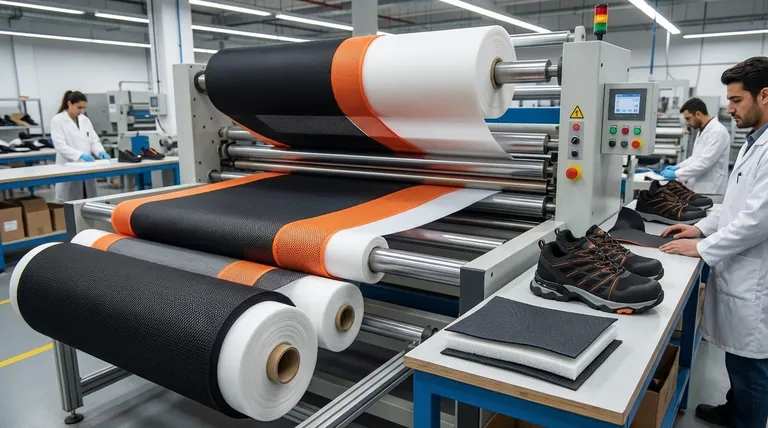
Solving Key Assembly Challenges
Laminating fabric isn't just about sticking layers together; it's a strategic process designed to overcome common problems that arise when working with thin or flexible textiles in a factory setting.
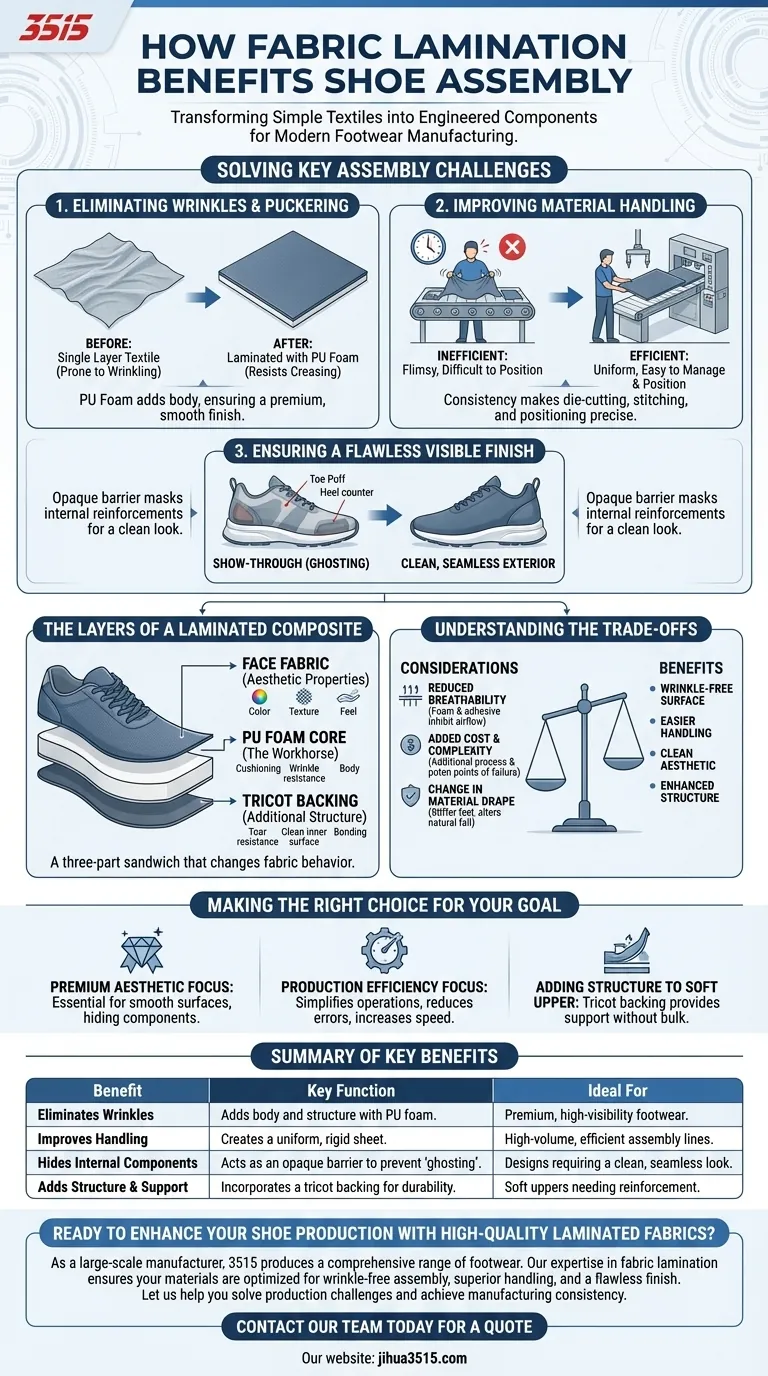
Eliminating Wrinkles and Puckering
A single layer of textile, especially a thin one, is prone to wrinkling and bunching during stitching and lasting (the process of stretching the upper over a mold).
Laminating the fabric to a layer of Polyurethane (PU) foam gives it substance and body. This added structure resists creasing and ensures the material lays flat and smooth, which is critical for a premium final product.
Improving Material Handling
Handling flimsy materials on an assembly line is inefficient and can lead to errors. Laminated fabrics are easier for both machinery and human hands to manage.
The foam backing creates a more uniform and slightly rigid sheet. This consistency makes processes like die-cutting, stitching, and positioning the fabric far more precise and repeatable.
Ensuring a Flawless Visual Finish
Many shoes contain internal reinforcements, such as toe puffs and heel counters, that provide shape and durability.
Without a backing, the outlines of these components can be visible through the outer fabric, an effect known as "show-through" or "ghosting." The lamination acts as an opaque barrier, completely hiding these structural elements for a clean, seamless exterior.
The Layers of a Laminated Composite
A laminated shoe fabric is typically a three-part sandwich, though variations exist. Each layer serves a distinct purpose.
The Face Fabric
This is the outermost layer, chosen for its aesthetic properties—color, texture, and feel. It's the part of the shoe the customer sees and touches.
The PU Foam Core
This middle layer is the workhorse of the composite. It provides the cushioning, wrinkle resistance, and general "body" that makes the material easy to work with and gives the final product a quality feel.
The Tricot Backing
Often, a third layer of tricot material is added to the back of the foam. This fine-knit fabric provides additional structure, improves tear resistance, and creates a clean inner surface that bonds well with adhesives and other shoe components.
Understanding the Trade-offs
While highly beneficial, fabric lamination is not without its considerations. Objectively weighing these factors is key to making the right material choice.
Impact on Breathability
The primary trade-off is a potential reduction in breathability. Adding a layer of foam and adhesive can inhibit the natural airflow of a mesh or canvas, which may be a concern for athletic or summer footwear.
Added Cost and Complexity
Lamination is an additional manufacturing process. This adds to the raw material cost and introduces another potential point of failure if the bond between the layers is not executed perfectly.
Change in Material Drape
Lamination makes a fabric stiffer. While this is desirable for structure, it alters the natural drape and feel of the original textile. This change must align with the intended design and function of the shoe.
Making the Right Choice for Your Goal
Applying lamination is a decision driven by the specific demands of the shoe's design and production process.
- If your primary focus is a premium aesthetic: Lamination is essential for achieving a smooth, wrinkle-free surface and hiding internal components, especially with delicate or lightweight fabrics.
- If your primary focus is production efficiency: Using pre-laminated materials simplifies factory operations, reducing handling errors and increasing assembly speed.
- If your primary focus is adding structure to a soft upper: Incorporating a tricot backing in your lamination provides significant support and durability without the bulk of traditional reinforcements.
Ultimately, fabric lamination elevates a simple textile into an engineered component, enabling greater design freedom and manufacturing consistency.
Summary Table:
| Benefit | Key Function | Ideal For |
|---|---|---|
| Eliminates Wrinkles | Adds body and structure with PU foam backing. | Premium, high-visibility footwear. |
| Improves Handling | Creates a uniform, rigid sheet for easier cutting/stitching. | High-volume, efficient assembly lines. |
| Hides Internal Components | Acts as an opaque barrier to prevent 'ghosting'. | Designs requiring a clean, seamless look. |
| Adds Structure & Support | Incorporates a tricot backing for durability. | Soft uppers needing reinforcement. |
Ready to enhance your shoe production with high-quality laminated fabrics?
As a large-scale manufacturer, 3515 produces a comprehensive range of footwear for distributors, brand owners, and bulk clients. Our expertise in fabric lamination ensures your materials are optimized for wrinkle-free assembly, superior handling, and a flawless finish.
Let us help you solve your key production challenges and achieve greater manufacturing consistency. Contact our team today to discuss your specific needs and get a quote!
Visual Guide
Related Products
- Wholesale Breathable Perforated Slip-On Loafers Custom Manufacturing
- Lightweight Breathable Sneakers with Wet-Traction Grip for Wholesale & Private Label
- Wholesale Leather Apron Toe Derby Shoes Custom Factory Production
- Wholesale Training Shoes with Dial Lacing System Custom OEM Manufacturing
- Wholesale Comfort Leather Business Shoes with Dial Lacing System
People Also Ask
- What are slip-on loafers and how should they be styled for a business casual look?
- What is the primary function of adding naked grain spawn as a substrate in sandwich-structured fungal insoles?
- Why is the inclusion of an IMU necessary for clinical assessment in sensing insoles? Unlock Actionable Gait Data
- How can aftermarket insoles improve shoe fit? The Ultimate Guide to Adjusting Shoe Volume
- What are the primary manufacturing advantages of 3D printing for therapeutic insoles? Revolutionizing Custom Orthotics