
At its core, cushioning in work shoes acts as a shock absorber for your entire body. For those who stand all day, this isn't a luxury; it's a critical mechanism for health and endurance. The materials in the shoe, like EVA foam or gel, dissipate the constant force of your body weight against hard surfaces, reducing pressure on your feet, joints, and back, which directly translates to less pain and fatigue.
The right cushioning does more than just soften your step; it protects your entire musculoskeletal system. It's a foundational tool for preventing the chronic pain and physical strain that result from prolonged standing, directly impacting your energy and focus throughout the workday.
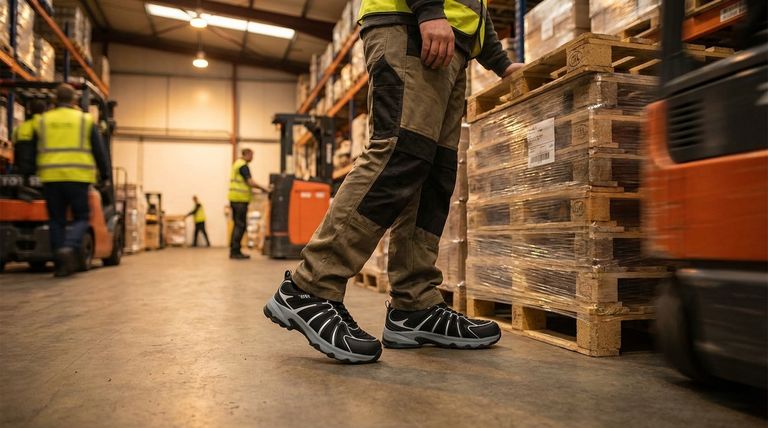
The Mechanics of Standing: Why Cushioning is Non-Negotiable
Standing for hours on hard, unforgiving surfaces like concrete creates a constant battle between your body and gravity. Effective cushioning is the primary line of defense in this daily conflict.
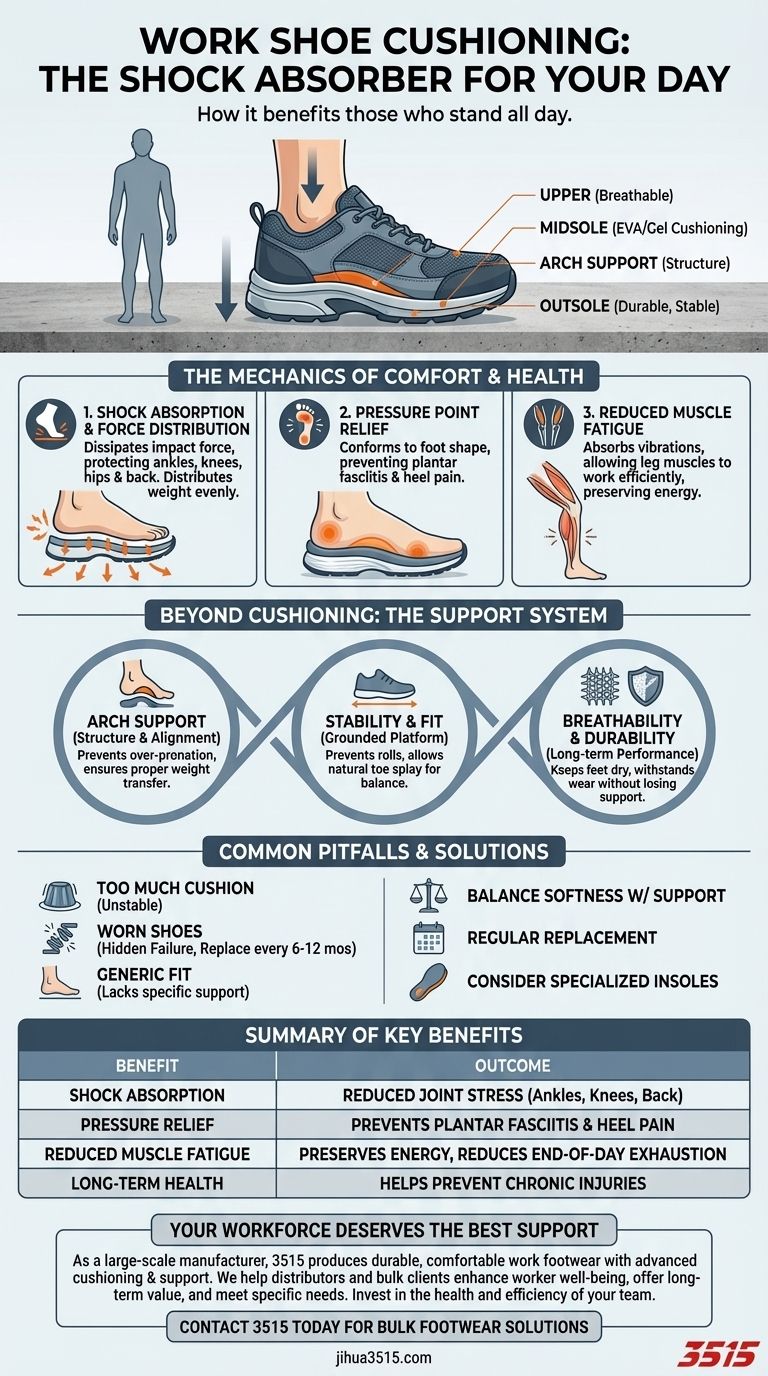
Shock Absorption and Force Distribution
When you stand or walk, the force of impact travels from the ground up through your body. Cushioning materials interrupt and absorb a significant portion of this shock.
This process prevents that raw force from jarring your ankles, knees, hips, and lower back. It effectively distributes your body weight more evenly across the entire foot, rather than allowing it to concentrate on the heel and the ball of the foot.
Pressure Point Relief
Prolonged standing creates intense, localized pressure points. A well-cushioned midsole and insole conform to the shape of your foot, relieving this pressure.
This is essential for preventing common ailments like plantar fasciitis and general heel pain, allowing you to remain comfortable for much longer periods.
Reducing Muscle Fatigue
Your leg muscles are constantly making micro-adjustments to keep you stable. Cushioning reduces the vibrations and impact forces your muscles have to counteract.
By absorbing this "noise," the shoe allows your muscles to work more efficiently, preserving your energy and significantly reducing end-of-day fatigue.
Beyond Cushioning: The Anatomy of an Effective Work Shoe
Cushioning is a vital component, but it works as part of a system. True, lasting comfort comes from a shoe that balances softness with other critical features.
The Critical Role of Arch Support
Cushioning without structure is like building a house on a foundation of sand. Arch support provides the rigid framework your foot needs to maintain proper alignment.
This support prevents your foot from over-pronating (rolling inward) and ensures your body weight is transferred correctly, which is crucial for preventing foot, knee, and back pain.
Stability and a Proper Fit
An effective work shoe provides a wide, stable platform to stand on. This prevents ankle rolls and helps you feel grounded.
Furthermore, a proper fit with sufficient room in the toe box allows your toes to splay naturally, preventing discomfort and improving your balance over a long shift.
Breathability and Durability
Materials like mesh or full-grain leather allow moisture to escape, keeping your feet dry and reducing the risk of blisters and fungal infections.
High-quality, durable materials ensure the shoe can withstand the wear and tear of a demanding work environment without losing its supportive qualities prematurely.
Understanding the Trade-offs and Common Pitfalls
Selecting the right shoe involves more than just picking the softest option available. Understanding the potential downsides is key to making an informed decision.
Too Much Cushion Can Be Unstable
An excessively soft, "marshmallow-like" shoe can feel good for a moment but may lack the necessary support for an entire day.
This can cause your foot to move around too much inside the shoe, forcing your muscles to work harder to maintain stability and potentially leading to fatigue or injury.
Forgetting to Replace Worn Shoes
The cushioning materials in shoes, especially EVA foam, break down and compress over time. A shoe can look perfectly fine on the outside while its internal support system has failed.
As a rule, work shoes should be replaced every 6 to 12 months, depending on usage. If you notice a loss of comfort or new aches and pains, it's time for a new pair.
Ignoring Your Specific Foot Type
A generic cushioned shoe may not be adequate for individuals with specific foot conditions like flat feet or high arches.
In these cases, supplementing the shoe's built-in features with a high-quality, specialized insole can provide the personalized arch support and shock absorption needed for true comfort.
Making the Right Choice for Your Goal
Choosing the right footwear requires you to balance comfort with the specific demands of your job and your body's needs.
- If your primary focus is maximum comfort on hard surfaces: Prioritize shoes with substantial EVA or gel midsoles and consider adding a high-quality insole for personalized support.
- If your primary focus is preventing pain and injury: Ensure the shoe has a firm structure and strong arch support in addition to its cushioning to maintain proper body alignment.
- If your primary focus is long-term value and health: Look for a durable, well-constructed shoe and commit to replacing it as soon as its cushioning and support begin to degrade.
Investing in the right footwear is a direct investment in your daily well-being and long-term physical health.
Summary Table:
| Benefit | How It Works | Key Outcome |
|---|---|---|
| Shock Absorption | Materials like EVA foam dissipate impact force from hard surfaces. | Reduces stress on joints (ankles, knees, back). |
| Pressure Relief | Conforms to the foot to distribute weight evenly. | Prevents plantar fasciitis and heel pain. |
| Reduced Muscle Fatigue | Absorbs vibrations, so muscles work more efficiently. | Preserves energy and reduces end-of-day exhaustion. |
| Long-Term Health | Maintains proper body alignment when paired with arch support. | Helps prevent chronic musculoskeletal injuries. |
Your Workforce Deserves the Best Support
As a large-scale manufacturer, 3515 produces a comprehensive range of durable, comfortable work footwear designed specifically for the demands of standing all day. Our production capabilities encompass all types of safety shoes and boots, engineered with advanced cushioning technologies, robust arch support, and superior durability.
We help distributors, brand owners, and bulk clients provide footwear that:
- Enhances Worker Well-being: Reduce fatigue and prevent pain, leading to higher productivity and morale.
- Offers Long-Term Value: Durable construction ensures shoes withstand daily wear while maintaining support.
- Meets Specific Needs: Customizable options for different arch types and job requirements.
Invest in the health and efficiency of your team. Contact 3515 today to discuss your bulk footwear needs and discover the perfect solution for your workforce.
Visual Guide
Related Products
- Custom Manufactured Air Cushion Leather Business Shoes for Wholesale
- Wholesale Breathable & Cushioned Training Shoes Custom Factory Production
- Lightweight Breathable Sneakers with Wet-Traction Grip for Wholesale & Private Label
- Wholesale Breathable Training Shoes Custom Athletic Footwear Manufacturer
- Wholesale Lightweight Cushioned Athletic Sneakers for Custom Bulk Production
People Also Ask
- What kind of shoes do businessmen wear? Master the Dress Code for Professional Success
- What are the essential business shoes every man should own? Build a Professional Wardrobe Foundation
- What are the benefits of lubricating work shoes? Protect Your Investment & Extend Lifespan
- What type of boots are suitable for challenging weather conditions in a business setting? | Durable & Professional Footwear
- When is saddle soap recommended for cleaning leather shoes? A Guide to Deep Restoration

















