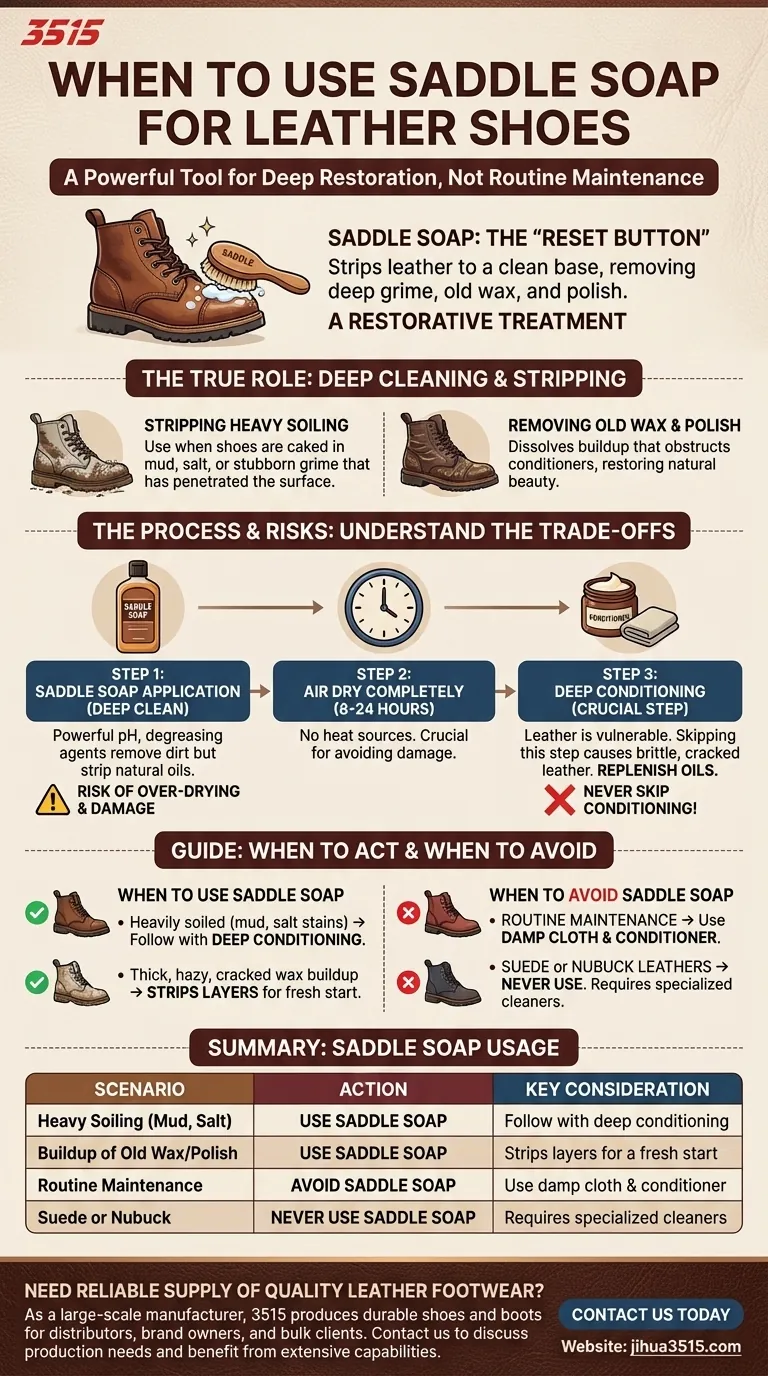
To be clear, saddle soap is a powerful, heavy-duty cleaner used for occasional, deep restoration, not for regular maintenance. It is the correct tool only when you need to strip away heavy soiling or a significant buildup of old wax and polish that a simpler cleaning method cannot remove.
Think of saddle soap as a "reset button" for your leather shoes. Its purpose is to strip the leather down to a clean base, removing everything from its pores so you can properly recondition it. It is a restorative treatment, not a routine wash.
The True Role of Saddle Soap in Leather Care
Understanding when to use saddle soap requires seeing it as a specialized tool within a broader care routine. Its strength is also its primary risk if used improperly.
A Tool for Deep Cleaning, Not Routine Wipes
For light dust or minor scuffs from daily wear, a simple wipe with a damp cloth is sufficient. Saddle soap is reserved for situations where shoes are caked in mud, salt, or other stubborn grime that has penetrated the leather's surface.
Stripping Away Old Polish and Wax
Over time, layers of wax polish can build up, creating a thick, sometimes cracked, finish. This buildup prevents new conditioners from absorbing and can obscure the leather's natural beauty. Saddle soap effectively dissolves and removes these old layers.
Preparing Leather for Reconditioning
Because saddle soap strips away everything, it also removes the leather's essential oils and fats. This means its use is always the first step in a multi-stage process. After cleaning with saddle soap, the leather is in a vulnerable, absorbent state, perfectly prepared for a deep conditioning treatment.
Understanding the Trade-offs and Risks
Using saddle soap correctly is as much about knowing what not to do as what to do. Its aggressive cleaning action comes with potential downsides that must be managed.
The Inherent Risk of Over-Drying
The primary reason saddle soap is not for regular use is its high pH and degreasing agents. These ingredients are excellent at removing dirt but will also strip the natural oils that keep leather supple. Frequent use will inevitably lead to dry, brittle, and cracked leather.
The Importance of a Proper Process
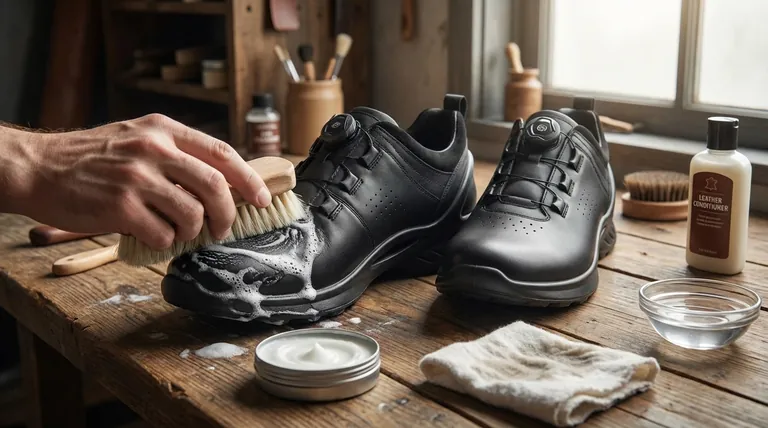
The application and removal process is critical. You must use a soft-bristled brush, apply the soap panel by panel, and meticulously wipe away all lather and residue with a clean cloth. Leaving any soap behind can degrade the leather over time.
The Crucial Drying and Conditioning Steps
After cleaning, the leather is saturated with water and must be allowed to air dry completely, which can take anywhere from 8 to 24 hours. Applying heat will cause permanent damage. Once dry, the leather is thirsty for nutrients. Skipping the conditioning step after using saddle soap is the most common and damaging mistake you can make.
How to Apply This to Your Shoes
Use this simple guide to decide on the right course of action for your footwear.
- If your shoes are heavily soiled with dried mud or winter salt stains: Saddle soap is the right choice for a deep, restorative clean before you recondition and polish them.
- If you have a thick, hazy, or cracked buildup of old wax polish: Use saddle soap to strip these old layers away and create a clean canvas for a fresh conditioning and polishing.
- If you are performing routine weekly or monthly maintenance: Do not use saddle soap. A simple wipe with a damp cloth, followed by a quality leather conditioner, is the correct and safe approach.
- If your shoes are made of exotic or delicate leathers like suede or nubuck: Never use saddle soap. These materials require specialized cleaners and brushes.
By understanding saddle soap as a powerful but infrequent restoration tool, you empower yourself to care for your leather goods correctly.
Summary Table:
| Scenario | Recommended Action | Key Consideration |
|---|---|---|
| Heavy soiling (mud, salt) | Use Saddle Soap | Follow with deep conditioning |
| Buildup of old wax/polish | Use Saddle Soap | Strips layers for a fresh start |
| Routine maintenance | Avoid Saddle Soap | Use a damp cloth and conditioner |
| Suede or nubuck leather | Never Use Saddle Soap | Requires specialized cleaners |
Need a reliable supply of quality leather footwear for your business?
As a large-scale manufacturer, 3515 produces a comprehensive range of durable shoes and boots for distributors, brand owners, and bulk clients. Our expertise ensures your products are built to last with proper care.
Contact us today to discuss your footwear production needs and benefit from our extensive manufacturing capabilities.
Visual Guide
Related Products
- Factory Direct Wholesale Leather Comfort Shoes with Dial Closure
- Classic Leather Derby Dress Shoes Wholesale & Custom Manufacturing
- Custom Manufactured Air Cushion Leather Business Shoes for Wholesale
- Wholesale Comfort Leather Business Shoes with Dial Lacing System
- Wholesale Breathable Perforated Leather Derby Shoes with Modern Comfort Sole
People Also Ask
- What are some common materials used to make men's leather shoes? A Guide to Calfskin, Cordovan & Suede
- How can you waterproof leather shoes? Choose the Right Method for Maximum Protection
- What role do auxiliary materials play in leather shoe product mix optimization? Maximize Profit & Stability
- What are the best practices for storing leather shoes? Preserve Your Investment for Years to Come
- What are the maintenance requirements for leather shoes? A Complete Guide to Longevity