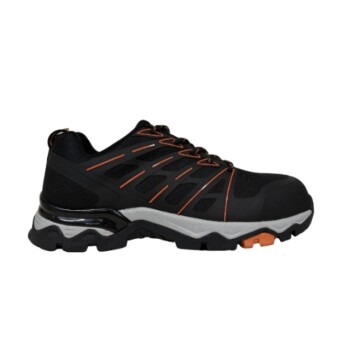
A data-driven 3D foot reconstruction API functions as a web-based processing engine that transforms standard 2D images into volumetric data. By capturing just three specific angles via a smartphone—the medial (inner), lateral (outer), and top views—the system generates a precise 3D model of the user's foot to deliver professional-grade measurements remotely.
Online procurement of safety footwear has historically suffered from high return rates due to the inability to physically try on rigid protective shoes. This API technology solves that friction by enabling accurate, remote digital fittings without requiring the user to visit a brick-and-mortar store.
The Technical Workflow
The Three-View Input Requirement
The process begins at the user level, utilizing a standard smartphone camera.
Rather than requiring complex video sweeps or specialized hardware (like LiDAR), the API requires only three static photographs: the top view, the medial view, and the lateral view.
Web Service Processing
Once the images are captured, the mobile application does not process the 3D reconstruction locally on the device.
Instead, the images are transmitted to a web service API. This server-side architecture ensures that heavy computational processing is handled by the cloud, allowing for complex data-driven reconstruction algorithms to run efficiently regardless of the user's phone capabilities.
Output Generation
The API returns a precise 3D foot model derived from the 2D photographic data.
This model provides the necessary digital measurements required to match a worker's foot to the specific internal volume of a safety shoe, effectively replicating the accuracy of a professional in-store measurement.
Solving the Safety Shoe Dilemma
Addressing Structural Rigidity
Safety shoes, often reinforced with steel or composite toes, are far less forgiving than casual footwear.
Because these shoes do not stretch or adapt to the foot over time, initial precision is critical. This API ensures that the sizing data reflects the actual 3D volume of the foot, preventing discomfort and injury.
Eliminating the Physical Trial Barrier
Traditional procurement often requires workers to travel to physical depots for fitting.
By embedding this API into a mobile app, organizations can decentralize procurement. Workers can generate their measurements from home or the job site, streamlining the supply chain and reducing administrative overhead.
Understanding the Trade-offs
Sensitivity to Input Quality
While the "three-photo" method is user-friendly, the output accuracy is strictly dependent on the quality of the input.
Poor lighting, obscured angles, or user error during the photography stage can degrade the quality of the 3D reconstruction. The application interface must guide the user effectively to ensure usable data.
Connectivity Dependence
Because this solution operates as a web service, it requires an active internet connection to function.
Procurement scenarios in remote areas with no connectivity will face friction, as the reconstruction cannot be performed locally on the device.
Making the Right Choice for Your Goal
- If your primary focus is Reducing Returns: Implement this API to ensure size recommendations are based on volumetric 3D data rather than subjective user guessing.
- If your primary focus is User Experience: Prioritize building a mobile UI that guides workers clearly through taking the three specific photos (medial, lateral, top) to prevent errors.
Adopting this technology shifts safety shoe procurement from a logistical headache to a precise, data-driven digital workflow.
Summary Table:
| Aspect | Description/Impact |
|---|---|
| Functionality | Transforms 3 smartphone photos (medial, lateral, top) into a precise 3D foot model |
| Processing Method | Web-based API (server-side computation via cloud) |
| Primary Benefit | Reduces safety shoe return rates due to inaccurate sizing; enables remote digital fittings |
| Solves Dilemma | Addresses structural rigidity of safety shoes; eliminates physical trial barrier |
| Key Advantage | Delivers professional-grade measurements remotely; streamlines procurement process |
| Dependencies | Requires quality input photos and an active internet connection |
As a large-scale manufacturer serving distributors and brand owners, 3515 offers comprehensive production capabilities for all footwear types, anchored by our flagship Safety Shoes series. Our extensive portfolio covers work and tactical boots, outdoor shoes, training shoes, sneakers, and Dress & Formal shoes to meet diverse bulk requirements. Elevate your footwear procurement precision and reduce costly returns by partnering with 3515. Discover how our innovative solutions can optimize your supply chain and enhance customer satisfaction – contact us today to discuss your bulk footwear needs!
References
- Jorge Valero, Sandra Alemany. A Statistical Size Recommender for Safety Footwear Based on 3D Foot Data. DOI: 10.15221/23.40
This article is also based on technical information from 3515 Knowledge Base .
Related Products
- Premium Suede Sport Safety Shoes for Wholesale & Bulk Orders
- Premium Lightweight Safety Shoes for Wholesale & Bulk Orders
- Wholesale Anti-Smash & Puncture-Proof Safety Shoes Custom Manufacturing for Brands
- Premium KPU Injection Athletic Style Safety Shoes
- Premium Safety Shoes with Rotating Buckle Safety Sneakers
People Also Ask
- What are the primary functions of professional safety shoes? Maximize Safety in Water Supply Confined Spaces
- What industries have specific OSHA footwear requirements? Ensure Compliance & Protect Your Workforce
- What role do specialized safety shoes play in preventing falls? Engineering Stability in Industrial Environments
- How do I choose the best safety shoes? Match Certified Features to Your Hazards
- What core functions do professional safety shoes serve? Enhance Construction & Industrial Safety Standards