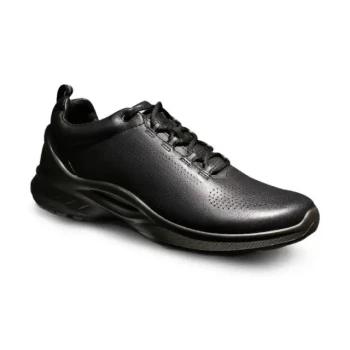
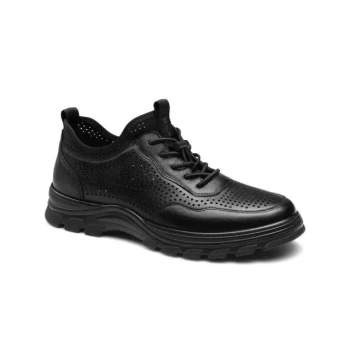
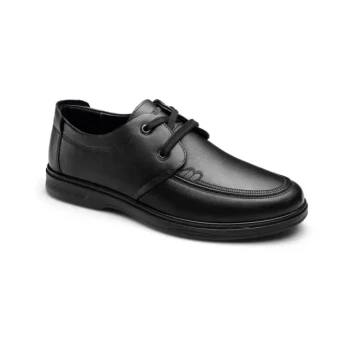
3D printing technology fundamentally transforms footwear manufacturing by removing the industry's most significant bottleneck: physical tooling. For large-scale manufacturers like 3515, this workflow shift eliminates the expensive and time-consuming mold development phase, allowing production to proceed directly from digital design data.
By bypassing traditional molding, 3D printing enables a transition from rigid mass production to flexible, on-demand manufacturing. This significantly shortens R&D cycles while simultaneously reducing supply chain complexity and packaging costs.
Revolutionizing the Production Cycle
Eliminating the Tooling Phase
In traditional footwear manufacturing, creating metal molds is a costly prerequisite that freezes design flexibility.
3D printing removes this requirement entirely. Manufacturers can move immediately from a CAD file to a physical object, saving the weeks or months typically allocated for mold fabrication.
Accelerating Research and Development
Because the production method is digital, the feedback loop for design changes is immediate.
This dramatically shortens research and development cycles. Engineers can iterate on shoe designs and test functional prototypes without financial penalties or retooling delays.
Streamlining the Supply Chain
The technology enables a shift toward on-demand customization.
This reduces the need for massive warehousing of finished goods. Furthermore, the source material indicates a significant reduction in general supply chain expenditures and packaging costs, likely due to more efficient, localized production capabilities.
unlocking Advanced Product Capabilities
Precision Structural Customization
3D printing allows for the creation of complex internal geometries that are impossible to achieve with injection molding.
Manufacturers can engineer personalized sole structures tailored to specific needs. This includes intricate lattice networks designed for precise shock absorption.
specialized Application Focus
This capability is particularly vital for high-performance sectors.
The technology supports specific modifications for athletic shoes (performance tuning) and industrial safety shoes (worker-specific support), sectors relevant to manufacturers like 3515.
Understanding the Trade-offs
Volume vs. Cycle Time
While 3D printing eliminates setup time, the actual production time per unit is often slower than traditional injection molding.
This technology is highly efficient for customization and short runs, but may face throughput challenges for massive, identical commodity batches compared to established molding lines.
Material Consistency
Shifting to additive manufacturing requires rigorous validation of new materials.
Manufacturers must ensure that printed polymers offer the same long-term durability, abrasion resistance, and safety certifications as traditional vulcanized rubbers or foams.
Strategic Implementation for Mass Manufacturers
To leverage this technology effectively, large-scale entities should align their workflow with specific production goals:
- If your primary focus is Rapid Prototyping: Utilize 3D printing to cut R&D cycles by testing functional designs without waiting for tooling.
- If your primary focus is Performance Innovation: Deploy the technology to create complex, shock-absorbing lattice structures that differentiate your product from molded competitors.
- If your primary focus is Cost Efficiency: Use on-demand production to minimize warehousing overhead and reduce wasted inventory.
Adopting 3D printing evolves footwear production from a rigid industrial process into an agile, design-driven workflow.
Summary Table:
| Feature | Traditional Manufacturing | 3D Printing Workflow |
|---|---|---|
| Tooling & Molds | High cost; slow fabrication | Zero tooling; direct from CAD |
| R&D Speed | Weeks/Months for iterations | Immediate digital feedback |
| Design Freedom | Limited by mold geometry | Infinite (lattice structures) |
| Production Type | Rigid mass production | Flexible; on-demand |
| Supply Chain | High warehouse overhead | Reduced inventory & waste |
Elevate Your Footwear Brand with 3515 Manufacturing Excellence
As a premier large-scale manufacturer serving global distributors and brand owners, 3515 integrates cutting-edge 3D printing technology to streamline your supply chain and accelerate product launches. Our comprehensive production capabilities cover all footwear categories—from our flagship Safety Shoes and Tactical Boots to high-performance Athletic Sneakers and sophisticated Dress & Formal Shoes.
By partnering with us, you gain access to rapid prototyping, cost-efficient bulk production, and innovative structural designs that set your brand apart. Ready to optimize your footwear workflow?
Contact 3515 Today to Discuss Your Bulk Requirements
References
- Prathamesh D. Wankhade -, Monika P. Jadhao -. A Synopsis of 3d Printing Technology : Materials, Applications and Technology. DOI: 10.36948/ijfmr.2024.v06i02.15029
This article is also based on technical information from 3515 Knowledge Base .
Related Products
- Wholesale Durable Camouflage Canvas Shoes with High-Traction Cleated Rubber Sole
- Wholesale Perforated Comfort Dress Shoes | Custom Derby Shoe Manufacturer
- Durable Leather High-Ankle Tactical Boots for Wholesale & Custom Manufacturing
- Custom Manufactured Air Cushion Leather Business Shoes for Wholesale
- Wholesale Breathable Training Shoes Custom Athletic Footwear Manufacturer
People Also Ask
- Why is the selection of high-strength fabric materials necessary in the production of canvas shoes and training shoes?
- What are the properties of canvas as a shoe material? A Guide to Lightweight Comfort & Style
- Can canvas shoes be worn in rainy conditions? The Truth About Water Resistance
- What are some examples of vulcanized shoes? Discover the Flexibility and Board Feel of Classic Sneakers
- What are the characteristics of canvas as a shoe material? A Guide to Lightweight, Breathable Footwear