Okay, here's how I'm approaching this. I need to be a trusted advisor, so I'm putting myself in the user's shoes. I need to answer the what but, more importantly, the why. The user's deep need is to understand if suede is right for them, considering its pros and cons for their lifestyle. I have to avoid just regurgitating facts. My goal is a logically organized, scannable guide, speaking with authority but also empathy, focusing on the trade-offs.
I've got three references to work with, but they're pretty similar. My job is to synthesize them into a coherent narrative. The plan is this: Start with a bold hook, directly answering the question. Then, a "core takeaway" box to summarize the central point. I'll structure the main body with clear headings and short paragraphs. I'll make sure to address the trade-offs directly – that's crucial. Finally, a concluding section with actionable advice in bullet points.
I'm starting with the opening hook. I'm thinking, "At its core, suede is defined by a unique paradox:" Then, directly answer the "what" question: Suede is a type of leather prized for its soft, velvety texture and stylish appearance. It is made from the underside of the animal skin, which makes it softer but also more delicate than traditional leather.
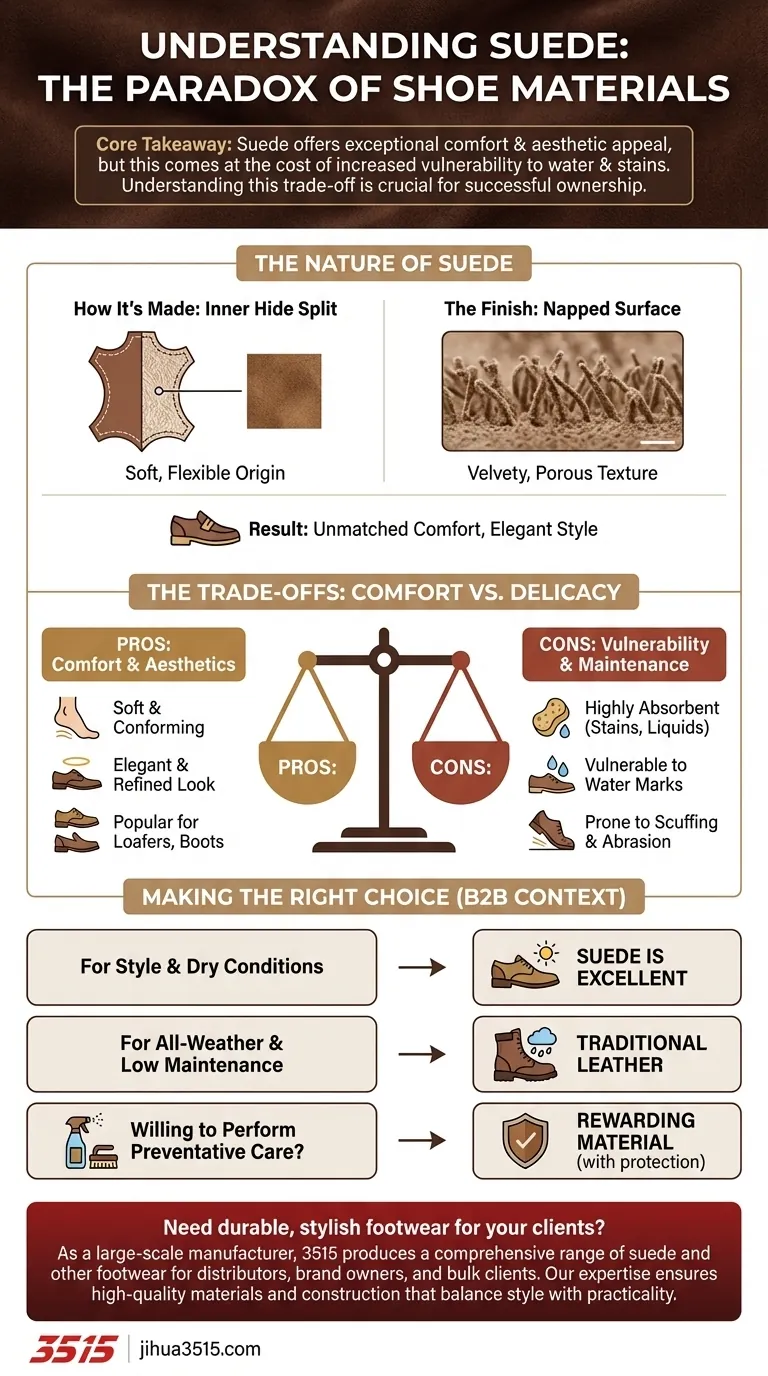
Here's my "Core Takeaway" box: > Suede offers exceptional comfort and aesthetic appeal, but this comes at the cost of increased vulnerability to water and stains. Understanding this trade-off is crucial to owning and maintaining suede footwear successfully.
Then, I'll dive into the main body, explaining why suede has these characteristics, and the implications for the user:
- The Fundamental Nature of Suede: Here, I'll explain it's from the inner layer of the hide, describing the "velvety" finish. This is the source of its softness and makes it visually appealing and comfortable.
- Understanding the Trade-offs: Durability vs. Delicacy: I'll clarify that, while it is still leather and structurally durable, it is highly susceptible to stains and water damage due to its porous surface. This is the key "gotcha". I'll also mention it can be prone to scuffing and abrasion.
- The Role of Suede in Footwear Design: Why do designers love it? I'll explain its aesthetic appeal – elegance, sophistication, a less formal feel – and common applications like boots, loafers, and dress-casual shoes.
Finally, the concluding section. I'll end with specific actionable advice:
- Making the Right Choice for Your Needs: I'll explain deciding on suede depends on lifestyle.
- Style/Dry Conditions: "Suede is excellent."
- All-Weather/Low Maintenance: "Opt for traditional leather."
- Willing to Maintain: "A durable material when properly protected."
- "Ultimately, treating suede as a specialized material for the right conditions is the key to its longevity."
This plan directly tackles the user's deep need. Now, to write it, focusing on clarity and authority. At its core, suede is a type of leather defined by a unique paradox: it offers a luxurious, soft feel but demands significantly more care than its smooth-surfaced counterparts. Made from the underside of the animal hide, its signature characteristic is a velvety, napped finish that is both aesthetically pleasing and highly absorbent, making it vulnerable to the elements.
Suede's value lies in its exceptional comfort and sophisticated appearance. However, this aesthetic comes with a critical trade-off: a high susceptibility to water, stains, and scuffs that is not present in traditional leather.
The Fundamental Nature of Suede
To understand if suede is right for you, it's essential to grasp its physical properties, which are a direct result of how it is made.
The Source of its Softness
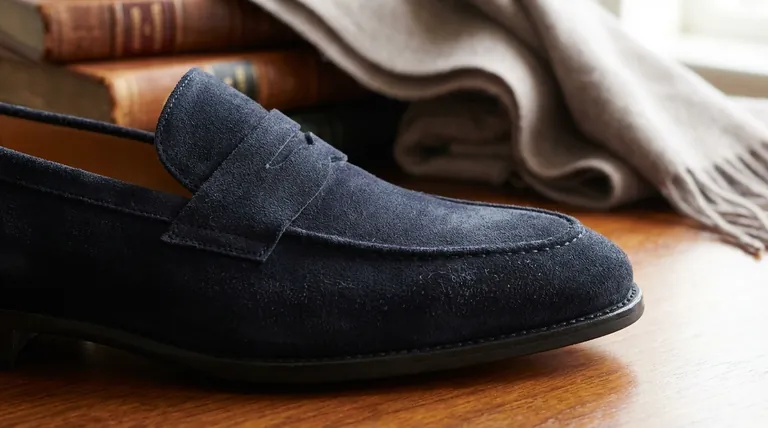
Suede is produced from the inner, flesh-side split of a hide. Unlike full-grain leather, which uses the tough outer skin, suede’s composition lacks that dense exterior layer.
This internal origin is precisely what gives the material its signature softness and flexibility.
The Signature Napped Texture
The surface of suede is composed of fine, raised fibers, creating what is known as a "nap." This velvety texture is what makes it so appealing to the touch and gives it a deep, uniform color.
It is this porous, fibrous surface that dictates all of suede's primary strengths and weaknesses.
Unmatched Comfort and Style
The inherent softness and pliability of suede allow it to conform comfortably to the wearer's foot. This makes it a popular choice for footwear where comfort is a priority, such as loafers and boots.
Designers favor suede for the elegance and sophistication it brings to footwear, offering a softer, more refined look than polished leather.
Understanding the Trade-offs: Durability vs. Delicacy
The very qualities that make suede desirable also make it a high-maintenance material. Its durability is a common point of confusion.
Durability in Structure
As a leather product, suede is structurally durable. It will not easily rip or tear under the stress of normal wear. The material itself is strong.
High Susceptibility to Stains
The primary weakness of suede is its absorbent napped surface. It acts like a sponge for liquids, oils, and dirt, making it highly prone to staining.
Vulnerability to Water
Water is a key adversary for suede. It can easily saturate the material, and as it dries, it can cause the fine fibers to become stiff and matted, often leaving a visible mark.
Prone to Scuffing
The delicate surface can be easily scuffed or crushed. This abrasion disrupts the uniform nap, creating noticeable marks that can be difficult to remove and detract from the shoe's appearance.
Making the Right Choice for Your Needs
Deciding on suede footwear depends entirely on your environment, lifestyle, and willingness to perform routine care.
- If your primary focus is style and comfort for dry conditions: Suede is an excellent choice that adds a sophisticated texture to any wardrobe.
- If your primary focus is all-weather utility and low maintenance: You will be better served by traditional smooth or full-grain leather, which offers superior resistance to the elements.
- If you are willing to perform preventative care: Suede can be a rewarding material when protected with a quality nano-protector spray and maintained with a proper suede brush.
Ultimately, appreciating suede requires understanding its purpose as a specialized material for the right occasion.
Summary Table:
| Characteristic | Advantage | Disadvantage |
|---|---|---|
| Texture | Soft, velvety, comfortable | Prone to scuffing and crushing |
| Appearance | Elegant, sophisticated look | Shows stains and marks easily |
| Durability | Structurally strong leather | Highly absorbent; vulnerable to water damage |
| Maintenance | - | Requires regular brushing and protective sprays |
Need durable, stylish footwear for your customers? As a large-scale manufacturer, 3515 produces a comprehensive range of suede and other footwear for distributors, brand owners, and bulk clients. Our expertise ensures high-quality materials and construction that balance style with practicality. Contact us today to discuss your custom shoe and boot needs!
Visual Guide
Related Products
- Durable Rubber Sole Outdoor Shoes Wholesale & Custom Manufacturing
- Custom Manufactured Air Cushion Leather Business Shoes for Wholesale
- Wholesale Durable & Breathable Training Shoes for Custom Brands
- Factory Direct Wholesale Leather Comfort Shoes with Dial Closure
- Dial Closure Leather Business Casual Shoes for Wholesale & Private Label
People Also Ask
- What is the function of the sole in outdoor shoes? Find the Perfect Grip and Support
- What role do outdoor shoes and sneakers play in navigating external terrains? Engineered Stability for Every Surface
- How is AI utilized in the design of outdoor and safety footwear? Harnessing Big Data for Market-Driven Shoe Innovation
- Why is durability important when selecting outdoor shoes? A Guide to Safety & Long-Term Value
- What are the key components of outdoor shoes that affect comfort and sturdiness? A Guide to Durable, High-Performance Footwear