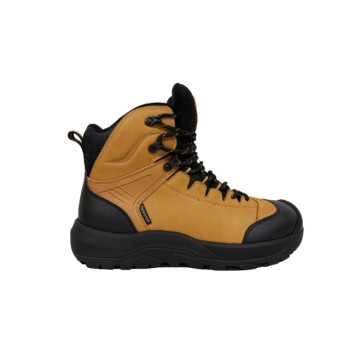
The collaboration between the high-voltage electrode and the power system functions as the critical mechanism for validating electrical safety. The power system acts as the generator, producing a precise and stable high voltage (often up to 18,000V), while the electrode serves as the delivery interface, applying this load directly to insulating footwear filled with conductive material. This specific configuration allows the machine to stress-test the insulation for a set duration, ensuring it can withstand extreme electrical environments.
The power system provides the necessary force, while the electrode acts as the delivery mechanism. Together, they simulate extreme electrified environments to expose invisible defects like leakage or material breakdown before the footwear is used in the field.
The Mechanics of the Test
Generating Stable Voltage
The core of the testing machine is the power system. It is engineered to generate a substantial voltage output, specifically cited as 18,000V in standard testing scenarios.
Crucially, this voltage must be stable. Fluctuations in power delivery would result in inaccurate test data, potentially allowing unsafe gear to pass inspection.
The Role of the Electrode
The high-voltage electrode acts as the bridge between the power source and the test object. It accurately applies the generated voltage to the insulating footwear.
For the test to work, the footwear is typically prepared with conductive fillers. The electrode connects with these fillers to ensure the electrical potential is distributed evenly across the insulation material.
Simulated Exposure Time
A momentary spike in voltage is not sufficient for a safety audit. The power system and electrode must maintain the high-voltage load for a specific duration, typically 1 minute.
This duration is critical. It simulates the sustained stress of a real-world electrified working environment, rather than just a momentary accidental contact.
Detecting Failure Points
Identifying Dielectric Breakdown
The primary goal of this combined system is to detect breakdown. This occurs when the insulation fails completely, allowing electricity to punch a hole through the material.
If the electrode detects a sudden drop in resistance or a massive surge in current, the system identifies the footwear as defective.
Monitoring Flashover and Leakage
Beyond total failure, the system looks for flashover, which is an electrical discharge over the surface of the insulation rather than through it.
Simultaneously, it measures excessive leakage current. Even if the shoe does not "fail" visibly, allowing too much current to pass through the insulation indicates weak protection that compromises user safety.
Understanding the Constraints
The Reality of Simulation
While this system is highly effective, it remains a simulation. The test applies a constant, controlled voltage for a fixed time (1 minute).
Real-world electrical accidents can involve unpredictable voltage spikes, physical abrasion, or environmental contaminants that a controlled laboratory test may not fully replicate.
Stress on Materials
Applying 18,000V to footwear is an intense process. There is an inherent trade-off between rigorously testing the material and potentially stressing the insulation.
The system must be calibrated perfectly to detect existing defects without degrading the integrity of a compliant pair of boots during the test itself.
Ensuring Reliable Safety Verification
The interaction between the power system and the electrode is the defining factor in footwear certification. When configuring or evaluating these tests, consider your specific objectives:
- If your primary focus is Defect Detection: Ensure the system is sensitive enough to distinguish between surface flashover and internal leakage current, as these represent different types of safety risks.
- If your primary focus is Consistency: Verify that the power system can maintain the target voltage (e.g., 18,000V) without fluctuation for the full 1-minute duration to prevent false passes.
Ultimately, the precise coordination of stable power generation and accurate electrode application is what transforms a standard boot into a certified life-saving device.
Summary Table:
| Component | Primary Function | Key Technical Role |
|---|---|---|
| Power System | Generation | Produces stable 18,000V output without fluctuations. |
| High-Voltage Electrode | Delivery | Transfers electrical load to footwear via conductive fillers. |
| Timer Mechanism | Duration Control | Sustains high-voltage stress for 1 minute for audit reliability. |
| Monitoring Sensor | Detection | Identifies dielectric breakdown, flashover, and leakage current. |
Secure Your Bulk Footwear Supply with 3515
As a large-scale manufacturer serving distributors and brand owners, 3515 offers comprehensive production capabilities for all footwear types. Our flagship Safety Shoes series is built to withstand rigorous electrical testing, ensuring every pair meets the highest global standards for dielectric protection.
Our extensive portfolio covers:
- Work and Tactical Boots for high-risk environments.
- Outdoor and Training Shoes for performance and durability.
- Sneakers and Dress & Formal Shoes for diverse bulk requirements.
Partner with a manufacturer that prioritizes technical precision and safety. Contact us today to discuss your wholesale needs and experience the 3515 commitment to quality.
References
- Juan Ramírez, Alex Valenzuela. Estimation of the Current Uncertainty in the Dielectric Shoe Test According to the ISO/IEC 17025 Standard in the High Voltage Laboratory LABAV of the Escuela Politécnica Nacional. DOI: 10.3390/engproc2024077021
This article is also based on technical information from 3515 Knowledge Base .
Related Products
People Also Ask
- What are the recommended insulation ratings for mild winter conditions? A Guide for Active & Stationary Workers
- How does insulation thickness correlate with temperature ranges? A Guide to Choosing the Right Warmth
- What insulation level is needed for severe cold and stationary work? 1200g or Higher is Essential
- What safety advantages do insulated boots offer beyond warmth? Dielectric Protection & Superior Grip
- How does fleece lining contribute to the warmth of insulated boots? Trapping Air for Superior Cold Protection