The definitive approach to keeping feet warm is not about a single product, but about managing a system of three critical factors: effective insulation, active moisture control, and unimpeded circulation. The foundation of this system is the combination of high-quality, moisture-wicking socks and properly fitted, weather-appropriate boots.
The core challenge of keeping feet warm isn't just about blocking external cold; it's about managing the internal environment. Success depends on a system that insulates from the cold, removes sweat, and allows for healthy blood flow.
Why Warm Feet Are a Health Imperative
Many people underestimate the importance of warm feet, viewing it as a matter of simple comfort. However, it is a crucial component of your body's overall health and safety in cold conditions.
The Body's Thermoregulation System
Your feet, hands, and head are key areas for heat loss. If any of these extremities become cold, your body struggles to regulate its core temperature effectively.
Keeping your feet warm helps blood vessels remain open, promoting better circulation. This allows your body to distribute heat more efficiently, which in turn can boost energy levels and even support your immune system.
The Dangers of Inaction: Frostbite and Trench Foot
Prolonged exposure to cold can lead to serious medical conditions. Cold feet are a primary risk factor for frostbite and trench foot.
These conditions damage skin, tissues, blood vessels, and nerves. Symptoms can range from numbness and swelling to permanent tissue death, severely impacting your mobility and long-term well-being.
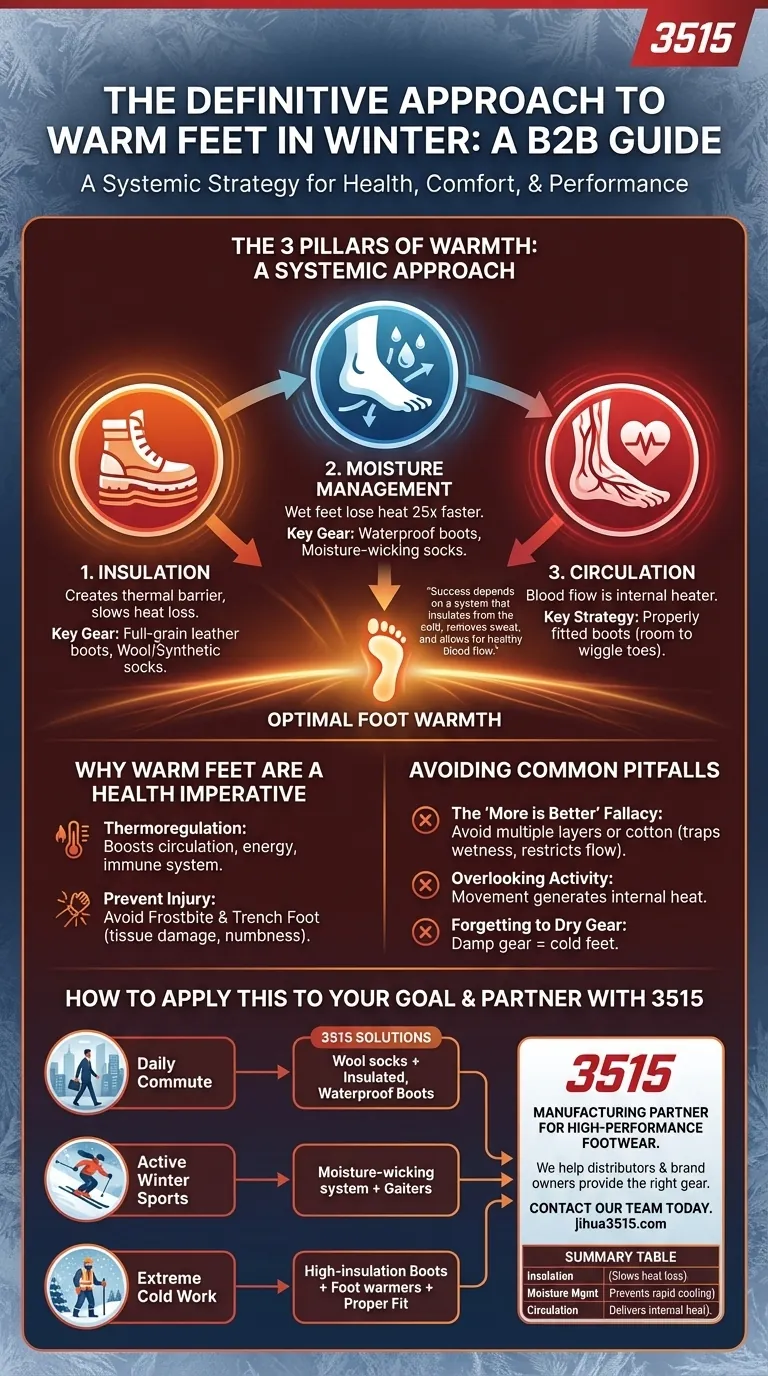
The Three Pillars of Warmth: A Systemic Approach
An effective strategy for warm feet relies on understanding and addressing three interconnected factors. Focusing on just one will likely lead to failure.
Pillar 1: Insulation
Insulation creates a thermal barrier, slowing the rate at which your body heat escapes into the cold environment.
The materials of your boots and socks are your primary insulators. Full-grain leather is an excellent material for boots as it provides natural insulation and durability, while wool or high-performance synthetic socks offer superior warmth compared to cotton.
Pillar 2: Moisture Management
Moisture is the enemy of warmth. Water conducts heat away from your body 25 times faster than air, meaning wet feet will become cold feet, regardless of your insulation.
This moisture can come from external sources like snow and slush, or internally from your own sweat. Waterproof boots protect from the outside, while moisture-wicking socks (like wool or synthetics) pull sweat away from your skin to keep it dry.
Pillar 3: Circulation
Your circulatory system is your body's internal heater, delivering warm blood to your extremities. If this flow is restricted, your feet will get cold no matter how good your socks and boots are.
Proper boot fit is essential. Footwear that is too tight will constrict blood vessels and cut off this vital heat supply. Always ensure you have enough room to wiggle your toes freely.
Understanding the Common Pitfalls
Even with the right gear, common mistakes can undermine your efforts to stay warm. Avoiding these pitfalls is as important as choosing the right equipment.
The "More is Better" Fallacy
Wearing multiple pairs of socks, especially if they are cotton, is often counterproductive. Cotton absorbs and holds moisture, placing a cold, wet layer directly against your skin.
Furthermore, multiple layers can make your boots too tight, which violates the principle of circulation by restricting blood flow. A single, high-quality wicking sock is almost always superior.
Overlooking the Power of Activity
A sedentary position allows cold to set in more quickly. Engaging in simple physical activity, even just wiggling your toes or walking in place, increases blood flow and generates heat from within.
Forgetting to Dry Your Gear
Putting on damp boots or socks from the previous day is a recipe for cold feet. Always ensure your gear has had a chance to dry completely before you wear it again.
How to Apply This to Your Goal
Your specific activity dictates how you should prioritize these principles.
- If your primary focus is daily comfort during a cold commute: A single pair of quality wool socks paired with well-fitting, insulated, and waterproof boots is your most effective solution.
- If your primary focus is active winter sports: Prioritize a moisture-wicking sock system to manage sweat, and consider using gaiters to keep snow out of your boots.
- If your primary focus is stationary work in extreme cold: Select boots with a high insulation rating and supplement your system with aids like chemical foot warmers, ensuring your boots are not too tight.
Ultimately, keeping your feet warm is an achievable goal when you treat it as an integrated system of insulation, moisture control, and circulation.
Summary Table:
| Key Principle | Why It Matters | Key Gear/Strategy |
|---|---|---|
| Insulation | Slows heat loss from your body. | Full-grain leather boots, wool socks. |
| Moisture Management | Wet feet lose heat 25x faster. | Waterproof boots, moisture-wicking socks. |
| Circulation | Blood flow is your body's heater. | Properly fitted boots (room to wiggle toes). |
Ready to Equip Your Customers with the Right Footwear System?
As a large-scale manufacturer, 3515 produces a comprehensive range of high-performance boots and shoes designed around the core principles of warmth, dryness, and comfort. We help distributors, brand owners, and bulk clients provide their customers with the right gear for any winter activity, from daily commutes to extreme cold work environments.
Partner with us to access:
- Durable, Insulating Boots: Crafted from materials like full-grain leather.
- Moisture-Managing Footwear: Designed to keep feet dry and warm.
- Expert Manufacturing: Capabilities for all types of shoes and boots, tailored to your market's needs.
Contact our team today to discuss your manufacturing needs and elevate your winter footwear offerings!
Visual Guide
Related Products
- Premium Insulated Safety Boots and Shoes for Wholesale & Bulk Orders
- Durable Waterproof Rain Boots | Custom Manufacturer for Wholesale & Brands
- Factory Direct Wholesale Rain Boots Durable Waterproof & Fully Customizable
- Wholesale Durable Camouflage Canvas Shoes with High-Traction Cleated Rubber Sole
- Durable Rubber Sole Outdoor Shoes Wholesale & Custom Manufacturing
People Also Ask
- What are the recommended insulation ratings for mild winter conditions? A Guide for Active & Stationary Workers
- How does insulation thickness correlate with temperature ranges? A Guide to Choosing the Right Warmth
- What insulation level is needed for severe cold and stationary work? 1200g or Higher is Essential
- What safety advantages do insulated boots offer beyond warmth? Dielectric Protection & Superior Grip
- How does fleece lining contribute to the warmth of insulated boots? Trapping Air for Superior Cold Protection