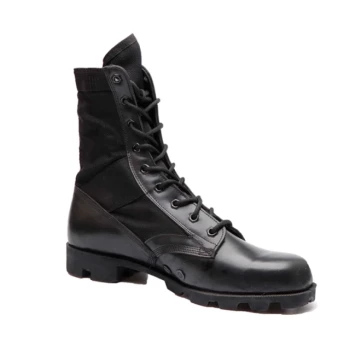
Tactical boots engineer support through a specific combination of structural height and material density. By utilizing a high-cut upper design, they provide rigid ankle stability necessary for navigating uneven ground. Simultaneously, midsoles featuring high-rebound materials actively absorb the repetitive shock of ground impact to preserve energy during extended operations.
The core function of a tactical boot is to act as a biomechanical stabilizer that reduces the accumulation of muscle fatigue. By mitigating ground impact and locking the ankle in place, these boots prevent chronic injuries to the knees and hips that often result from insufficient support.
Biomechanical Stability on Complex Terrain
High-Cut Design for Ankle Locking
The primary mechanism for stability in tactical boots is the high-cut upper. This design physically reinforces the ankle joint, restricting excessive lateral movement.
By effectively locking the foot in place, the boot compensates for insufficient ankle strength. This is critical when navigating steep stairs or irregular topography where gait instability can lead to falls.
Structural Reinforcement via Shanks
Beyond the upper, many tactical boots incorporate built-in support structures such as midsole shanks.
These internal components stiffen the sole, preventing the boot from twisting under load. This ensures that the platform under your foot remains consistent, even when the ground beneath it is shifting or jagged.
Impact Management and Injury Prevention
High-Rebound Energy Absorption
Prolonged standing or moving creates a cumulative physical toll known as impact load. Tactical boots address this with midsoles constructed from high-rebound materials.
These materials compress to absorb the shock of each step, rather than transferring that force up the kinetic chain. This directly reduces the strain placed on leg muscles.
Protecting the Knees and Hips
The long-term value of this impact absorption is the prevention of chronic orthopedic issues.
Insufficient support transfers stress to major joints. By intercepting this stress at the foot, tactical boots mitigate the risk of developing chronic injuries in the knees and hips over a professional's career.
Adaptation to Environmental Hazards
Industrial-Grade Traction
Stability is impossible without connection to the ground. Tactical boots utilize industrial-grade, wear-resistant rubber outsoles with deep tread patterns.
This composition prevents slipping on distinct surfaces, from muddy trails to icy streets. A durable rubber mixture reduces the impact of sharp stones, allowing for confident movement over "non-standard" athletic fields.
Enhanced Risk Perception
There is a psychological component to physical support. When a professional trusts their footwear's grip and puncture resistance, their perception of environmental risk lowers.
This confidence allows the user to shift focus away from navigating hazards. Instead, attention can be fully directed toward physical performance and the mission at hand.
Understanding the Trade-offs: Mobility vs. Protection
While heavy-duty boots offer maximum stability, they introduce weight and rigidity that can hinder performance in certain contexts.
The Weight Penalty
Boots designed for rough, mountainous terrain are often heavier and more durable. While they offer superior protection, they can increase fatigue on flat, smooth paths where a lightweight boot would suffice.
Flexibility Limitations
Highly supportive boots with thick heel counters and puncture-resistant soles can be less flexible. If your operation requires high-speed sprinting on flat concrete, the rigidity required for rocky terrain may become a biomechanical hindrance.
Matching the Boot to the Mission Profile
Selecting the correct footwear requires analyzing your specific operational environment.
- If your primary focus is uneven or rocky terrain: Prioritize boots with firm soles, midsole shanks, and high-cut ankle support to prevent twists and falls.
- If your primary focus is wet or muddy environments: Ensure the boot features deep treads for grip and waterproof construction to maintain foot health.
- If your primary focus is flat, urban patrol: Opt for lightweight boots that reduce mass on the foot to maximize agility and minimize energy expenditure.
True professional support is not about wearing the toughest boot, but wearing the one that best mitigates the specific physical stressors of your environment.
Summary Table:
| Feature | Mechanical Benefit | Professional Value |
|---|---|---|
| High-Cut Upper | Lateral ankle locking | Prevents sprains and falls on uneven ground |
| High-Rebound Midsole | Kinetic shock absorption | Reduces muscle fatigue and protects joints |
| Midsole Shanks | Torsional rigidity | Stabilizes the platform on jagged surfaces |
| Deep-Tread Outsoles | Industrial-grade traction | Ensures slip-resistance on mud, ice, and rock |
| Puncture Resistance | Physical barrier protection | Lowers risk perception and enhances focus |
Partner with a Leading Tactical Footwear Manufacturer
As a large-scale manufacturer serving global distributors and brand owners, 3515 offers comprehensive production capabilities for all footwear types. Our flagship Safety Shoes and Tactical Boots series are engineered to meet the rigorous demands of professional operations on complex terrains.
From work and tactical boots to outdoor, training, and dress shoes, we provide the bulk manufacturing expertise you need to scale your brand. Contact us today to discuss your specific requirements and see how our durable, high-performance designs can add value to your portfolio.
References
- Joel Gomes da Silva, Elamara Marama de Araújo Vieira. Construction of a Musculoskeletal Discomfort Scale for the Lower Limbs of Workers: An Analysis Using the Multigroup Item Response Theory. DOI: 10.3390/ijerph20075307
This article is also based on technical information from 3515 Knowledge Base .
Related Products
- Durable Leather Tactical Boots Wholesale & Custom Manufacturing for Brands
- High-Traction Suede Tactical Boots Wholesale & Custom Manufacturing
- Durable Leather High-Ankle Tactical Boots for Wholesale & Custom Manufacturing
- Durable Mid-Cut Tactical Boots for Wholesale & Private Label
- Wholesale Waterproof Tactical Boots Custom Suede & High-Traction Soles
People Also Ask
- What specialized protections do tactical boots offer? Maximize Endurance with High-Performance Footwear
- What features should law enforcement officers look for in tactical boots? Essential Guide for Safety & Performance
- Importance of Professional Tactical Boots in Loess Gully Regions: Ensure Safety and Precision for Field Monitoring
- What is rucking, and why are tactical boots suitable for it? Discover the Ultimate Footwear for Heavy Loads
- What makes the traction of tactical boots superior? Unlock the Science of Unbeatable Grip