
To put it simply, tactical boots offer excellent weather resistance, but their specific performance depends entirely on the features they are designed with. Most are built to keep your feet dry, comfortable, and protected across a range of conditions, from cold and wet mornings to hot and humid afternoons.
The central takeaway is not whether tactical boots are weather-resistant, but rather understanding that you must match the boot's specific features—like waterproofing, insulation, and breathability—to the climate and conditions you will actually face.
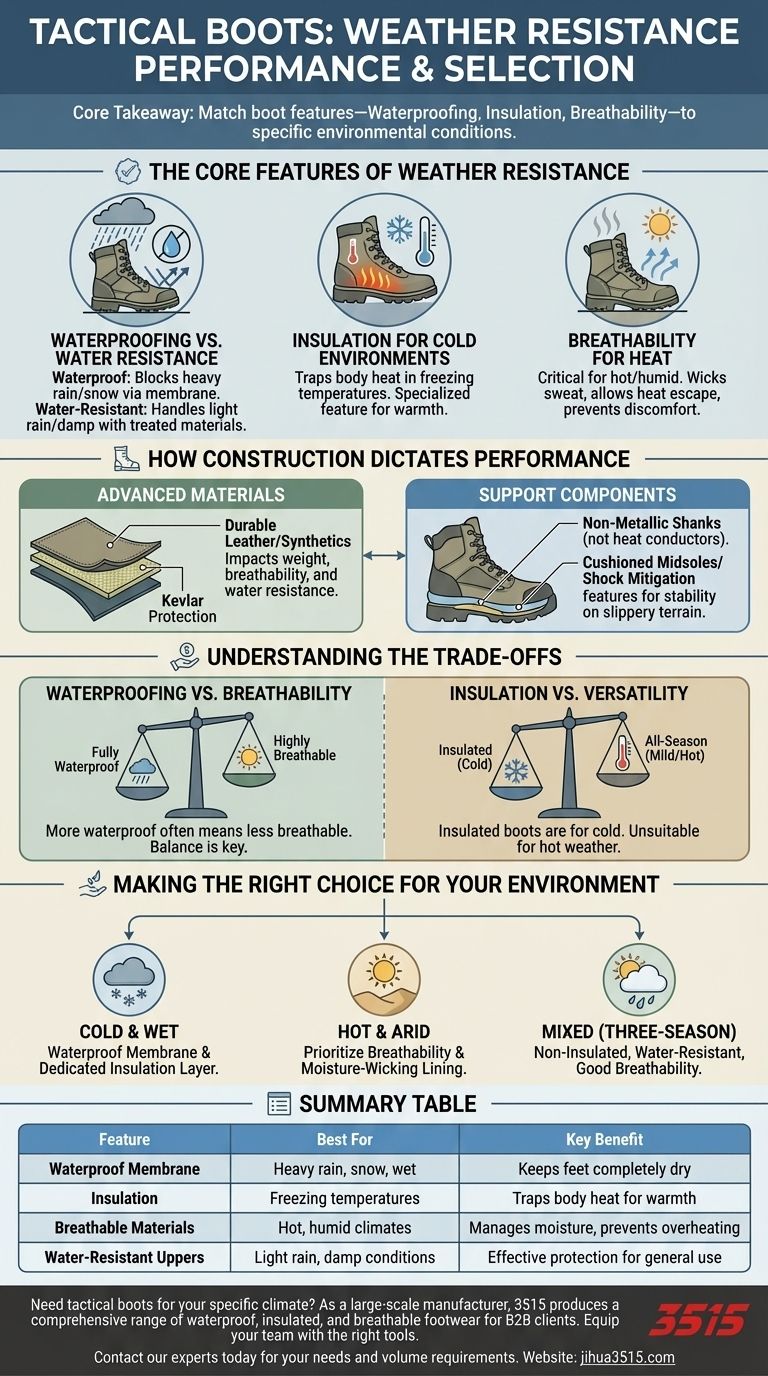
The Core Features of Weather Resistance
Tactical boots are not a monolith; they are specialized tools. Their ability to handle weather is determined by a combination of key technologies and materials designed for specific environments.
### Waterproofing vs. Water Resistance
Many boots use water-resistant materials, such as treated leather, which can handle light rain and damp conditions effectively.
For heavy rain, deep puddles, or snow, you need a truly waterproof boot. These models incorporate a waterproof membrane that physically blocks water from entering while still allowing sweat vapor to escape.
### Insulation for Cold Environments
For cold weather operations, certain tactical boots include a layer of insulation. This material traps body heat, keeping your feet warm in freezing or near-freezing temperatures.
It's crucial to note that insulation is a specialized feature. A non-insulated boot will not provide significant warmth in cold climates, though its materials may not conduct cold as readily as other footwear.
### Breathability for Heat and Moisture Management
In hot or humid conditions, breathability is the most critical feature. These boots use materials and construction techniques, like moisture-wicking linings, to pull sweat away from your skin.
This design allows warm, moist air to escape, which is essential for preventing blisters, discomfort, and fungal infections during strenuous activity.
How Construction Dictates Performance
Beyond the core features, the overall construction of the boot plays a significant role in its all-weather capability.
### The Role of Advanced Materials
Uppers may be constructed from durable leather, lightweight synthetics, or even Kevlar for added protection. The choice of material directly impacts the boot's weight, breathability, and water resistance.
### Specialized Support Components
Features like non-metallic shanks are important because they are not thermal conductors, meaning they won't transfer heat or cold from the ground to your foot.
Cushioned midsoles and shock mitigation systems provide stability and comfort, which are vital for maintaining performance when navigating slippery or uneven terrain in bad weather.
Understanding the Trade-offs
Choosing the right tactical boot is a matter of balancing competing benefits. No single boot is perfect for every possible condition.
### The Waterproofing vs. Breathability Dilemma
This is the most significant trade-off. The more waterproof a boot is, the less breathable it tends to be.
A fully waterproof boot is excellent for a downpour but can feel hot and swampy from sweat during intense activity in a warmer climate. A highly breathable boot is ideal for a desert but will leave you with wet feet in a rainstorm.
### Insulation vs. Versatility
Insulated boots are purpose-built for the cold. Wearing them in mild or hot weather will cause excessive sweating, extreme discomfort, and a higher risk of blisters.
This specialization makes them highly effective in their intended environment but limits their use as an all-season boot.
Making the Right Choice for Your Environment
To select the correct boot, you must first define your primary operating environment.
- If your primary focus is cold and wet climates: You need a boot with a certified waterproof membrane and a dedicated insulation layer.
- If your primary focus is hot and arid climates: Prioritize breathability, lightweight materials, and a superior moisture-wicking lining above all else.
- If your primary focus is mixed, three-season conditions: Look for a non-insulated, water-resistant boot with good breathability to cover the widest range of scenarios.
Ultimately, choosing the right tactical boot means selecting the right tool for the job.
Summary Table:
| Feature | Best For | Key Benefit |
|---|---|---|
| Waterproof Membrane | Heavy rain, snow, wet conditions | Keeps feet completely dry |
| Insulation | Freezing or near-freezing temperatures | Traps body heat for warmth |
| Breathable Materials | Hot, humid climates, intense activity | Manages moisture, prevents overheating |
| Water-Resistant Uppers | Light rain, damp conditions | Effective protection for general use |
Need tactical boots built for your specific climate?
As a large-scale manufacturer, 3515 produces a comprehensive range of tactical footwear for distributors, brand owners, and bulk clients. Our production capabilities encompass all types of waterproof, insulated, and breathable boots designed to perform in any environment.
Let us help you equip your team with the right tools for the job. Contact our experts today to discuss your specific needs and volume requirements.
Visual Guide
Related Products
- Durable Leather Tactical Boots Wholesale & Custom Manufacturing for Brands
- High-Traction Suede Tactical Boots Wholesale & Custom Manufacturing
- Durable Leather High-Ankle Tactical Boots for Wholesale & Custom Manufacturing
- Wholesale Waterproof Tactical Boots Custom Suede & High-Traction Soles
- Durable Mid-Cut Tactical Boots for Wholesale & Private Label
People Also Ask
- What specialized protections do tactical boots offer? Maximize Endurance with High-Performance Footwear
- What features should law enforcement officers look for in tactical boots? Essential Guide for Safety & Performance
- Importance of Professional Tactical Boots in Loess Gully Regions: Ensure Safety and Precision for Field Monitoring
- What is rucking, and why are tactical boots suitable for it? Discover the Ultimate Footwear for Heavy Loads
- What makes the traction of tactical boots superior? Unlock the Science of Unbeatable Grip















