Quiet materials in hunting boots enhance stealth by minimizing two distinct types of sound: the high-frequency rustle of contact with the environment and the sharp, artificial clink of hardware. Soft-faced fabrics and leathers absorb sound waves when brushing against vegetation, while non-metallic components eliminate the unnatural noises that instantly alert game to a hunter's presence.
The ultimate goal of a quiet boot is not silence, but acoustic camouflage. The right materials and design allow your movements to produce softer, lower-frequency sounds that blend into the natural environment, rather than the sharp, distinct noises that signal danger to wildlife.
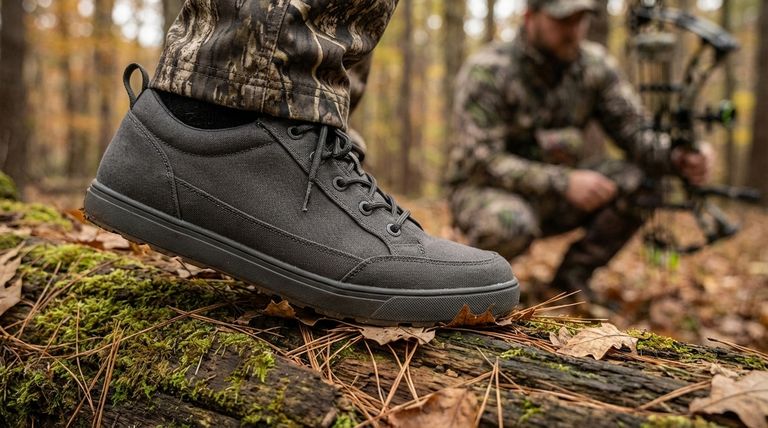
The Two Pillars of Acoustic Stealth in Footwear
A boot's acoustic signature is determined by two primary factors: how it interacts with the world around it and the sounds it generates internally. Truly stealthy footwear must address both.
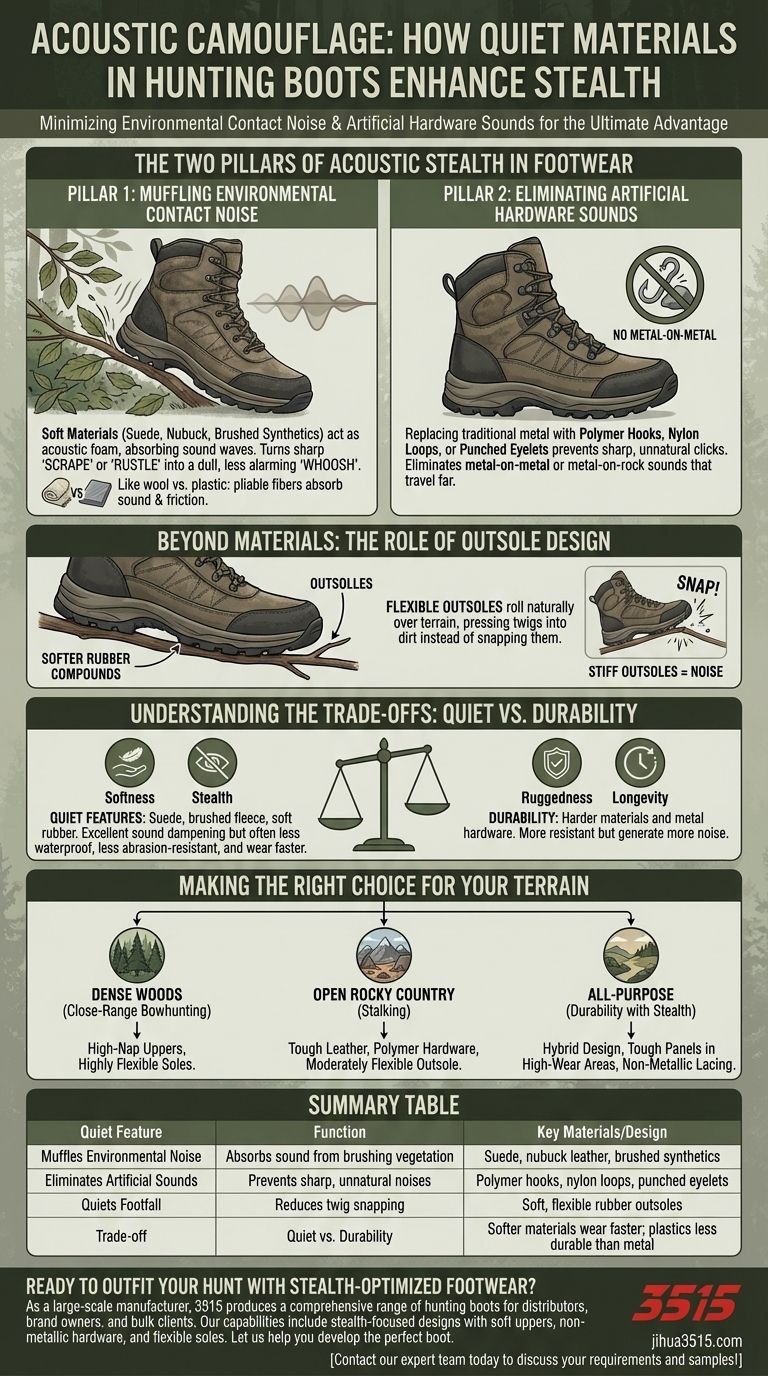
Pillar 1: Muffling Environmental Contact Noise
The most frequent noise a hunter makes comes from their boots brushing against leaves, branches, and rocks.
The material on the boot's upper is the first line of defense. Soft materials like suede, nubuck leather, or brushed synthetic fabrics have a textured, non-reflective surface.
This texture acts like acoustic foam, trapping and deadening sound waves rather than reflecting them. This turns a sharp scrape or rustle into a much duller, less alarming whoosh.
Think of the difference between dragging a plastic tarp through the woods versus a wool blanket. The blanket's soft, pliable fibers absorb sound and friction, making it significantly quieter.
Pillar 2: Eliminating Artificial Hardware Sounds
Animals are highly attuned to sounds that do not belong in their environment. The sharp, metallic click of a lacing hook hitting a rock is an unnatural sound that travels far.
Stealth-focused boots systematically remove this liability. They replace traditional metal hardware, such as eyelets and speed hooks, with quieter alternatives.
These alternatives include molded polymer hooks, nylon loops, or simple punched eyelets directly in the leather. This design choice eliminates the possibility of metal-on-metal or metal-on-rock sounds that can betray a hunter's position from a great distance.
Beyond Materials: The Role of Outsole Design
The quietest upper is useless if the sole of the boot announces every step. The design and composition of the outsole play a massive role in sound discipline.
The Sound of Your Footfall
A stiff, hard outsole will loudly snap every twig it lands on. It lacks the flexibility to conform to the ground.
Quieter boots use softer rubber compounds in their outsoles. This allows the boot to roll more naturally over uneven terrain and press a twig into the dirt rather than snapping it.
This flexibility provides a better "feel" for the ground beneath your feet, allowing you to sense and avoid noisy obstacles like loose rocks or dry sticks before putting your full weight down.
Understanding the Trade-offs: Quiet vs. Durability
Designing the perfect hunting boot is a balancing act. The features that make a boot exceptionally quiet often come at the expense of ruggedness.
The Softness Dilemma
The softest and quietest materials, like brushed fleece or suede, are inherently less waterproof and less resistant to abrasion. They can be easily torn by thorns or worn down by abrasive rock.
The Hardware Compromise
While polymer and nylon lacing systems are much quieter, they are generally less durable than metal. In extremely cold conditions, some plastics can become brittle and crack under the stress of tightly cinched laces.
The Outsole Balance
Softer rubber outsoles provide a stealthier footfall but will wear down significantly faster than harder, more durable compounds, especially if used frequently on rocky or paved surfaces.
Making the Right Choice for Your Terrain
Your ideal boot depends entirely on your specific hunting environment and style.
- If your primary focus is close-range bowhunting in dense woods: Prioritize boots with exceptionally soft, high-nap uppers and highly flexible soles to minimize noise from leaves and twigs.
- If your primary focus is stalking in open, rocky country: Balance quiet features with durability by choosing tough leather boots that use polymer hardware and a moderately flexible outsole.
- If your primary focus is all-purpose durability with some stealth: Look for a hybrid design with tough panels in high-wear areas and softer materials elsewhere, paired with a reliable non-metallic lacing system.
Ultimately, the quietest boot is the one that best matches your environment, allowing your presence to merge seamlessly with the natural world.
Summary Table:
| Quiet Feature | Function | Key Materials/Design |
|---|---|---|
| Muffles Environmental Noise | Absorbs sound from brushing vegetation | Suede, nubuck leather, brushed synthetics |
| Eliminates Artificial Sounds | Prevents sharp, unnatural noises | Polymer hooks, nylon loops, punched eyelets |
| Quiets Footfall | Reduces twig snapping | Soft, flexible rubber outsoles |
| Trade-off | Quiet vs. Durability | Softer materials wear faster; plastics less durable than metal |
Ready to Outfit Your Hunt with Stealth-Optimized Footwear?
As a large-scale manufacturer, 3515 produces a comprehensive range of hunting boots for distributors, brand owners, and bulk clients. Our production capabilities encompass all types of boots, including models designed specifically for acoustic stealth with soft uppers, non-metallic hardware, and flexible soles.
Let us help you develop or source the perfect boot to give hunters the ultimate advantage in the field.
Contact our expert team today to discuss your requirements and samples!
Visual Guide
Related Products
- Wholesale Durable Mid-Cut Tactical Boots for Custom & Private Label Brands
- Durable Mid-Cut Tactical Boots for Wholesale & Private Label
- Wholesale Lightweight Tactical Boots Custom Manufacturer for Desert & Combat Use
- Durable Spiked Camouflage Boots Wholesale & Factory Production
- Wholesale Lightweight Tactical Boots with Dial Closure OEM & Bulk Orders
People Also Ask
- What are some key features of top-tier tactical boots for 2023? Find the Perfect Boot for Your Mission
- Can tactical boots be stylish for everyday wear? Yes, with the right styling and features.
- How does the extended self theory explain high-value footwear? Build Your Professional Identity and Status
- What are the general characteristics of tactical boots? Lightweight, Agile Footwear for Professionals
- What are the weight and mobility differences between combat and tactical boots? Choose the Right Boot for Your Mission