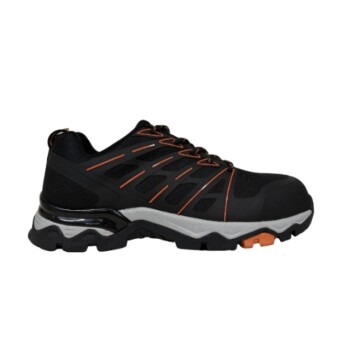
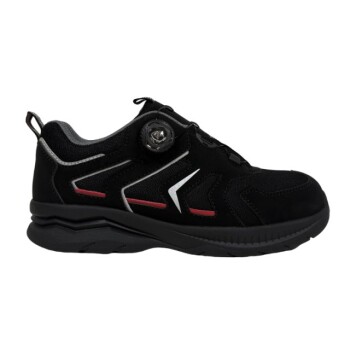
Professional-grade safety shoes function as a critical mechanical interface within the industrial exoskeleton ecosystem, acting as more than just personal protective equipment (PPE). Beyond protecting the foot, the rigid construction of these shoes provides a stable baseline for foot pressure sensors, which is essential for the exoskeleton to accurately interpret user movement and load distribution.
The integration of professional safety shoes is not merely about compliance; it is a functional requirement for high-end robotics. The shoe’s rigid sole enables precise gait recognition by stabilizing pressure sensors, allowing the exoskeleton to adapt to complex industrial terrains.
The Role of Rigidity in Sensor Accuracy
Stabilizing Foot Pressure Sensors
For a load-bearing exoskeleton to function correctly, it must understand the user's intent. This is achieved through foot pressure sensors placed beneath the foot.
If a worker wears soft-soled shoes, the cushioning absorbs and distorts the pressure data. Professional safety shoes feature rigid soles that provide a hard, consistent surface, ensuring sensors capture clear, unadulterated signals.
Enabling Precise Gait Recognition
Exoskeletons rely on algorithms to calculate the user's center of gravity. Accurate data is required to distinguish between standing, lifting, or walking.
The stability provided by professional-grade footwear ensures that gait recognition systems function reliably. This allows the machine to synchronize its movements with the human, even on uneven or debris-strewn industrial floors.
Dual-Layer Protection Strategy
The "Anti-Smash" Function
In environments like construction and logistics, lower-limb exoskeletons assist with lifting, but they do not inherently cover the foot.
Safety shoes complete the protective envelope by providing anti-smash capabilities. This ensures that while the exoskeleton relieves strain on the back and legs, the feet remain protected from falling heavy objects such as timber or furniture components.
Mitigation of Puncture Risks
Industrial floors are often hazardous, containing sharp objects like nails, wood splinters, or metal scraps.
Professional safety shoes utilize reinforced soles to provide anti-puncture functions. This protects the worker from injury and prevents damage to any delicate sensor arrays located at the bottom of the exoskeleton assembly.
Understanding the Trade-offs
Sensitivity vs. Protection
While rigid soles are excellent for sensor data integrity, they reduce the worker's own tactile feedback from the ground.
Operators may feel less "connected" to the surface they are walking on. This requires the exoskeleton’s control system to be highly responsive to compensate for the loss of natural proprioception.
System Weight and Fatigue
Adding heavy-duty safety footwear to a load-bearing exoskeleton increases the total weight on the user's legs.
While the exoskeleton carries the external load, the weight of the boot is often moved by the user's muscles during the swing phase of walking. This can contribute to specific types of fatigue if the system is not perfectly calibrated to assist leg swing.
Making the Right Choice for Your Goal
To maximize the efficiency of an industrial exoskeleton, you must select footwear that complements the machine's specific sensing technology.
- If your primary focus is Sensor Precision: Prioritize shoes with extremely rigid outsoles to minimize signal noise in the foot pressure sensors.
- If your primary focus is Environmental Safety: Prioritize boots with maximum anti-puncture and anti-slip ratings to handle complex floor hazards like sawdust or sharp debris.
The synergy between the shoe and the machine is the deciding factor in whether an exoskeleton feels like a tool or a burden.
Summary Table:
| Functional Aspect | Contribution of Professional Safety Shoes | Benefit to Exoskeleton System |
|---|---|---|
| Sensor Accuracy | Rigid soles provide a stable, hard surface | Prevents signal distortion for foot pressure sensors |
| Gait Recognition | Maintains consistent center of gravity data | Enables precise synchronization between machine and user |
| Physical Protection | Anti-smash and anti-puncture materials | Protects the user's feet and delicate exoskeleton sensor arrays |
| Terrain Adaptation | Stabilized foot interface | Allows for safer navigation across uneven or hazardous industrial floors |
Elevate Your Industrial Safety and Performance with 3515
As a large-scale manufacturer serving global distributors and brand owners, 3515 offers comprehensive production capabilities for all footwear types. Our flagship Safety Shoes series is engineered to integrate seamlessly with advanced technologies like industrial exoskeletons, providing the rigid stability and heavy-duty protection required for high-end robotics applications.
From work and tactical boots to training shoes and sneakers, our extensive portfolio meets diverse bulk requirements with uncompromising quality. Contact us today to discover how our specialized footwear solutions can enhance your product lineup and protect your workforce.
References
- Shuang Qiu, Zhiyong Tang. Systematic Review on Wearable Lower Extremity Robotic Exoskeletons for Assisted Locomotion. DOI: 10.1007/s42235-022-00289-8
This article is also based on technical information from 3515 Knowledge Base .
Related Products
- Premium Suede Sport Safety Shoes for Wholesale & Bulk Orders
- Premium Lightweight Safety Shoes for Wholesale & Bulk Orders
- Wholesale Anti-Smash & Puncture-Proof Safety Shoes Custom Manufacturing for Brands
- Premium KPU Injection Athletic Style Safety Shoes
- Premium Safety Shoes with Rotating Buckle Safety Sneakers
People Also Ask
- What industries have specific OSHA footwear requirements? Ensure Compliance & Protect Your Workforce
- What are the primary functions of professional safety shoes? Maximize Safety in Water Supply Confined Spaces
- What role do specialized safety shoes play in preventing falls? Engineering Stability in Industrial Environments
- Why wear protective masks, gloves, and safety shoes in 5S Shine? Elevate Safety and Discipline
- What happens during the cutting stage of safety shoes manufacturing? Precision, Process & Quality