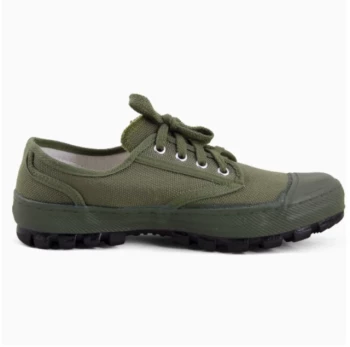
To ensure a secure fit, manufacturers of light work boots combine robust construction techniques with intelligent anatomical design. They use high-quality stitching and advanced lacing systems to hold the boot's structure, while incorporating features like padded collars and well-shaped toe boxes to create a comfortable and stable internal environment for your foot.
The manufacturer builds the foundation for a secure fit through careful design and construction, but the final, perfect fit is achieved through the user's personal adjustments, including proper lacing, sock choice, and potential use of custom insoles.

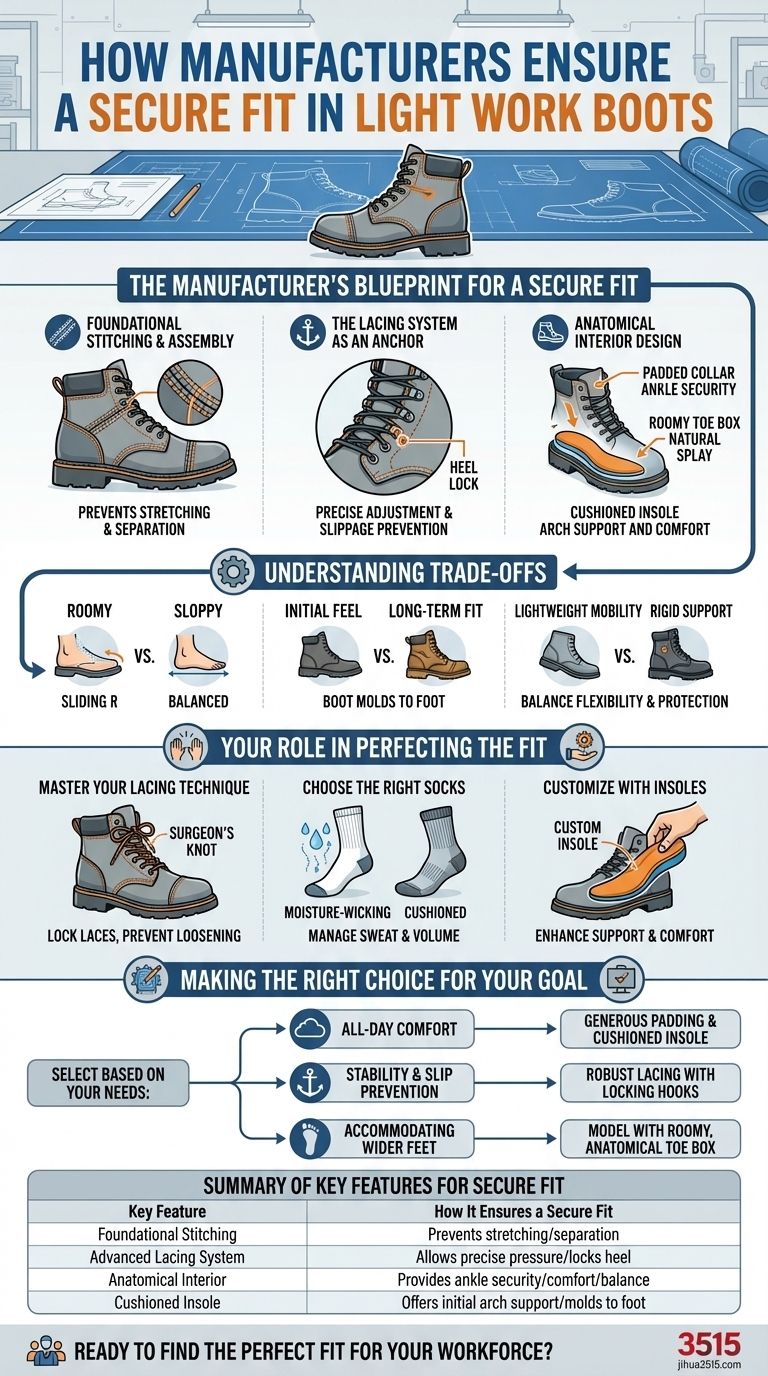
The Manufacturer's Blueprint for a Secure Fit
A truly secure boot is not just tight; it's engineered to work with the anatomy of your foot. Manufacturers focus on several key areas to build this foundation.
Foundational Stitching and Assembly
High-quality stitching is the first step. It ensures that all components of the boot—from the upper to the sole—are held together securely, preventing unwanted stretching or separation that can lead to a loose fit over time.
The Lacing System as an Anchor
The lacing system is the primary tool for adjusting fit. Manufacturers incorporate durable eyelets and often speed hooks near the top of the boot. This allows you to apply precise, even pressure across the top of your foot and lock your heel into the back of the boot, which is critical for preventing slippage and blisters.
Anatomical Interior Design
Modern boots are designed from the inside out. A padded collar provides comfort and helps secure the ankle. A roomy toe box allows your toes to splay naturally for better balance, while a well-designed cushioned insole provides initial arch support and comfort.
Understanding the Trade-offs
Achieving a secure fit involves balancing competing factors. Understanding these trade-offs is key to selecting the right boot and setting realistic expectations.
Roomy vs. Sloppy
A roomy toe box is essential for comfort, but too much volume can cause your foot to slide internally. This creates friction, instability, and a sloppy feel that compromises safety and control.
Initial Feel vs. Long-Term Fit
Even the best-made boots require a break-in period. The materials will mold to your foot over time, meaning the fit you feel in the store will almost certainly change. A boot that feels slightly snug initially will often become the perfect fit.
Lightweight Mobility vs. Rigid Support
Light work boots are valued for their comfort and flexibility. This is often achieved by using less rigid materials. The trade-off is a reduction in the heavy-duty support and protection found in more robust, heavier boots.
Your Role in Perfecting the Fit
The manufacturer provides the template, but you are responsible for the final adjustments. How you wear the boot is just as important as how it was made.
Master Your Lacing Technique
Simply pulling your laces tight isn't enough. Learning techniques like a "surgeon's knot" can lock the laces at the ankle, preventing them from loosening throughout the day and keeping your heel firmly in place.
Choose the Right Socks
The right socks are a critical interface between your foot and the boot. Moisture-wicking socks prevent the sweat and friction that lead to blisters. Cushioned socks can take up excess volume in a boot that is slightly too large, improving the overall fit.
Customize with Insoles
The factory insole provides a basic level of comfort. For those needing enhanced arch support or a more customized fit, replacing it with an aftermarket or custom insole can dramatically improve comfort and stability.
Making the Right Choice for Your Goal
Select a boot based on its features and how they align with your specific needs on the job.
- If your primary focus is all-day comfort: Look for boots with generously padded collars and high-quality cushioned insoles.
- If your primary focus is stability and preventing slippage: Choose a boot with a robust lacing system that includes locking hooks near the ankle.
- If your primary focus is accommodating wider feet: Prioritize models explicitly designed with a roomy, anatomical toe box.
Ultimately, a secure fit is a partnership between the manufacturer's design and your personal customization.
Summary Table:
| Key Feature | How It Ensures a Secure Fit |
|---|---|
| Foundational Stitching | Prevents stretching and separation for long-term structural integrity. |
| Advanced Lacing System | Allows precise pressure adjustment to lock the heel and prevent slippage. |
| Anatomical Interior (Padded Collar, Roomy Toe Box) | Provides ankle security, comfort, and natural toe splay for better balance. |
| Cushioned Insole | Offers initial arch support and comfort, molding to the foot over time. |
Ready to find the perfect fit for your workforce?
As a large-scale manufacturer, 3515 produces a comprehensive range of footwear for distributors, brand owners, and bulk clients. Our production capabilities encompass all types of shoes and boots, including light work boots engineered with the precise stitching, lacing systems, and anatomical designs detailed above to ensure superior comfort, stability, and safety for your end-users.
Let's discuss your specific needs and how our manufacturing expertise can deliver the secure, high-quality boots your customers demand. Contact our team today for a consultation.
Visual Guide
Related Products
- Lightweight Breathable Training Shoes for Wholesale & Custom OEM Manufacturing
- Durable Leather Work Boots for Wholesale & Custom Manufacturing
- Durable Leather Work Boots for Wholesale & Custom OEM Manufacturing
- Wholesale Lightweight Tactical Boots with Dial Closure OEM & Bulk Orders
- Durable Leather Work Boots Wholesale Manufacturer & Custom Factory
People Also Ask
- Why are lightweight training shoes often preferred over professional hiking boots in urban walking? Maximize City Comfort
- What is the primary role of specialized training or orthopedic shoes? Enhance Safety in Elderly Balance Training
- Why are professional-grade training shoes essential for physical therapy? Ensure Patient Safety and Gait Stability
- Why are the slip-resistance and stability performance of training shoes critical in gait analysis? Ensure Data Accuracy
- Why is the use of flat-soled or professional training shoes essential for WBV? Maximize Vibration Energy Transfer