The short answer is that lightweight work shoes reduce pressure on your feet through a combination of modern materials and intelligent design. They use advanced foam composites to decrease the overall weight you lift with each step and incorporate specialized cushioning and insole technology to absorb the shock of impact.
The core principle is a two-part solution: reducing the repetitive energy you expend lifting your feet and simultaneously dissipating the impact forces when your feet hit the ground. This combination significantly lowers the cumulative strain on your feet, knees, and joints over a long workday.
The Physics of a Lighter Step
To understand the benefit, you must think about the cumulative effect of walking over an entire shift. A small reduction in weight has a massive impact when multiplied by thousands of steps.
Reducing the Repetitive Load
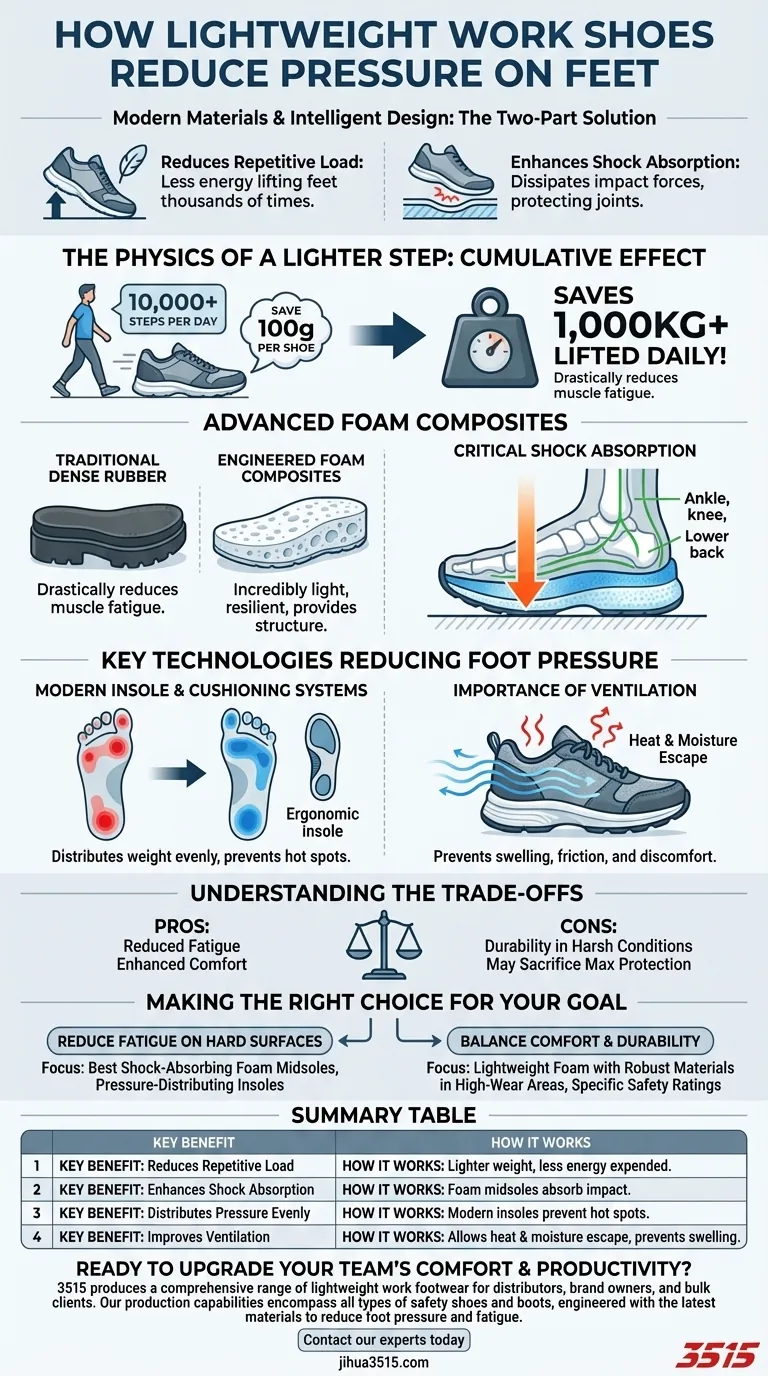
Even a reduction of 100 grams per shoe may seem minor. However, if you take 10,000 steps in a day, you are saving your body from lifting a cumulative 1,000 kilograms (or over 2,200 pounds) of weight. This drastically reduces muscle fatigue.
Advanced Foam Composites
Modern work shoes achieve this weight reduction by replacing heavy, dense rubber with engineered foam composites. These materials are specifically designed to be both incredibly light and resilient, providing structure without the penalty of traditional weight.
The Critical Role of Shock Absorption
Every time your foot strikes the ground, an impact force travels up through your body. Lightweight shoes use advanced cushioning and foam midsoles to absorb and dissipate a significant portion of this shock, protecting your ankles, knees, and even your lower back.
Key Technologies That Reduce Foot Pressure
Beyond simply being lighter, these shoes incorporate specific features designed to enhance comfort and reduce strain.
Modern Insole and Cushioning Systems
Newer insole technologies are engineered to distribute your body weight more evenly across the entire surface of your foot. This prevents the formation of high-pressure "hot spots" on the heel and ball of the foot, which are common sources of pain.
The Importance of Ventilation
While not a direct mechanical feature, superior ventilation plays a crucial role. By allowing heat and moisture to escape, it prevents feet from swelling. Swollen feet can create immense pressure inside a shoe, leading to friction, blisters, and overall discomfort.
Understanding the Trade-offs
While highly effective for reducing fatigue, lightweight shoes are not the perfect solution for every single work environment. Objectivity requires acknowledging their potential limitations.
Durability vs. Weight
The advanced foams that make shoes light can sometimes be less resistant to abrasion and wear than traditional dense rubber and leather. In extremely harsh environments with sharp or abrasive surfaces, a heavier, more robust boot may be a necessary trade-off for longevity.
Protection Level Considerations
Always match the shoe to the specific hazards of your job. While many lightweight shoes feature composite safety toes and meet industry standards, some ultra-light models may prioritize comfort over maximum impact or puncture protection found in heavy-duty boots.
Making the Right Choice for Your Goal
Select your footwear based on the primary demands of your workday.
- If your primary focus is reducing fatigue on hard, flat surfaces: Prioritize shoes with the best shock-absorbing foam midsoles and advanced pressure-distributing insoles.
- If your primary focus is balancing comfort with all-around durability: Look for a shoe that combines lightweight foam cushioning with more robust materials in high-wear areas and ensure it has the specific safety ratings your job requires.
Ultimately, investing in the right lightweight footwear is a direct investment in your daily comfort and long-term joint health.
Summary Table:
| Key Benefit | How It Works |
|---|---|
| Reduces Repetitive Load | Lighter weight means less energy expended lifting your feet thousands of times per day. |
| Enhances Shock Absorption | Advanced foam midsoles absorb impact forces, protecting ankles, knees, and back. |
| Distributes Pressure Evenly | Modern insoles prevent high-pressure 'hot spots' on the heel and ball of the foot. |
| Improves Ventilation | Reduces foot swelling and discomfort by allowing heat and moisture to escape. |
Ready to upgrade your team's comfort and productivity?
As a large-scale manufacturer, 3515 produces a comprehensive range of lightweight work footwear for distributors, brand owners, and bulk clients. Our production capabilities encompass all types of safety shoes and boots, engineered with the latest materials to reduce foot pressure and fatigue.
We can help you provide superior comfort that boosts morale and reduces fatigue-related issues.
Contact our experts today to discuss your specific needs and explore our catalog.
Visual Guide
Related Products
- Lightweight Breathable Training Shoes for Wholesale & Custom OEM Manufacturing
- Premium Lightweight Safety Shoes for Wholesale & Bulk Orders
- Lightweight Breathable Sneakers with Wet-Traction Grip for Wholesale & Private Label
- Wholesale Lightweight Cushioned Athletic Sneakers for Custom Bulk Production
- Wholesale Lightweight Tactical Boots with Dial Closure OEM & Bulk Orders
People Also Ask
- Why are lightweight training shoes often preferred over professional hiking boots in urban walking? Maximize City Comfort
- What is the primary role of specialized training or orthopedic shoes? Enhance Safety in Elderly Balance Training
- Why are professional-grade training shoes essential for physical therapy? Ensure Patient Safety and Gait Stability
- Why are the slip-resistance and stability performance of training shoes critical in gait analysis? Ensure Data Accuracy
- Why is the use of flat-soled or professional training shoes essential for WBV? Maximize Vibration Energy Transfer