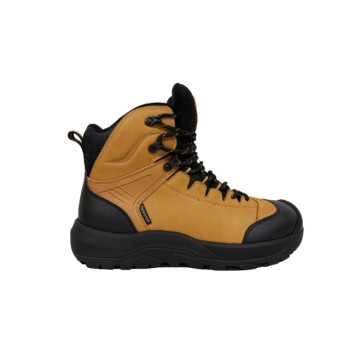
The short answer is: insulated boots help control moisture primarily by using liner materials that wick sweat away from your skin. This is a critical function that prevents the rapid heat loss that occurs when moisture cools, ensuring the insulation can do its job of keeping you warm.
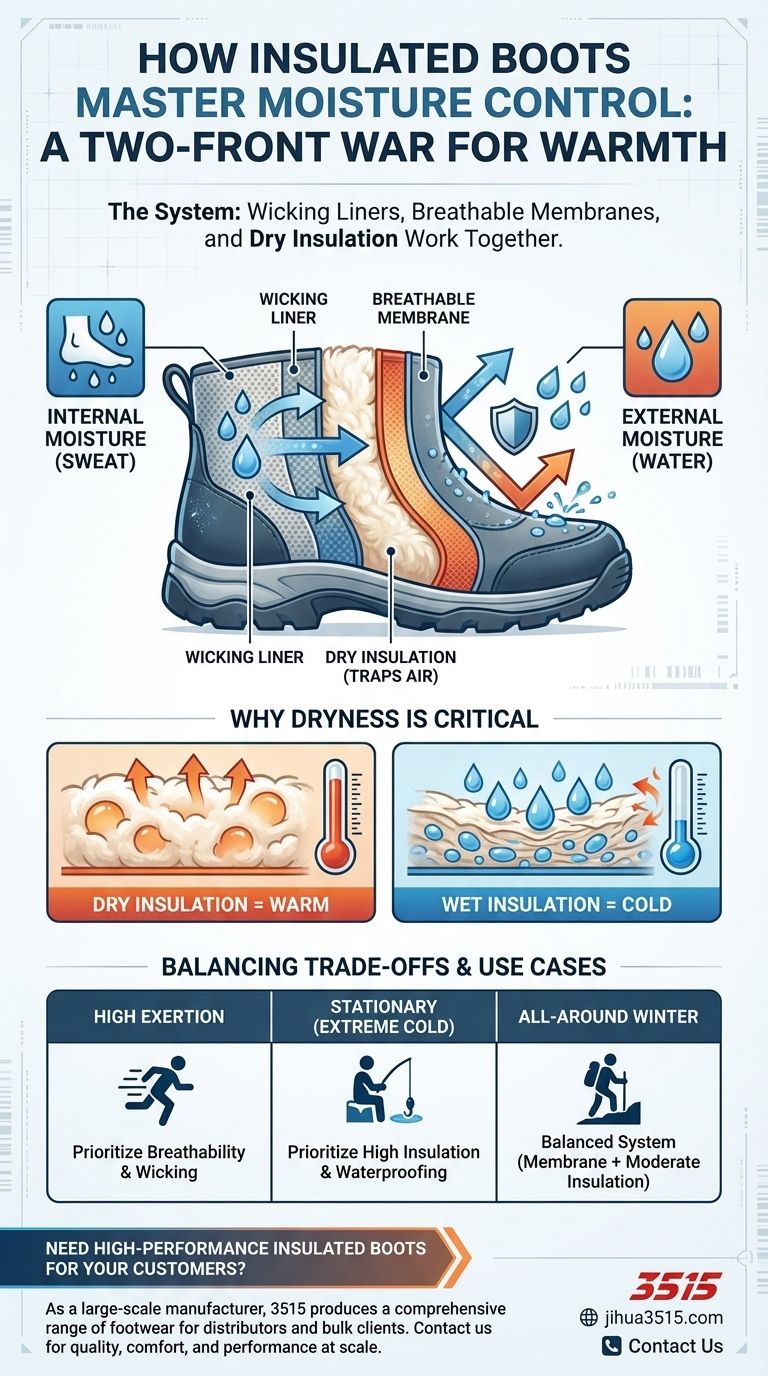
The core principle to understand is that moisture is the enemy of warmth. Insulated boots manage moisture not as a single feature, but as a system where wicking liners, breathable membranes, and the insulation itself work together to keep your feet dry from both internal sweat and external water.
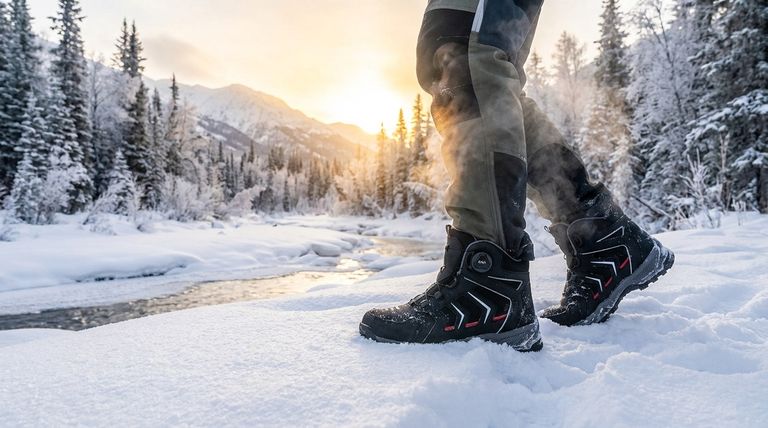
The Two-Front War Against Moisture
To be effective, an insulated boot must fight a battle against moisture on two fronts: sweat generated from inside the boot and water attempting to get in from the outside. A failure on either front will compromise the insulation and leave you with cold, wet feet.
How Boots Manage Internal Moisture (Sweat)
The most immediate threat to your warmth is often your own sweat. The boot's internal design is built to combat this.
The primary mechanism for this is wicking. Liners made from synthetic materials or wool are designed to pull moisture away from your skin and spread it across a larger surface area, allowing it to evaporate more easily.
This process is crucial because it prevents the insulation from becoming saturated with sweat.
Why Dryness Is Critical for Insulation
Insulation works by trapping a layer of air, which is a poor conductor of heat. This trapped air slows the rate at which your body heat escapes into the cold environment.
Water, however, is an excellent conductor of heat—it pulls heat away from your body about 25 times faster than air.
When insulation gets wet, the water displaces the trapped air. Instead of a warm air barrier, you now have a cold, wet conductor pressed against your foot, actively accelerating heat loss and defeating the entire purpose of the boot.
The Role of Breathable Membranes
Many modern insulated boots incorporate a waterproof-breathable membrane, such as GORE-TEX.
This is a specialized layer with pores small enough to block liquid water molecules from entering, but large enough to allow water vapor (sweat) to escape. This technology allows the boot to "exhale" sweat vapor, actively moving moisture out of the system entirely.
Understanding the Trade-offs
Choosing the right insulated boot involves balancing competing priorities. No single boot is perfect for every situation.
Breathability vs. Waterproofing
There is often a trade-off between how breathable a boot is and how waterproof it is.
A completely sealed, rubber boot is 100% waterproof but has zero breathability, meaning all sweat is trapped inside. A highly breathable boot may be more susceptible to letting external water in over time.
The Critical Importance of Socks
The moisture management system of your boots is only as good as your socks.
Wearing cotton socks will completely undermine the wicking properties of your boot's liner. Cotton absorbs and holds moisture, keeping a wet layer directly against your skin. Always choose wool or synthetic socks that are designed to wick moisture.
Insulation Level and Your Activity
A common mistake is choosing a boot that is too warm for your activity level.
If you are highly active (e.g., snowshoeing or winter hiking), a boot with extreme insulation will cause your feet to sweat excessively. This can overwhelm the boot's ability to manage moisture, leaving your feet wet and prone to getting cold when you stop moving.
Making the Right Choice for Your Goal
Select your boots based on how you will use them, paying close attention to the moisture management system.
- If your primary focus is high-exertion activity: Prioritize boots with excellent breathability and proven wicking liners to manage the heavy sweat output.
- If your primary focus is stationary activity in extreme cold (e.g., ice fishing): Prioritize a high insulation value and a robust waterproof shell, as preventing heat loss and external moisture intrusion are the main challenges.
- If your primary focus is all-around winter use: Look for a balanced boot with a reliable waterproof-breathable membrane and a moderate level of insulation.
Understanding how your boots manage moisture empowers you to select the right system for your needs, ensuring your feet stay warm and dry.
Summary Table:
| Moisture Control Feature | How It Works | Key Benefit |
|---|---|---|
| Wicking Liners | Pulls sweat away from skin to a larger surface area for evaporation. | Prevents insulation from getting wet and losing effectiveness. |
| Breathable Membranes | Allows sweat vapor to escape while blocking external liquid water. | Actively removes internal moisture to keep feet dry. |
| Insulation Itself | Traps dry air to slow heat loss; fails when wet. | Highlights the critical need to keep the boot's interior dry. |
Need high-performance insulated boots for your customers?
As a large-scale manufacturer, 3515 produces a comprehensive range of footwear for distributors, brand owners, and bulk clients. Our production capabilities encompass all types of insulated boots designed with advanced moisture-wicking liners and breathable membranes to ensure superior warmth and dryness.
Contact us today to discuss your specific needs and discover how we can deliver quality, comfort, and performance at scale.
Visual Guide
Related Products
- Premium Insulated Safety Boots and Shoes for Wholesale & Bulk Orders
- High Performance Fire-Retardant Waterproof Safety Boots
- Premium Wholesale Waterproof Safety Boots High Performance Protection for Industrial Markets
- Factory Direct Wholesale Rain Boots Durable Waterproof & Fully Customizable
- Wholesale Waterproof Tactical Boots Custom Suede & High-Traction Soles
People Also Ask
- What are the recommended insulation ratings for mild winter conditions? A Guide for Active & Stationary Workers
- How does insulation thickness correlate with temperature ranges? A Guide to Choosing the Right Warmth
- What insulation level is needed for severe cold and stationary work? 1200g or Higher is Essential
- What safety advantages do insulated boots offer beyond warmth? Dielectric Protection & Superior Grip
- How does fleece lining contribute to the warmth of insulated boots? Trapping Air for Superior Cold Protection