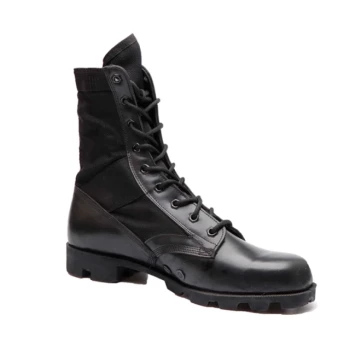
High-performance footwear secures your footing through a critical combination of aggressive traction and structural reinforcement. Specifically, these boots utilize high-abrasion, deep-lug outsoles paired with rigid ankle support to maintain lateral stability and prevent slippage on complex, uneven surfaces.
Core Takeaway Protection on uneven terrain is not just about shielding the foot from impact; it is about biomechanical control. By interlocking with the ground via deep treads and stabilizing the ankle joint against lateral movement, specialized footwear converts unstable surfaces into a secure platform, preventing acute injuries like sprains and reducing chronic fatigue.
The Mechanics of Traction and Stability
Deep-Lug Outsole Architecture
The primary line of defense is the outsole, which must feature deep-tread patterns and high-abrasion materials. These lugs dig into loose soil or gravel to maximize friction, ensuring sufficient ground contact even on rocky or slippery terrain.
Lateral Ankle Support
To counteract the risk of ankle rollovers on irregular ground, these boots incorporate reinforced ankle support systems. This structural rigidity restricts excessive lateral movement, preventing sprains when weight is shifted unexpectedly due to buckled pavement or tree roots.
Impact Shielding
Uneven terrain often conceals hazards like sharp stones, protruding roots, or raised tiles. High-performance boots feature reinforced toe protection zones and thick, wear-resistant soles to shield the foot from direct collisions and the discomfort of stepping on sharp objects.
Reducing Physiological Strain
Shock Absorption and Energy Return
In high-intensity environments, the physical toll on the body is significant. Advanced footwear utilizes specialized cushioning materials to absorb shock and provide energy return, protecting the skeletal system during high-load activities like running or climbing.
Musculoskeletal Alignment
Stability affects more than just the feet; it impacts the entire body. Features like arch support and superior grip provide a stable foundation that reduces lower limb muscle fatigue and lowers the risk of Low Back Pain (LBP) caused by compensating for unstable footing.
Understanding the Trade-offs
Weight vs. Durability
To achieve industrial-grade protection and wear resistance, these boots often utilize heavy, dense materials. While this maximizes durability for heavy handling and rough terrain, the added weight can increase energy expenditure over long distances compared to lighter, less protective options.
Sensitivity vs. Protection
Thick, high-abrasion soles are excellent for shielding feet from sharp gravel and shock. However, this creates a barrier that reduces proprioception (ground feel), potentially making it harder to gauge subtle changes in terrain texture compared to thinner, minimalist footwear.
Making the Right Choice for Your Goal
Selecting the correct footwear depends on whether your priority is maximum stability or athletic agility.
- If your primary focus is heavy-duty work or carrying loads: Prioritize boots with high ankle shafts and rigid, wear-resistant outsoles to prevent musculoskeletal injury and fatigue.
- If your primary focus is speed and high-intensity movement: Look for "energy return" cushioning and deep treads that offer traction without the excessive weight of industrial-grade safety boots.
The right boot does not just cover your foot; it acts as an anchor that stabilizes your entire body against the unpredictability of the ground.
Summary Table:
| Feature | Mechanism of Protection | Primary Benefit |
|---|---|---|
| Deep-Lug Outsole | High-abrasion treads dig into loose soil/gravel | Maximum traction and slip resistance |
| Ankle Support | Reinforced structural rigidity | Prevents lateral rollovers and sprains |
| Toe Zones & Soles | Impact shielding materials | Protection from sharp objects and collisions |
| Cushioning Tech | Shock absorption and energy return | Reduces muscle fatigue and skeletal strain |
Partner with 3515 for High-Performance Footwear Solutions
As a large-scale manufacturer serving distributors and brand owners, 3515 offers comprehensive production capabilities for all footwear types. Our flagship Safety Shoes series is engineered to provide the ultimate stability and protection described above. From rugged tactical boots and outdoor shoes to specialized training shoes and sneakers, our extensive portfolio meets diverse bulk requirements with industrial-grade durability.
Ready to elevate your product line with footwear that masters any terrain? Contact us today to discuss your bulk manufacturing needs and discover the value 3515 brings to your brand.
References
- Narine Selumyan, Hayk Petrosyan. STUDY OF TYPES OF INJURIES AND CAUSES OF THEIR OCCURRENCE IN VARIOUS SPORTS. DOI: 10.53068/25792997-2023.1.8-135
This article is also based on technical information from 3515 Knowledge Base .
Related Products
- Durable Leather Tactical Boots Wholesale & Custom Manufacturing for Brands
- High-Traction Suede Tactical Boots Wholesale & Custom Manufacturing
- Durable Leather High-Ankle Tactical Boots for Wholesale & Custom Manufacturing
- Wholesale Waterproof Tactical Boots Custom Suede & High-Traction Soles
- Durable Mid-Cut Tactical Boots for Wholesale & Private Label
People Also Ask
- What specialized protections do tactical boots offer? Maximize Endurance with High-Performance Footwear
- What features should law enforcement officers look for in tactical boots? Essential Guide for Safety & Performance
- Importance of Professional Tactical Boots in Loess Gully Regions: Ensure Safety and Precision for Field Monitoring
- What is rucking, and why are tactical boots suitable for it? Discover the Ultimate Footwear for Heavy Loads
- What makes the traction of tactical boots superior? Unlock the Science of Unbeatable Grip