
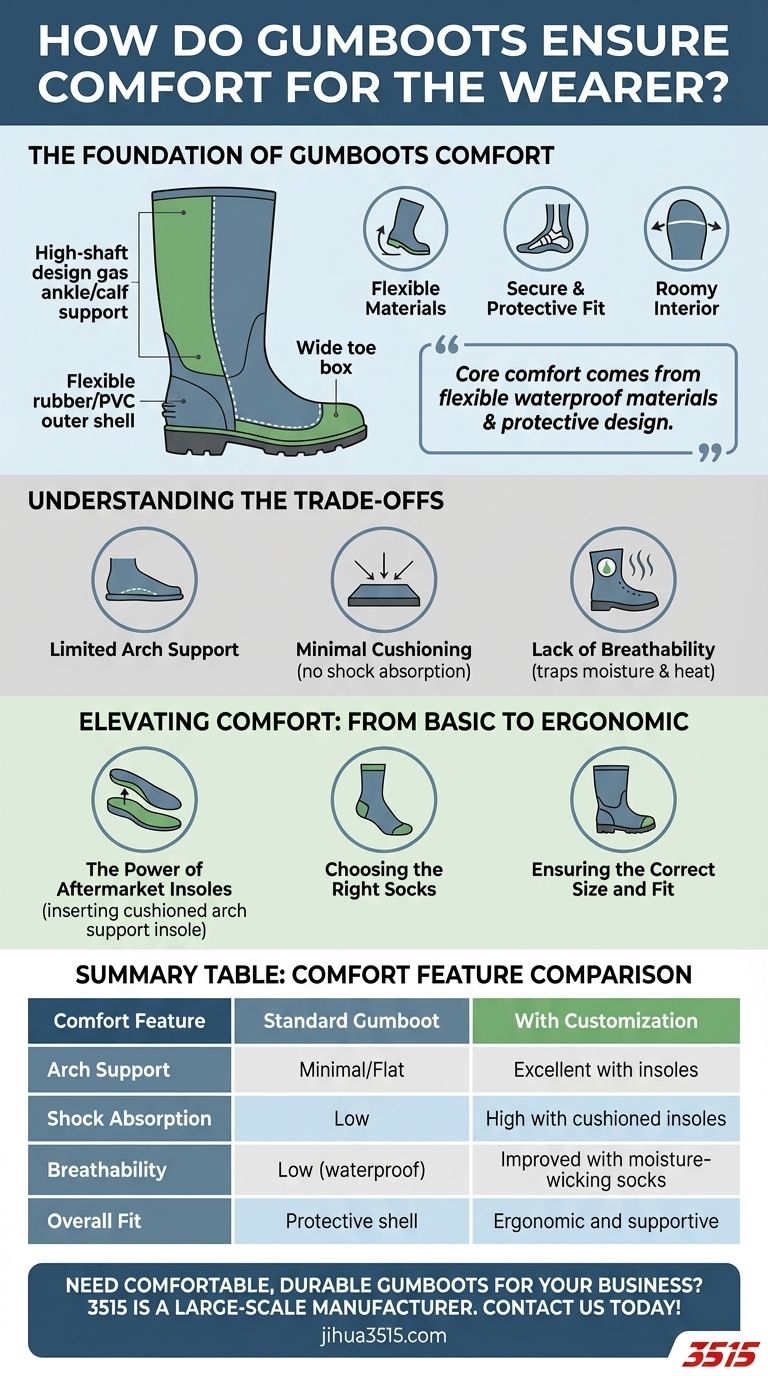
At its core, gumboot comfort comes from the inherent flexibility of their waterproof materials and a design focused on protection. The rubber or PVC construction moves with your foot, while the high-shaft design provides basic support for the ankle and calf, shielding you from wet and dirty conditions.
The essential takeaway is that gumboots provide a foundational level of comfort through their protective shell and flexible materials. However, achieving true, all-day ergonomic comfort often requires customizing the boot with additions like supportive insoles.
The Foundation of Gumboots Comfort
To understand how gumboots work, we must first look at their fundamental design principles, which prioritize protection and material performance.
The Role of Flexible Materials
The primary material used in gumboots, typically natural rubber or PVC, is chosen for its unique combination of waterproofing and flexibility.
This flexibility allows the boot to bend and move with your foot's natural articulation, preventing the stiff, restrictive feeling common in other types of heavy-duty footwear.
A Secure and Protective Fit
The classic high-calf design of a gumboot is not just for keeping water out. It also offers a degree of support to the ankle and lower leg.
This structure helps stabilize the foot on uneven or muddy ground and provides a sense of security, which contributes to the overall feeling of comfort and well-being.
A Roomy Interior
Most gumboots are designed with a generous fit, particularly in the toe box. This prevents the pinching and cramping that can cause significant discomfort, especially when worn for extended periods.
Understanding the Trade-offs
While effective, the simple design of a standard gumboot has inherent limitations. True comfort requires acknowledging what they often lack.
Limited Arch Support
The most common point of failure for comfort in gumboots is the flat inner sole. Most basic models offer virtually no built-in arch support.
Without proper support, the foot can flatten and fatigue, leading to discomfort and strain in the feet, ankles, and even knees during prolonged use.
Minimal Cushioning
The rubber sole of a gumboot is excellent for durability and grip, but it provides very little shock absorption.
Walking on hard surfaces can send impact shocks up through the leg. This is a key difference between a basic gumboot and more ergonomically designed work boots that feature cushioned midsoles.
Lack of Breathability
The very feature that makes gumboots effective—being waterproof—is also their biggest comfort challenge. The non-porous material traps moisture and heat.
This can lead to a sweaty, uncomfortable environment inside the boot, increasing the risk of blisters and foot health issues if not managed properly.
Elevating Comfort: From Basic to Ergonomic
You can easily mitigate the inherent downsides of a gumboot by making a few strategic additions or choices.
The Power of Aftermarket Insoles
Adding a high-quality cushioned insole is the single most effective way to transform the comfort of a gumboot.
A good insole can provide the missing arch support and shock absorption, turning a basic protective shell into a genuinely comfortable and supportive boot.
Choosing the Right Socks
Never underestimate the importance of your socks. Wearing moisture-wicking socks made from wool or synthetic blends will pull sweat away from your skin.
This helps keep your feet dry and dramatically reduces the discomfort and health risks associated with a lack of breathability.
Ensuring the Correct Size and Fit
An improper fit will negate any other comfort feature. Ensure there is enough room to wiggle your toes but not so much that your heel lifts excessively when you walk. A snug fit around the midfoot will prevent your foot from sliding internally.
Making the Right Choice for Your Needs
Selecting the right approach depends entirely on how you plan to use your gumboots.
- If your primary focus is short-term protection: A standard, well-fitting gumboot will likely meet your comfort needs for occasional tasks in wet conditions.
- If your primary focus is all-day wear and support: You must prioritize adding a high-quality, supportive insole to provide the necessary arch support and cushioning.
- If your primary focus is safety on slick surfaces: Pay close attention to the outsole, ensuring it has a deep, aggressive tread pattern designed for grip.
Ultimately, viewing your gumboots as a customizable protective system is the key to unlocking their full comfort potential.
Summary Table:
| Comfort Feature | Standard Gumboot | With Customization |
|---|---|---|
| Arch Support | Minimal / Flat | Excellent with insoles |
| Shock Absorption | Low | High with cushioned insoles |
| Breathability | Low (waterproof) | Improved with moisture-wicking socks |
| Overall Fit | Protective shell | Ergonomic and supportive |
Need comfortable, durable gumboots for your business? As a large-scale manufacturer, 3515 produces a comprehensive range of waterproof footwear for distributors, brand owners, and bulk clients. Our production capabilities ensure every boot can be customized for superior arch support, cushioning, and fit. Contact us today to discuss your gumboot needs and get a tailored solution!
Visual Guide
Related Products
- Durable Goodyear Welt Leather Work Boots for Wholesale & Private Label
- Lightweight Breathable Training Shoes for Wholesale & Custom OEM Manufacturing
People Also Ask
- What is the difference between full-grain and top-grain leather? Premium Material Guide for Boot Manufacturers
- What are the advantages of leather as an upper material for work boots? Unmatched Durability & Custom Comfort
- Why is it important to waterproof leather work boots? Protect Your Investment and Performance
- How should new leather work boots be broken in? A Guide to Comfort and Durability
- What are the advantages of leather uppers in work boots? Unmatched Durability & Protection

