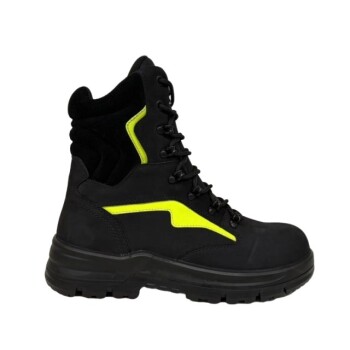
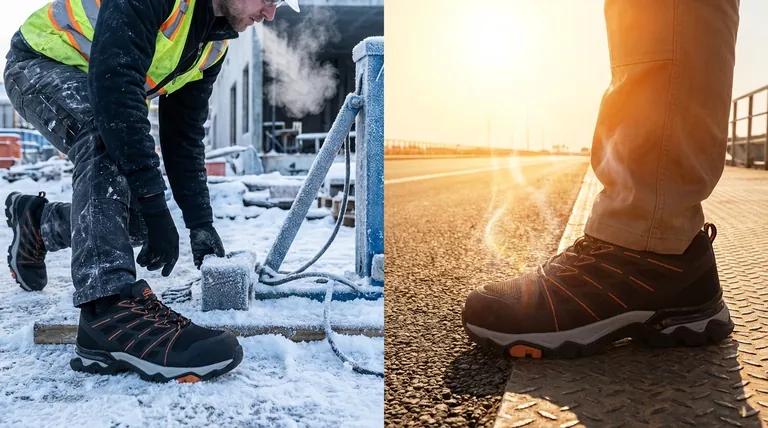
To put it simply, composite toe work boots perform exceptionally well in a wide range of weather conditions. Because they are made from non-metallic materials like carbon fiber, Kevlar, or plastic, they are not thermal conductors, meaning they do not transfer heat or cold to your feet.
The core advantage of composite toe boots is their thermal neutrality, providing superior comfort in both extreme heat and cold. This focus on comfort, however, comes with a trade-off in maximum impact resistance when compared to traditional steel toe boots.
The Science of All-Weather Comfort
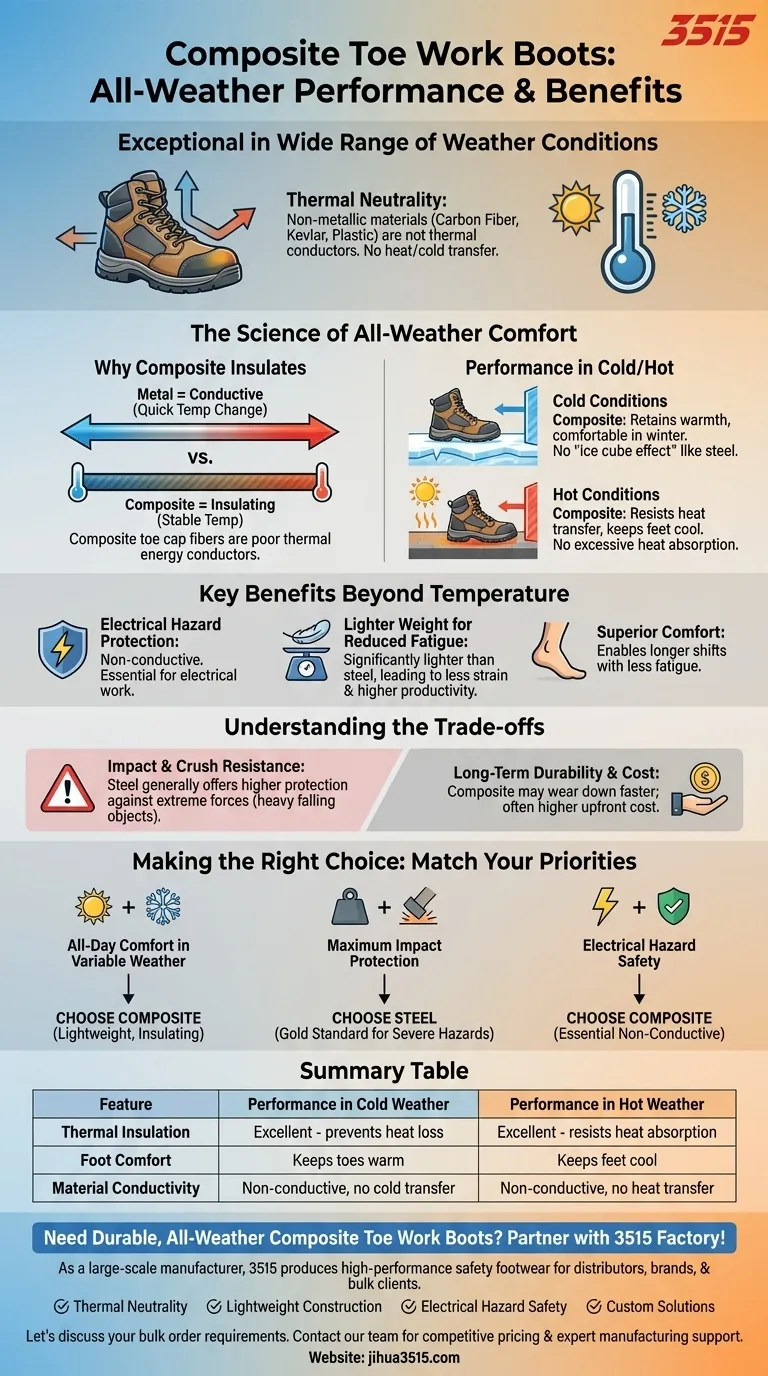
The primary reason composite toe boots excel in various climates is the insulating nature of their materials. Unlike metal, which rapidly conducts temperature, composite materials create a buffer between your foot and the outside environment.
Why Composite Materials Insulate
A composite toe cap is made of non-metallic fibers. These materials are inherently poor conductors of thermal energy.
Think of it like holding a metal rod versus a plastic one. The metal rod will quickly feel cold in winter or hot in the sun, while the plastic rod's temperature remains much more stable.
Performance in Cold Conditions
In cold or damp weather, a steel toe cap acts like an ice cube, pulling heat away from your toes and making your entire foot feel colder.
Composite toe caps do not have this effect. They help your feet retain their natural warmth, making them significantly more comfortable during long shifts in winter.
Performance in Hot Conditions
The same principle applies in hot weather. A steel toe cap can absorb ambient heat from hot pavement or direct sunlight, making the front of the boot uncomfortably warm.
Composite materials resist this heat transfer, helping to keep your feet cooler and more comfortable on hot, humid afternoons.
Key Benefits Beyond Temperature
While thermal comfort is a major advantage, composite toe boots offer other benefits that make them suitable for diverse working environments.
Electrical Hazard Protection
Because they contain no metal, composite toe boots do not conduct electricity. This makes them the preferred—and often required—choice for electricians, engineers, and anyone working near potential electrical hazards.
Lighter Weight for Reduced Fatigue
Composite materials are significantly lighter than steel. This reduction in weight means less strain on your feet and legs over a long workday.
The improved comfort can lead to higher productivity and less fatigue, especially during extended shifts that require a lot of walking or standing.
Understanding the Trade-offs
No work boot is perfect for every situation. To make an informed decision, you must understand the limitations of composite toe caps compared to their steel counterparts.
Impact and Crush Resistance
While composite toe boots meet OSHA and ASTM safety standards, steel generally offers a higher level of protection against extreme impact and crush forces.
If you work in an environment with a high risk of extremely heavy falling objects, such as heavy industrial manufacturing or logging, steel may provide superior protection.
Long-Term Durability and Cost
Composite toe caps may not have the same long-term durability as steel. The material can wear down more quickly with heavy use.
Additionally, composite toe boots are often more expensive upfront due to the more complex materials and manufacturing process involved.
Making the Right Choice for Your Goal
Selecting the right safety boot depends entirely on the specific demands of your job and your primary priorities.
- If your primary focus is all-day comfort in variable weather: Composite is the superior choice for its lightweight construction and excellent thermal insulation.
- If your primary focus is maximum impact protection: Steel toe remains the gold standard for environments with the heaviest and most severe hazards.
- If your primary focus is electrical hazard safety: Composite toe is the essential, non-negotiable option for its non-conductive properties.
Ultimately, choosing the right boot means matching its core strengths to the most critical demands of your workday.
Summary Table:
| Feature | Performance in Cold Weather | Performance in Hot Weather |
|---|---|---|
| Thermal Insulation | Excellent - prevents heat loss | Excellent - resists heat absorption |
| Foot Comfort | Keeps toes warm | Keeps feet cool |
| Material Conductivity | Non-conductive, no cold transfer | Non-conductive, no heat transfer |
Need Durable, All-Weather Composite Toe Work Boots? Partner with 3515 Factory!
As a large-scale manufacturer, 3515 produces a comprehensive range of safety footwear for distributors, brand owners, and bulk clients. We specialize in high-performance composite toe boots designed for superior comfort and protection in any climate.
Our manufacturing capabilities ensure:
- Thermal Neutrality: Boots that keep workers comfortable in extreme temperatures.
- Lightweight Construction: Reduced fatigue for long shifts.
- Electrical Hazard Safety: Meets industry standards for non-conductive protection.
- Custom Solutions: Tailored production for your specific market needs.
Let's discuss your bulk order requirements. Contact our team today to get competitive pricing and expert manufacturing support!
Visual Guide
Related Products
- Wholesale Durable Safety Boots Manufacturer Customizable Steel Toe Work Boots
- Durable Leather Moc Toe Work Boots for Wholesale & Custom Manufacturing
- Durable Moc-Toe Wedge Work Boots | Wholesale Manufacturing for Brands
- Durable Moc Toe Wedge Sole Work Boots for Wholesale and Private Label
- Wholesale Customizable Safety Boots Durable & Protective Footwear Manufacturing
People Also Ask
- What are the pros and cons of steel toe work boots? A Guide to Maximum Protection vs. Comfort
- What are the different types of steel toe work boots? Choose the Right Boot for Your Job
- What is the history of steel toe work boots? From German Invention to Modern Safety Standard
- How much weight can steel toe work boots withstand? Unpacking the 3,372 lb. Safety Standard
- What are some common myths about steel toe work boots? Debunked for Modern Workers