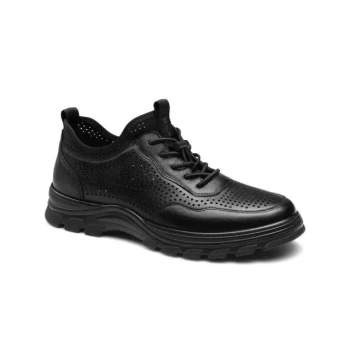
Circular economy-oriented manufacturing systems optimize footwear lifecycles by synchronizing high-automation production with advanced end-of-life recovery capabilities. These systems utilize low-power production units to maximize output and quality while significantly reducing energy and raw material inputs. Crucially, they integrate design-for-disassembly principles, enabling industrial-grade equipment to reclaim materials efficiently, thereby extending the economic utility of the resources used in footwear like safety shoes and sneakers.
The core advantage of this approach is the shift from a linear production model to a regenerative loop. By employing industrial-grade automated disassembly, manufacturers can recover high rates of raw materials, ensuring that operational efficiency gains in the factory translate directly to long-term resource conservation.
The Mechanics of Operational Efficiency
Maximizing Output with Minimal Input
Circular manufacturing systems rely heavily on high-automation, low-power production units. These systems are engineered to achieve superior production volume and build quality without a proportional increase in energy consumption. For manufacturers of volume products like work boots and training shoes, this directly lowers the production cost per unit.
Resource Conservation as a Competitiveness Driver
In this framework, industrial-grade equipment is explicitly designed to minimize raw material loss and optimize energy utilization. Investing in high-efficiency processing systems—such as those that save water and energy—is the most economically viable path for transitioning away from traditional linear economies. This efficiency reduces waste at the source, ensuring that every ounce of material contributes to the final product.
Closing the Loop through Design and Technology
Integrating Design-for-Disassembly
Operational efficiency in a circular economy extends beyond the assembly line; it begins with how the shoe is engineered. These systems incorporate design-for-disassembly principles, ensuring that footwear components can be easily separated after consumer use. This foresight prevents complex, bonded materials from becoming unrecyclable waste.
Automated Material Recovery
The success of the circular model depends on the use of industrial-grade automated disassembly equipment. Because the products are designed for separation, this machinery can rapidly strip components down to their base materials. This process significantly increases material recovery rates compared to manual or traditional recycling methods.
Extending Economic Lifecycles
By facilitating easier recycling, manufacturers effectively extend the economic lifecycle of the raw materials. Instead of sourcing virgin materials for every batch of dress shoes or sneakers, the system allows for the reintroduction of recovered materials. This stabilizes supply chains and insulates manufacturers from raw material price volatility.
Understanding the Trade-offs
The Capital Intensity of Automation
While operational costs decrease over time, the initial transition requires significant investment in specialized high-automation equipment. Manufacturers must balance the long-term savings of low-power units against the upfront capital expenditure required to install them.
Design Constraints
Adopting design-for-disassembly principles imposes strict constraints on the product development process. Designers may face limitations on material choices or bonding agents to ensure compatibility with automated disassembly equipment. This can temporarily slow down the prototyping phase as teams adjust to new engineering standards.
Strategic Implementation for Manufacturers
To successfully transition to a circular manufacturing model, you must align your equipment investments with your long-term sustainability goals.
- If your primary focus is immediate cost reduction: Prioritize investment in high-efficiency water-saving and energy-saving processing systems to lower unit costs.
- If your primary focus is long-term material security: Implement design-for-disassembly principles immediately to maximize the effectiveness of future automated recovery equipment.
- If your primary focus is production volume: Deploy high-automation, low-power production units to increase output while maintaining strict quality control.
True operational efficiency is achieved not just by making shoes faster, but by designing systems that retain the value of your materials indefinitely.
Summary Table:
| Feature | Operational Benefit | Circular Impact |
|---|---|---|
| High-Automation Units | Increases output while lowering energy use | Reduces carbon footprint per pair |
| Design-for-Disassembly | Facilitates rapid component separation | Prevents bonded materials from becoming waste |
| Automated Recovery | Lowers labor costs for material reclamation | Maximizes high-grade material reuse |
| Resource Conservation | Reduces raw material and utility costs | Stabilizes supply chains via material loops |
Partner with 3515 for Circular Footwear Solutions
As a premier large-scale manufacturer serving global distributors and brand owners, 3515 leverages cutting-edge production capabilities to optimize your product lifecycle. Our expertise in high-automation and energy-efficient manufacturing allows us to deliver superior quality across our flagship Safety Shoes series, as well as tactical boots, sneakers, and formal footwear.
By partnering with us, you gain access to a supply chain designed for the circular economy—minimizing waste while maximizing material utility. Let us help you meet your bulk requirements with sustainable, industrial-grade excellence.
Ready to elevate your footwear line? Contact us today to discuss your production needs!
References
- Gözde Koca, Halil GÖKCAN. ANALYSIS OF DRIVERS AND CHALLENGES IN CIRCULAR ECONOMY WITH SWARA AND BWM METHODS IN CLOTHING SECTOR. DOI: 10.30798/makuiibf.822067
This article is also based on technical information from 3515 Knowledge Base .
Related Products
- Lightweight Breathable Training Shoes for Wholesale & Custom OEM Manufacturing
- Wholesale Durable Camouflage Canvas Shoes with High-Traction Cleated Rubber Sole
- Wholesale Breathable Training Shoes Custom Athletic Footwear Manufacturer
- Durable Leather High-Ankle Tactical Boots for Wholesale & Custom Manufacturing
- Premium Lightweight Safety Shoes for Wholesale & Bulk Orders
People Also Ask
- Why are lightweight training shoes often preferred over professional hiking boots in urban walking? Maximize City Comfort
- What is the primary role of specialized training or orthopedic shoes? Enhance Safety in Elderly Balance Training
- Why are professional-grade training shoes essential for physical therapy? Ensure Patient Safety and Gait Stability
- Why are the slip-resistance and stability performance of training shoes critical in gait analysis? Ensure Data Accuracy
- Why is the use of flat-soled or professional training shoes essential for WBV? Maximize Vibration Energy Transfer