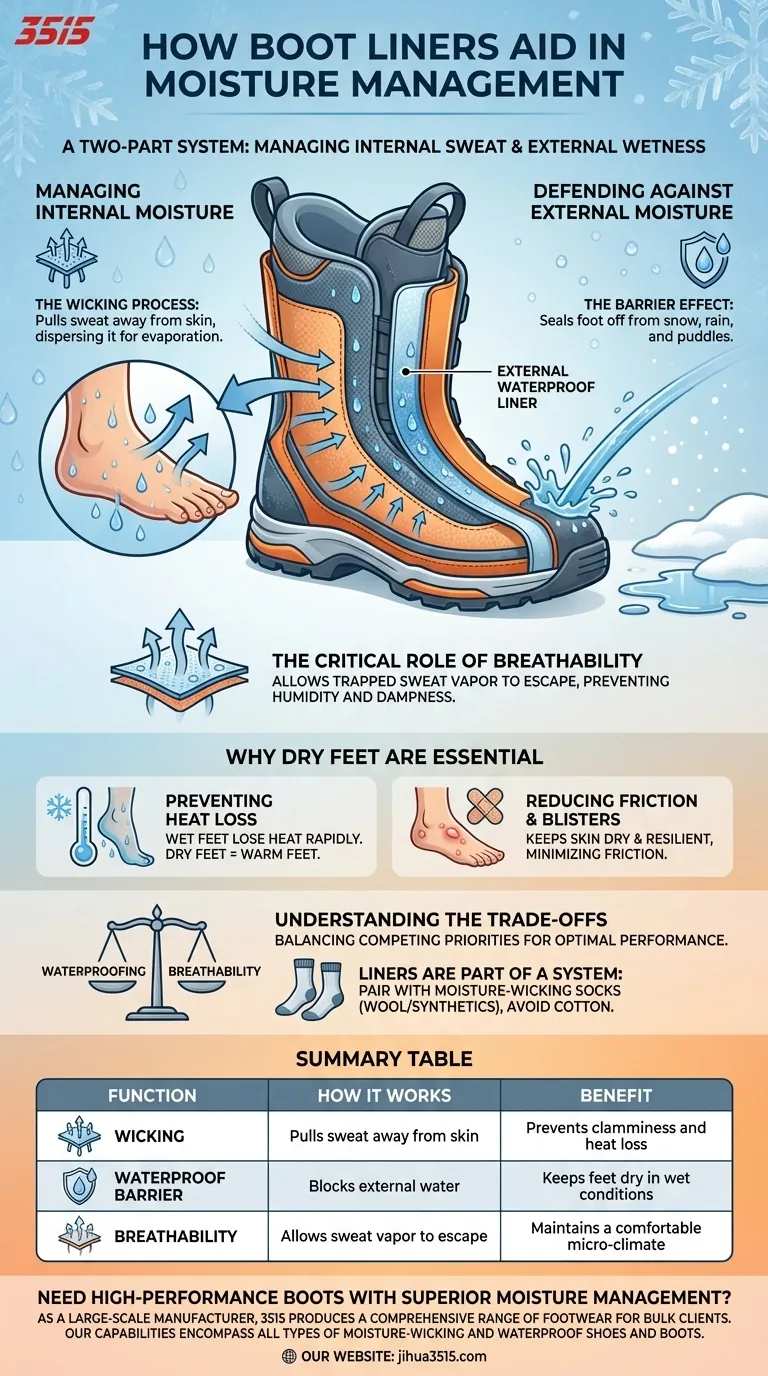
At their core, boot liners manage moisture through a two-part system. They actively pull sweat away from your skin through a process called wicking, while simultaneously acting as a physical barrier that prevents external water from reaching your foot. This dual action is crucial for keeping feet dry, warm, and comfortable.
The primary function of a boot liner isn't just insulation; it's to create a controlled micro-environment around your foot. Effective moisture management addresses both internal sweat and external wetness, which is the true key to all-day warmth and comfort.
The Two Fronts of Moisture Management
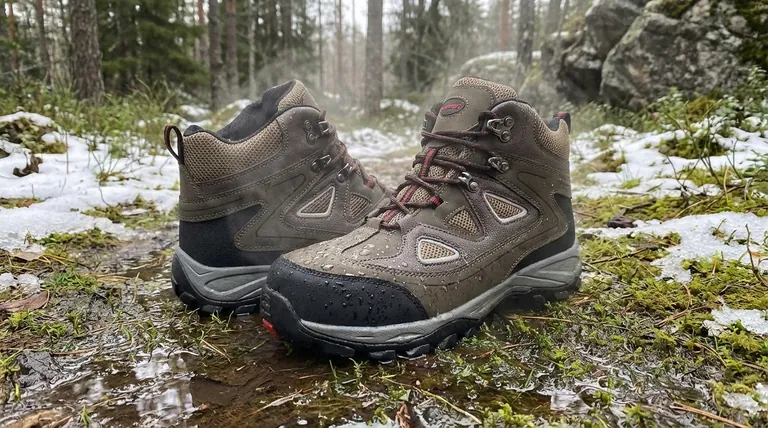
Your feet face a constant battle with moisture from two different sources: the sweat they produce and the wet environments you move through. A high-quality boot liner is engineered to fight on both of these fronts.
Managing Internal Moisture: The Wicking Process
Your feet can produce a surprising amount of sweat, especially during physical activity. If this moisture stays against your skin, it can lead to coldness and discomfort.
Boot liners are made from materials designed to wick this sweat. This means they pull the moisture away from the surface of your feet and disperse it across the liner's fabric, allowing it to evaporate more easily.
Defending Against External Moisture: The Barrier Effect
The second function is more straightforward: the liner acts as a barrier. This is especially true for boots with a dedicated internal waterproof liner.
This layer prevents water from snow, rain, or puddles from penetrating through the boot's outer material and soaking your socks. It effectively seals your foot off from the outside environment.
The Critical Role of Breathability
Wicking sweat away from your skin is only half the battle. That moisture needs somewhere to go.
This is where breathability comes in. A breathable liner allows the trapped sweat vapor to escape from the boot entirely. Without this, the humidity inside your boot would rise, eventually leaving your feet feeling damp and clammy, even if no external water gets in.
Why Dry Feet Are Essential
Failing to manage moisture inside your boots has consequences that go beyond simple discomfort. Understanding these risks highlights why liners are so critical.
Preventing Catastrophic Heat Loss
Water conducts heat away from your body up to 25 times faster than air. When your socks and feet get wet, they rapidly lose heat.
This is why your feet can feel freezing cold even in well-insulated boots if they are damp. A dry foot is a warm foot.
Reducing Friction and Blisters
Moisture softens the skin on your feet, making it much more susceptible to the friction that causes blisters.
By keeping your skin dry, a good liner and sock system maintains your skin's natural resilience, drastically reducing the risk of painful blisters during long days on your feet.
Understanding the Trade-offs
No single solution is perfect for every situation. The design of a boot liner always involves a balance between competing priorities.
The Waterproofing vs. Breathability Dilemma
The most common trade-off is between being fully waterproof and being highly breathable.
Extremely effective waterproof barriers can sometimes limit the boot's ability to vent sweat vapor. In very high-exertion activities, this can mean a liner traps more sweat than it can release, which is why material choice is so important.
Liners Are Part of a System
A boot liner cannot do its job alone. Its performance is directly impacted by your choice of socks.
Wearing a cotton sock, for example, will completely undermine a high-performance liner. Cotton absorbs and holds moisture against your skin, preventing the wicking process from ever starting. Always pair a good liner with moisture-wicking socks made of wool or synthetics.
Making the Right Choice for Your Goal
To ensure comfort and performance, match your boot liner's strengths to your intended activity.
- If your primary focus is high-exertion activity: Prioritize a liner system with maximum breathability and wicking capability to manage the high volume of sweat you will produce.
- If your primary focus is working in very wet, cold conditions: Prioritize a liner with a robust waterproof barrier to ensure no external moisture can get in.
- If your primary focus is all-around daily wear: Look for a balanced liner that offers good water resistance and solid breathability for versatility in changing conditions.
Ultimately, understanding how your boot liner works empowers you to create a complete footwear system that keeps you dry and comfortable no matter the challenge.
Summary Table:
| Function | How It Works | Benefit |
|---|---|---|
| Wicking | Pulls sweat away from skin | Prevents clamminess and heat loss |
| Waterproof Barrier | Blocks external water | Keeps feet dry in wet conditions |
| Breathability | Allows sweat vapor to escape | Maintains a comfortable micro-climate |
Need high-performance boots with superior moisture management?
As a large-scale manufacturer, 3515 produces a comprehensive range of footwear for distributors, brand owners, and bulk clients. Our production capabilities encompass all types of moisture-wicking and waterproof shoes and boots, designed to keep your customers dry and comfortable in any condition.
Contact us today to discuss your footwear needs and discover how we can bring value to your business.
Visual Guide
Related Products
- Wholesale Tactical Boots High-Traction & Reflective for Bulk & Brand Orders
- Premium Wholesale Tactical Style Safety Shoes Boots with Quick Lacing
- High Performance Fire-Retardant Waterproof Safety Boots
- Durable Goodyear Welt Leather Work Boots for Wholesale & Private Label
- High-Traction Suede Tactical Boots Wholesale & Custom Manufacturing
People Also Ask
- How do tactical boots protect against injuries? Discover the Integrated Safety System
- What boots do navy SEALs run in? Discover the Mission-Driven Footwear Philosophy
- How should one choose the right tactical boots? Match Your Mission for Optimal Performance & Safety
- What is the role of professional 3D medical imaging software in optimizing tactical boot design and performance?
- What are the advantages and disadvantages of tactical boots? Lightweight Comfort vs. Rugged Durability