
The short answer is yes. Boot sizing is notoriously inconsistent across different brands and even between different styles from the same brand. This variation is not arbitrary; it stems from fundamental differences in the boot's construction, specifically the last it's built on, and its intended function, from rugged hiking to formal dress.
Your numerical shoe size is merely a starting point. A truly accurate fit depends on understanding that you are not just fitting for length, but for the three-dimensional shape and intended purpose of the boot itself.
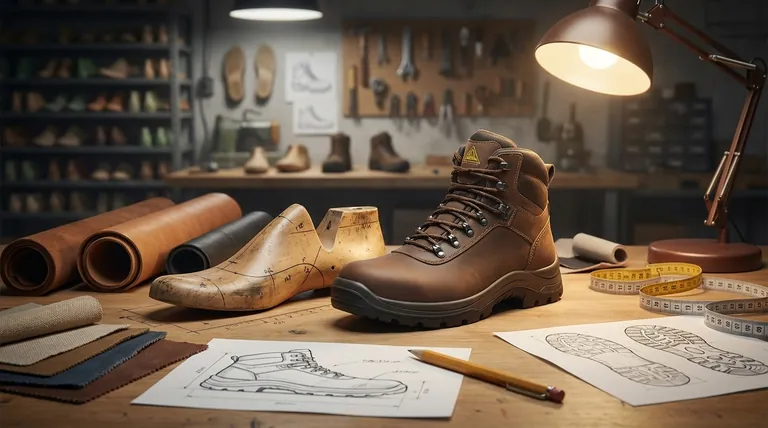
The Core Reason for Sizing Variation: The Last
The single most important factor determining a boot's fit is the last. Understanding this concept is the key to predicting how a boot will feel on your foot.
What is a Boot Last?
A last is the three-dimensional, foot-shaped mold that a boot is constructed around. It dictates the boot's final length, width, volume, and overall shape—from the heel to the toe box.
Think of it as the foundational blueprint for the boot's interior space.
How Lasts Differ by Brand
Every boot manufacturer develops its own proprietary lasts. These are based on extensive research into their target customer's foot anatomy and their specific "fit philosophy."
A brand specializing in work boots for the North American market will use a wider, higher-volume last than an Italian brand known for its sleek, narrow dress boots.
How Lasts Differ by Style
Even within a single brand, different lasts are used for different types of boots. A company's hiking boot will be built on a different last than their casual Chelsea boot.
The hiking boot last will have a roomier toe box to prevent toe-bang on descents, while the Chelsea boot last will be sleeker for a more refined silhouette.
How Function Dictates Fit
The intended use of a boot directly influences the design of its last and, therefore, its fit.
Hiking and Work Boots
These boots are engineered for performance and support. They are often designed with more interior volume to accommodate thicker socks and the natural swelling of the feet during prolonged activity.
This is why some people find they need to size down a half-size in a work boot if they plan to wear it for casual use with thin socks.
Dress and Casual Boots
Fit in these styles often prioritizes aesthetics, favoring a closer, more sculpted silhouette. The lasts used are typically narrower and have a lower instep to achieve a clean look.
If you have a wider foot or a high instep, you may find that you need to size up in these styles or seek out brands that offer specific width options.
Pull-On vs. Laced Boots
The method of entry dramatically affects fit. Laced boots offer a high degree of adjustability across the instep.
Pull-on styles like Chelsea or cowboy boots must be snug enough over the instep to lock your heel in place. If the instep is too loose, you will experience significant heel slip, even if the length is correct.
Common Pitfalls to Avoid
Navigating boot sizing requires avoiding a few common mistakes that lead to a poor fit.
Confusing Length with Volume
The most frequent error is assuming a boot is "too small" when it's actually the wrong shape. Sizing up to fix a width or instep issue often results in a boot that is too long, causing tripping hazards and heel slip.
Over-relying on Customer Reviews
While helpful, reviews are subjective. A review that says a boot "runs large" might come from someone with a very narrow foot. Instead of trusting a single opinion, look for a strong consensus in the comments.
Ignoring the Brand's Sizing Chart
Never assume your size in one brand will translate to another. Always consult the specific manufacturer's sizing guide. The most reliable brands will advise on whether a particular style fits "true to size" or if you should size up or down.
Making the Right Choice for Your Goal
Use the boot's intended purpose to guide your sizing strategy.
- If your primary focus is a specific activity (hiking, work): Research the brand's reputation for that style and anticipate wearing thicker socks by ensuring adequate room without being sloppy.
- If your primary focus is fashion or dress: Pay close attention to descriptions of the boot's silhouette (e.g., "sleek," "narrow") and consider sizing up if you have a wider foot.
- If you have wide or high-volume feet: Prioritize brands that offer dedicated width options (like E, EE), as simply increasing the length size is not an effective solution.
- If you are buying online: Measure your foot length and width and compare it directly to the sizing chart provided by that specific brand for that specific boot.
Ultimately, understanding the principles of fit empowers you to make a more informed decision than relying on a number alone.
Summary Table:
| Factor | How It Affects Sizing | Key Takeaway |
|---|---|---|
| The Last (Foot Mold) | Dictates length, width, volume, and shape. | Every brand and style has a unique last. Your size is not universal. |
| Intended Function | Hiking/work boots are roomier; dress boots are sleeker. | Fit for the boot's purpose. A hiking boot fit differs from a dress boot. |
| Style (Pull-on vs. Laced) | Laced boots are adjustable; pull-ons must be snug at the instep. | The method of entry is crucial for heel lock and overall comfort. |
Struggling with inconsistent boot sizing? Partner with 3515, a large-scale manufacturer specializing in producing a comprehensive range of footwear for distributors, brand owners, and bulk clients.
We understand that a perfect fit is paramount. Our production capabilities encompass all types of shoes and boots, and we can work with you to develop lasts and styles that meet the precise needs of your target market. Let us help you deliver superior comfort and quality to your customers.
Contact our expert team today to discuss your custom manufacturing needs.
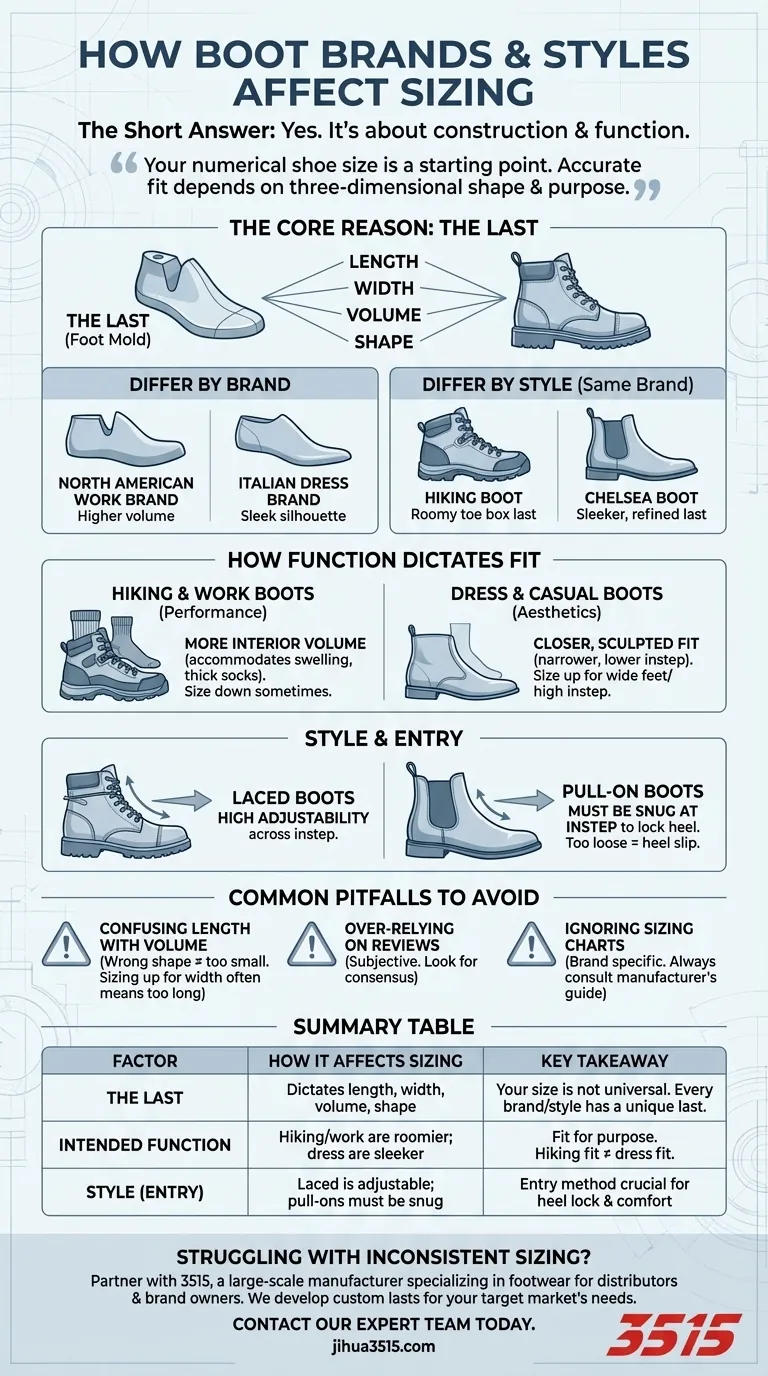
Visual Guide
Related Products
- Durable Leather Tactical Boots Wholesale & Custom Manufacturing for Brands
- Durable Leather Work Boots for Wholesale & Custom OEM Manufacturing
- Durable Leather Work Boots Wholesale Manufacturer & Custom Factory
- Durable Leather Work Boots for Wholesale & Custom Manufacturing
- High Performance Fire-Retardant Waterproof Safety Boots
People Also Ask
- What specialized protections do tactical boots offer? Maximize Endurance with High-Performance Footwear
- What features should law enforcement officers look for in tactical boots? Essential Guide for Safety & Performance
- Importance of Professional Tactical Boots in Loess Gully Regions: Ensure Safety and Precision for Field Monitoring
- What is rucking, and why are tactical boots suitable for it? Discover the Ultimate Footwear for Heavy Loads
- What makes the traction of tactical boots superior? Unlock the Science of Unbeatable Grip

















