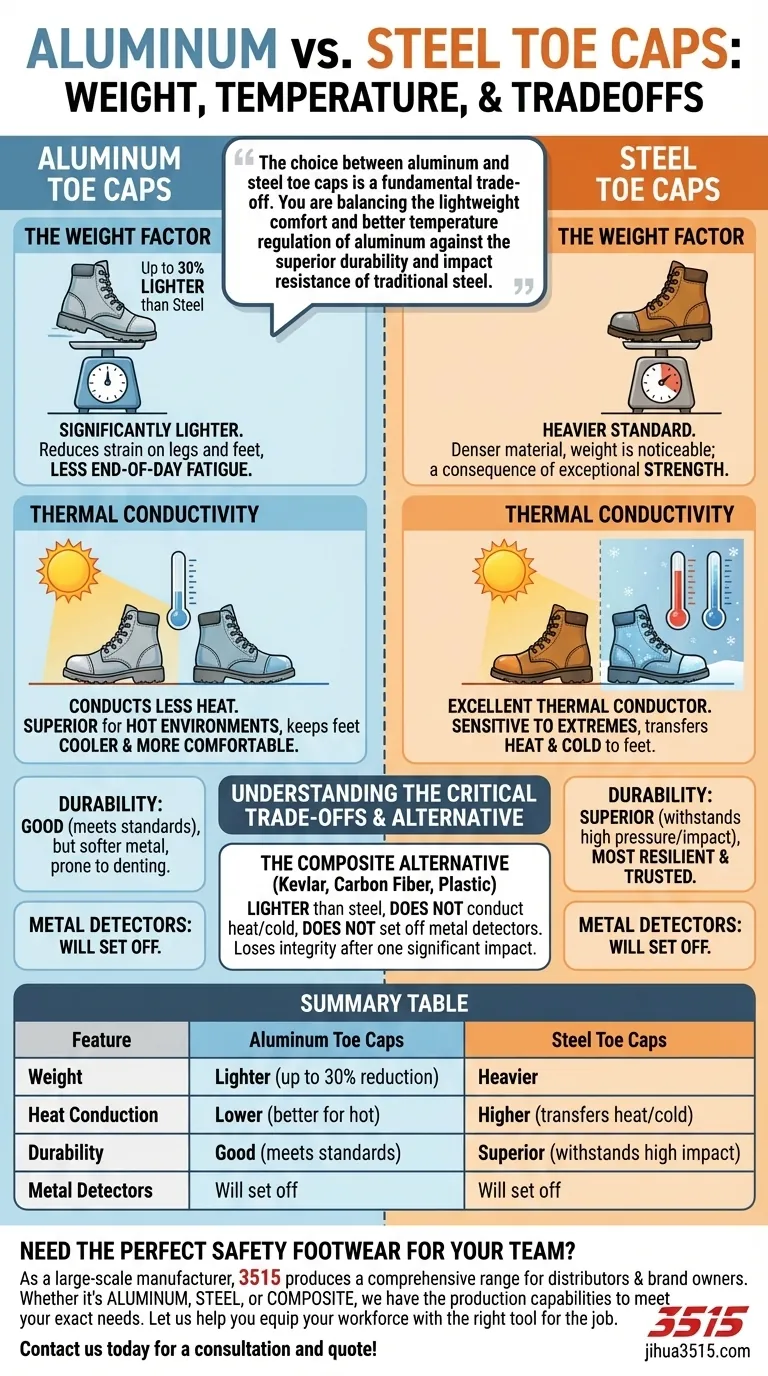
In a direct comparison, aluminum toe caps are significantly lighter than their steel counterparts and are more comfortable in hot environments because they conduct less heat. This combination often results in reduced fatigue for the wearer over a long workday.
The choice between aluminum and steel toe caps is a fundamental trade-off. You are balancing the lightweight comfort and better temperature regulation of aluminum against the superior durability and impact resistance of traditional steel.
The Weight Factor: Comfort and Fatigue
Aluminum's Lightweight Advantage
Aluminum toe caps can reduce the overall weight of a safety boot by up to 30% compared to steel.
This weight reduction is not trivial. Over thousands of steps taken during a workday, it translates directly into less strain on your legs and feet, significantly reducing end-of-day fatigue.
Steel's Heavier Standard
Steel is denser and therefore heavier than aluminum. While modern boot designs have improved, the weight difference is still noticeable.
This added weight is a direct consequence of steel's primary benefit: its exceptional strength and durability.
Thermal Conductivity: Managing Temperature
Aluminum for Hot Environments
Aluminum conducts less heat than steel. This property makes it a superior choice for working in hot weather or high-temperature indoor environments.
By transferring less external heat to the foot, aluminum toe caps help keep your feet cooler and more comfortable.
Steel's Sensitivity to Extremes
Steel is an excellent thermal conductor, which is a significant drawback in safety footwear.
It will readily transfer heat to your feet in hot conditions and, just as important, will draw heat away from your feet in the cold, making them feel colder.
Understanding the Critical Trade-offs
Durability and Impact Resistance
This is where steel holds a clear advantage. Steel toe caps are more durable and can withstand higher pressures and repeated impacts without failing.
Aluminum, while meeting all required safety standards, is a softer metal. It is more prone to denting or potentially cracking under extreme or repeated stress.
Practicality: Metal Detectors
A key operational difference is that both steel and aluminum toe caps will interfere with metal detectors.
This can be a significant issue in secure facilities or specific industries where frequent screening is required. In these cases, a composite toe is the necessary alternative.
The Composite Alternative
It is worth noting the third major option: composite toe caps. These are made from non-metal materials like Kevlar, carbon fiber, or plastic.
They are lighter than steel, do not conduct heat or cold, and do not set off metal detectors. However, they can lose their protective integrity after a single significant impact and often need to be replaced.
Making the Right Choice for Your Environment
Your specific work environment and daily tasks should dictate your choice.
- If your primary focus is all-day comfort and reducing fatigue: Aluminum is an excellent choice due to its significant weight savings.
- If your primary focus is maximum durability in a harsh, high-impact environment: Steel remains the most resilient and trusted option.
- If you work in extreme temperatures or pass through metal detectors: Composite toe caps provide the best balance of safety and practicality.
Ultimately, understanding the properties of each material allows you to select the right tool for your specific job.
Summary Table:
| Feature | Aluminum Toe Caps | Steel Toe Caps |
|---|---|---|
| Weight | Lighter (up to 30% reduction) | Heavier |
| Heat Conduction | Lower (better for hot environments) | Higher (transfers heat/cold) |
| Durability | Good (meets safety standards) | Superior (withstands high impact) |
| Metal Detectors | Will set off | Will set off |
Need the Perfect Safety Footwear for Your Team?
As a large-scale manufacturer, 3515 produces a comprehensive range of safety footwear for distributors, brand owners, and bulk clients. Whether your priority is the lightweight comfort of aluminum, the rugged durability of steel, or the non-metal practicality of composite toes, we have the production capabilities and expertise to meet your exact needs.
Let us help you equip your workforce with the right tool for the job.
Contact us today for a consultation and get a competitive quote!
Visual Guide
Related Products
- Advanced KPU Athletic Safety Shoe with Steel Toe Cap Anti-Slip Rotary Lacing System
- Wholesale Safety Footwear Manufacturer for Bulk & Custom OEM Orders
- Wholesale Durable Breathable Safety Boots Custom OEM Manufacturer
- Wholesale Customizable Safety Boots Durable & Protective Footwear Manufacturing
- Puncture-Resistant Velcro Safety Boots for Wholesale & Custom Manufacturing
People Also Ask
- What are the key differences between steel toe and composite toe caps? Choose the Right Safety for Your Job
- What impact do steel toe caps have on toe skin health? Prevent Friction and Pressure in Your Safety Shoes
- What are the primary protective functions of safety shoes with steel toes in the automotive repair industry?
- What type of safety shoe is recommended for workers exposed to heavy machinery? Steel Toe Boots for Ultimate Protection
- How does defining specific friction interface models in FEA assist in predicting safety shoe toe cap failure modes?