
The defining innovation of the M-1942 jungle boot was its active ventilation system, centered around a unique woven mesh insole. This system was engineered to combat the primary cause of foot ailments in the tropics: trapped moisture. By creating a mechanism for air exchange with every step, it kept soldiers' feet dramatically drier and healthier than any previous standard-issue footwear.
The M-1942's true advantage was not just its ability to let water out, but its ingenious design that used the soldier's own movement as a pump. This active air circulation was the key to preventing the debilitating foot conditions common in jungle warfare.
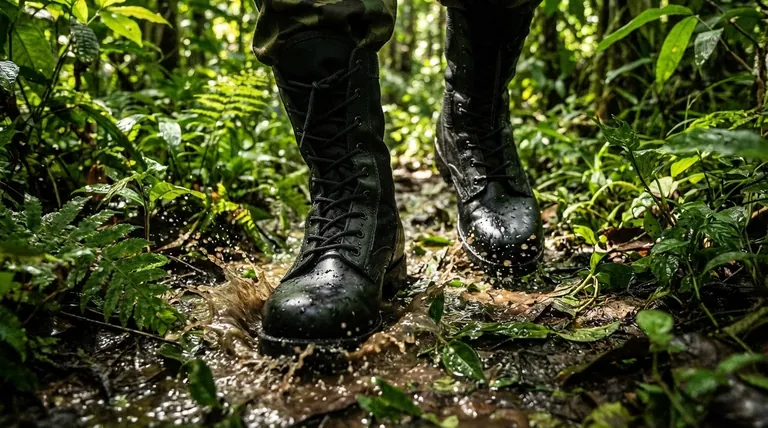
The Core Problem: Trapped Moisture in the Jungle
The Failure of Traditional Boots
Standard-issue leather boots were a liability in tropical environments. Once soaked, they became heavy, failed to dry, and trapped water against the skin. This constant moisture created the perfect conditions for severe foot problems.
The Medical Consequences
Prolonged exposure to moisture leads to skin maceration, where the skin becomes soft and weak. This dramatically increases the risk of painful blisters and the development of tropical ulcers, severe infections that could incapacitate a soldier.
Deconstructing the M-1942's Ventilation System
The Saran Mesh Insole
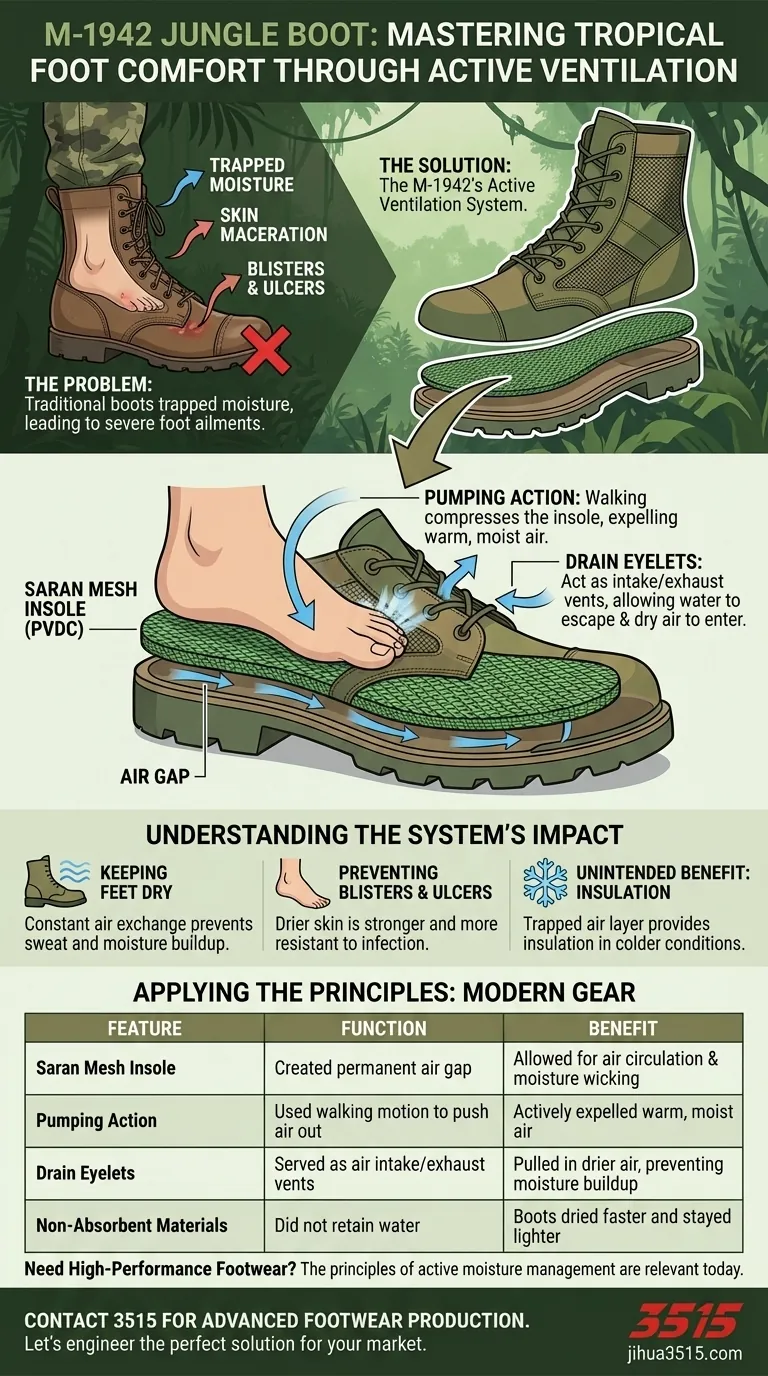
The heart of the system was an insole made from fused layers of Saran (PVDC) plastic woven into a mesh. This material was non-absorbent and created a permanent air gap between the bottom of the foot and the boot's sole.
The Pumping Action of Walking
This trapped layer of air was not static. As a soldier walked, the compression and release of the insole acted like a bellows. Each step squeezed moist, warm air out from inside the boot.
The Role of the Drain Eyelets
The final piece of the system was a set of water drain eyelets near the instep. These ports served a dual purpose: they allowed standing water to escape quickly, but more importantly, they acted as the intake and exhaust vents for the air pump. Moist air was pushed out, and drier, ambient air was pulled in with every step.
Understanding the System's Impact
Keeping Feet Dry
By constantly exchanging the boot's internal, humid air for drier external air, the system prevented the buildup of sweat and moisture. This directly addressed the root cause of skin breakdown and fungal infections.
Preventing Blisters and Ulcers
Drier skin is stronger and more resistant to friction and infection. By maintaining a healthier skin environment, the M-1942 boot significantly reduced the incidence of blisters and the tropical ulcers that could form from minor cuts or abrasions on compromised skin.
An Unintended Benefit: Insulation
The same trapped layer of air that provided ventilation also offered a degree of insulation. In colder conditions, this air gap helped insulate the foot from the cold ground, showcasing the versatility of the design principle.
How to Apply This to Your Gear
The principles pioneered by the M-1942 continue to influence modern footwear design for extreme environments.
- If your primary focus is moisture management in hot, wet climates: Prioritize footwear with built-in drainage ports and non-absorbent materials that promote active ventilation, mirroring the M-1942's core function.
- If your primary focus is preventing blisters and skin breakdown: Recognize that keeping the skin dry is paramount, a lesson directly demonstrated by the boot's air-circulating insole and modern moisture-wicking socks.
Ultimately, the M-1942 boot serves as a masterclass in how solving the root cause of a problem—in this case, trapped moisture—can fundamentally change performance and well-being.
Summary Table:
| Feature | Function | Benefit |
|---|---|---|
| Saran Mesh Insole | Created a permanent air gap | Allowed for air circulation and moisture wicking |
| Pumping Action | Used walking motion to push air out | Actively expelled warm, moist air with every step |
| Drain Eyelets | Served as air intake/exhaust vents | Pulled in drier air, preventing moisture buildup |
| Non-Absorbent Materials | Did not retain water | Boots dried faster and stayed lighter than leather |
Need High-Performance Footwear for Demanding Environments?
The principles of active moisture management pioneered by the M-1942 are more relevant than ever. As a large-scale manufacturer, 3515 produces a comprehensive range of advanced footwear for distributors, brand owners, and bulk clients. We can integrate modern materials and ventilation technologies into durable boots and shoes designed for extreme conditions, ensuring superior comfort and foot health for your end-users.
Let's engineer the perfect solution for your market. Contact our team today to discuss your production needs.
Visual Guide
Related Products
- Durable Military Combat Boots with Water Drainage for Wholesale & OEM
- Durable Mid-Cut Tactical Boots for Wholesale & Private Label
- High-Traction Suede Tactical Boots Wholesale & Custom Manufacturing
- Wholesale Lightweight Tactical Boots Custom Manufacturer for Desert & Combat Use
- Wholesale Durable Mid-Cut Tactical Boots for Custom & Private Label Brands
People Also Ask
- Why must gait validation for military applications be conducted in combat boots? Ensure Data Accuracy for Soldiers
- What are the common types of combat boots? Find the Right Boot for Your Mission
- What factors should be considered when choosing military boots for hiking? Durability vs. Weight for Your Terrain
- What are the key considerations when choosing military boots? Prioritize Compliance, Environment & Fit
- How should the midfoot and heel fit in military boots? Achieve a Snug, Secure Fit for Blister Prevention




