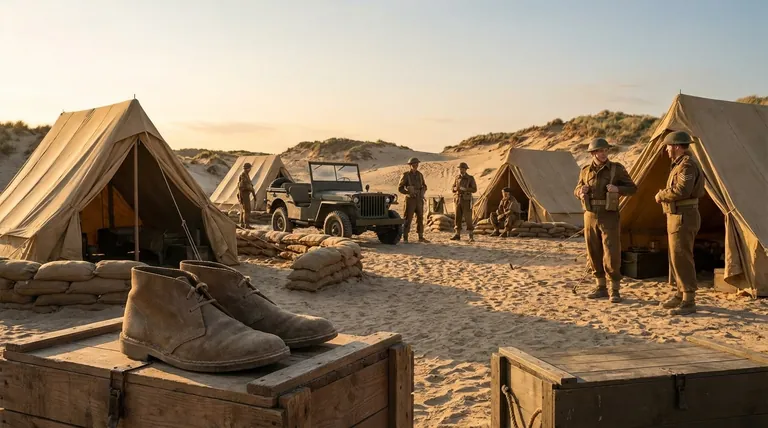
The Chukka boot's journey to popularity began not on a fashion runway, but in the deserts of World War II. Its initial adoption during the 1940s was driven entirely by military function. British soldiers stationed in hot, sandy climates required footwear that was lighter than a standard combat boot but far more durable and protective than an open shoe, and the chukka's simple, ankle-high design was the perfect solution.
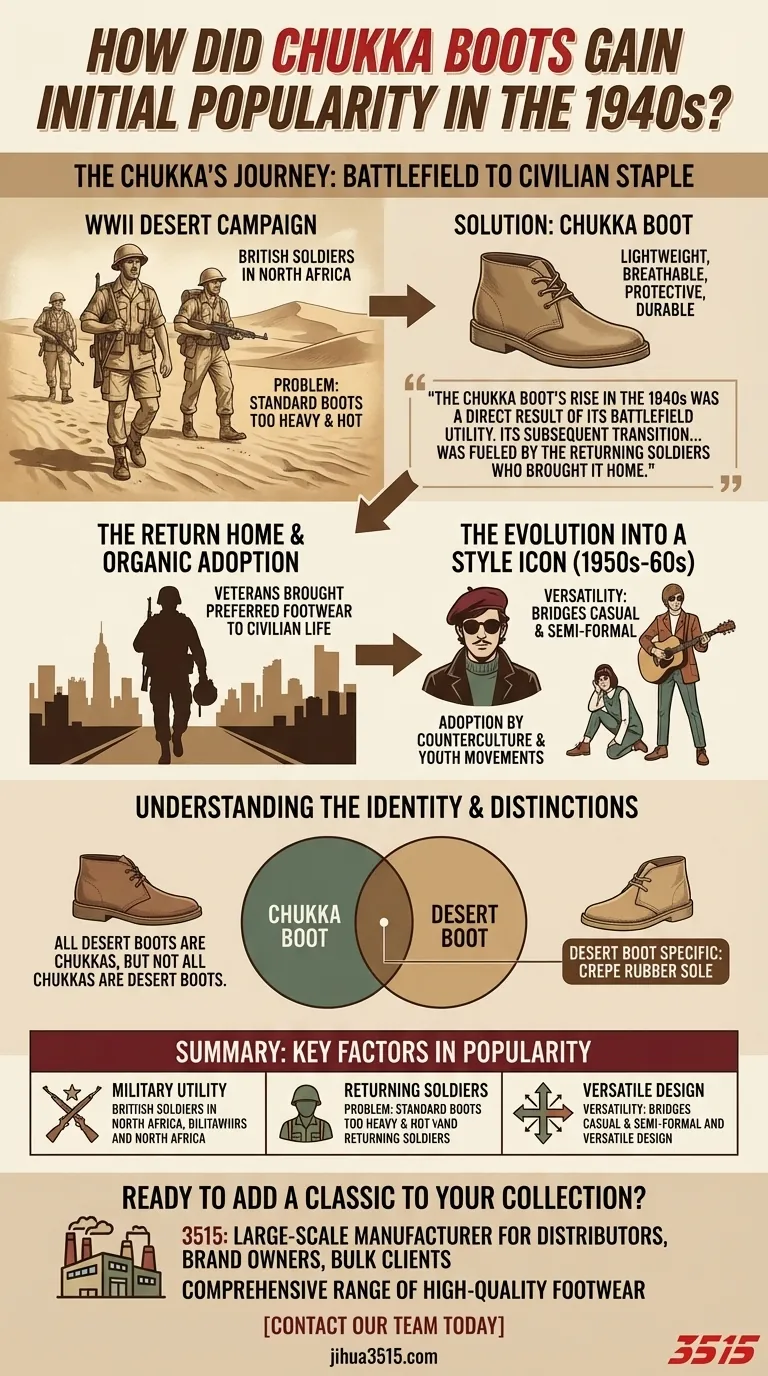
The Chukka boot's rise in the 1940s was a direct result of its battlefield utility. Its subsequent transition from functional soldier's gear to a civilian style icon was fueled by the returning soldiers who brought it home.
From Battlefield Utility to Civilian Staple
The story of the chukka is a classic example of form following function. Its design was a direct response to a specific environmental and operational challenge faced by soldiers.
The Problem of the Desert Campaign
British soldiers fighting in North Africa and other desert theaters during WWII needed specialized gear. Standard-issue military boots were often too heavy and hot for the climate.
The conditions demanded footwear that was lightweight, breathable, and capable of keeping sand out while offering protection from the rough terrain.
Engineered for Practicality
The chukka boot's design perfectly met these requirements. Its ankle-high cut provided protection without restricting movement, a crucial advantage in active duty.
The uppers, typically made of sturdy leather or suede, offered durability, while the simple, open-lacing system made them easy to put on and take off. This combination of comfort and resilience made them a favorite among officers and soldiers alike.
The Return Home
When the war ended, soldiers returned to civilian life but didn't leave their preferred footwear behind. They continued to wear their chukka boots, associating them with the ruggedness and practicality of their service.
This organic adoption by veterans introduced the chukka to a wider audience, planting the seeds for its future as a menswear classic. It carried an authentic, understated style that resonated in the post-war era.
The Evolution into a Style Icon
While the 1940s established the chukka's presence, the 1950s and 60s cemented its status as a style icon, moving it beyond its military roots.
Adoption by Counterculture
The boot's simple, unpretentious aesthetic appealed to post-war youth movements. Beatniks, artists, and rebels embraced the chukka as an alternative to the polished, formal footwear of the establishment.
Icons like the Clarks Desert Boot, a specific type of chukka introduced in 1950, became synonymous with this casual, anti-conformist cool.
The Power of Versatility
The chukka's greatest strength is its versatility. It effortlessly bridges the gap between casual and semi-formal wear.
It looks just as natural paired with worn-in jeans as it does with smart chinos or trousers, making it an incredibly reliable and flexible wardrobe component.
Understanding the Chukka's Identity
To truly appreciate the chukka, it's important to understand its specific place in the footwear hierarchy and distinguish it from similar styles.
Not a Formal Dress Boot
Despite its clean lines, the chukka is not a formal boot. Its origins are in sport (the name likely comes from a period of play in polo) and military utility.
Features like open lacing and materials like suede or crepe soles place it firmly in the smart-casual category. It is a stylish step up from a sneaker but a step down from an oxford or dress boot.
The "Desert Boot" Distinction
A common point of confusion is the difference between a chukka and a desert boot. The relationship is simple: all desert boots are chukkas, but not all chukkas are desert boots.
A desert boot is a specific type of chukka, traditionally unlined and defined by its crepe rubber sole. General chukka boots can feature a wide variety of sole materials, including leather or harder rubber.
Making the Right Choice for Your Goal
The chukka's rich history has given rise to many variations. Selecting the right one depends entirely on your intended use and personal style.
- If your primary focus is historical authenticity: Seek out a classic desert boot with a suede upper and a genuine crepe sole to capture the original mid-century aesthetic.
- If your primary focus is modern versatility: Opt for a chukka in dark brown or black leather with a durable rubber or leather sole, which can easily transition from the office to the weekend.
- If your primary focus is casual comfort: A soft, unlined suede chukka offers unparalleled comfort for relaxed, everyday wear with jeans or chinos.
By understanding its origins in pure utility, you can appreciate the Chukka boot as a timeless piece of design.
Summary Table:
| Key Factor | Role in Popularity |
|---|---|
| Military Utility | Provided lightweight, protective footwear for British soldiers in desert climates. |
| Returning Soldiers | Veterans brought the practical and comfortable boots back to civilian life. |
| Versatile Design | The ankle-high, simple design proved suitable for both active duty and casual wear. |
Ready to Add a Classic to Your Collection?
The Chukka boot's journey from a military essential to a wardrobe staple is a testament to its timeless design and versatility. As a large-scale manufacturer, 3515 produces a comprehensive range of high-quality footwear for distributors, brand owners, and bulk clients.
Whether you're looking to stock an authentic desert boot or a modern, versatile chukka, our production capabilities encompass all types of shoes and boots to meet your market's needs. Let's discuss how we can help you supply this iconic style.
Contact our team today to explore our catalog and discuss your requirements.
Visual Guide
Related Products
- Durable Spiked Camouflage Boots Wholesale & Factory Production
- Wholesale High-Traction Camo Boots - Custom Manufacturer for Brands
- High-Traction Suede Tactical Boots Wholesale & Custom Manufacturing
- Durable Leather High-Ankle Tactical Boots for Wholesale & Custom Manufacturing
- Premium Wholesale Tactical Style Safety Shoes Boots with Quick Lacing
People Also Ask
- How does boot height affect waterproofing? Choose the Right Height for Ultimate Protection
- What are the best types of shoes for different gardening conditions? Find Your Perfect Match.
- What role does camouflage play in hunting boots? It's More Than Just a Pattern
- What should you look for to ensure boots are fully waterproof? The Essential 2-Part System
- How does boot construction affect waterproofing? The Science Behind Truly Dry Feet