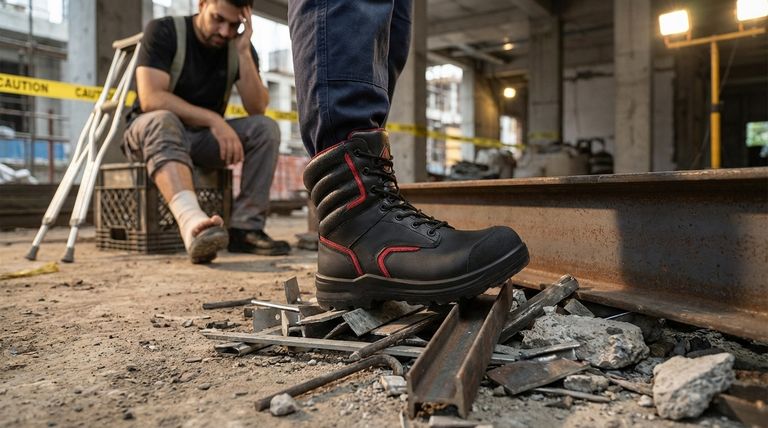
Based on the most recent comprehensive data from the U.S. Bureau of Labor Statistics, there were approximately 100,000 occupational foot injuries reported in a single year. These incidents represent 7% of all wounds caused by workplace accidents and are significant enough to cause an average of 10 days away from work per injury.
While the raw number of foot injuries is high, the true measure of their impact is the substantial loss of productivity. Each incident represents a significant operational and financial disruption, making foot protection a critical component of any effective safety program.
Quantifying the Scope of Foot Injuries
To fully grasp the issue, we must look at both the total number of incidents and their proportion relative to other workplace accidents. This data provides a clear picture of the risk.
The Annual Incident Rate
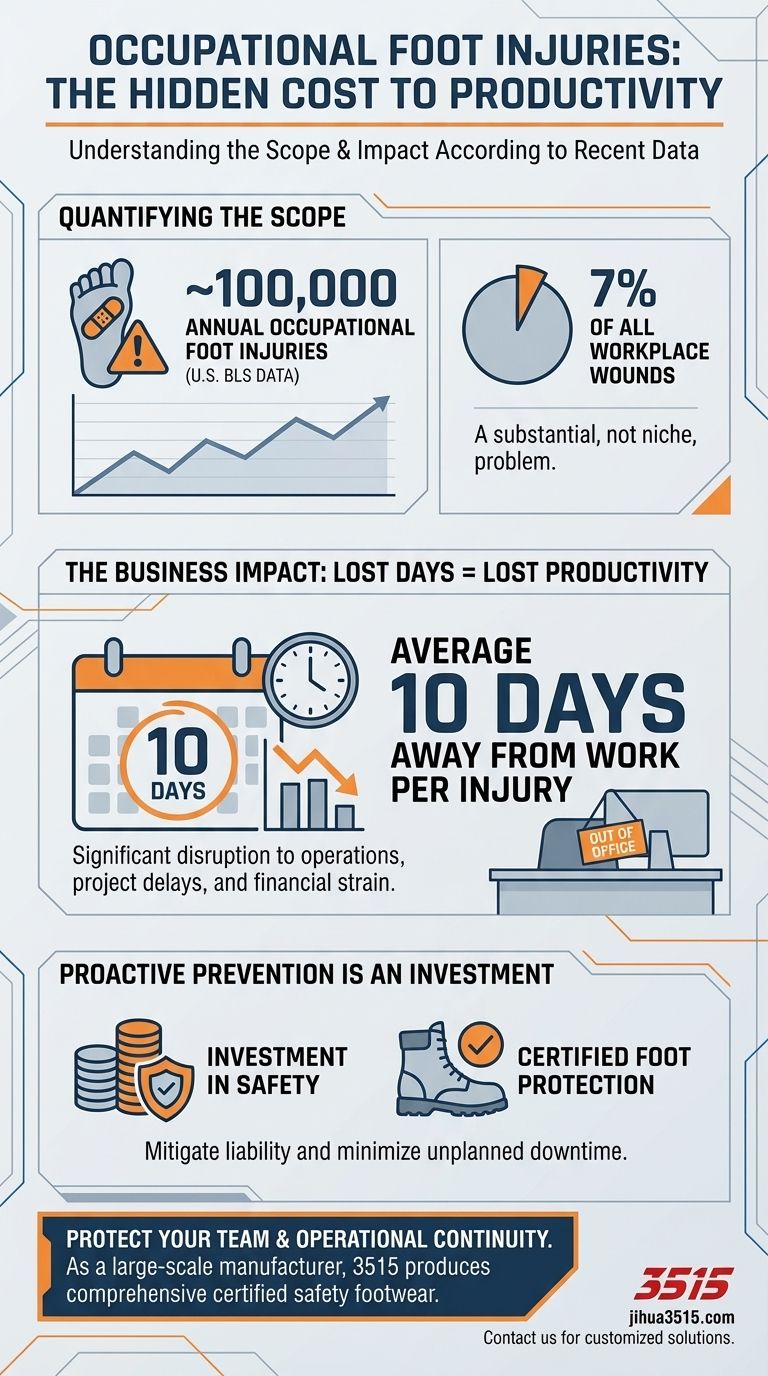
The U.S. Bureau of Labor Statistics (BLS) reported approximately 100,000 foot injuries in 2016. This figure serves as a key benchmark for understanding the frequency of these events in the American workplace.
A Proportional Perspective
Foot injuries account for 7% of all wounds sustained in workplace accidents. This statistic highlights that foot-related incidents are not a minor or niche problem but a substantial and consistent category of occupational harm.
The Hidden Cost: Beyond the Injury Itself
The direct medical cost of an injury is only the beginning. The more significant business impact often comes from the secondary effects, particularly the loss of skilled labor and the resulting disruption to operations.
The Impact of Lost Workdays
The most critical data point is the consequence of these injuries: an average of 10 days away from work per incident. This is a direct measure of lost productivity.
For an organization, this translates into project delays, the need for temporary staffing, and significant strain on the rest of the team. The cost of this downtime often far exceeds the initial medical expenses.
Understanding the Trade-offs of Negligence
Failing to invest in and enforce proper foot protection is not a cost-saving measure; it's a significant financial and operational gamble. The data reveals a clear trade-off between proactive prevention and reactive, costly consequences.
The Cost of Inaction
The decision to neglect proper safety footwear protocols exposes a company to predictable risk. The potential cost of a single injury—factoring in lost workdays, potential legal fees, and insurance increases—dwarfs the investment required for a comprehensive foot protection program.
The Ripple Effect on Operations
A single foot injury does not happen in a vacuum. The absence of a team member for two full work weeks can disrupt workflows, impact morale, and place an unsustainable burden on colleagues, leading to a wider decrease in efficiency and potential burnout.
How to Apply This to Your Workplace
Understanding this data allows you to make informed decisions about resource allocation and safety priorities. Your approach should align with your primary organizational goals.
- If your primary focus is risk management and compliance: The statistics confirm that foot injuries are a foreseeable hazard, making a robust and enforced footwear policy essential for mitigating liability.
- If your primary focus is operational efficiency: Preventing foot injuries is a direct investment in minimizing unplanned downtime, as an average 10-day absence per incident can severely disrupt project timelines and budgets.
Ultimately, the data shows that proactive foot safety is not an expense but a crucial investment in your organization's stability and productivity.
Summary Table:
| Key Statistic | Figure |
|---|---|
| Annual Occupational Foot Injuries (U.S.) | ~100,000 |
| Percentage of All Workplace Wounds | 7% |
| Average Days Away from Work per Injury | 10 Days |
Protect your team and your productivity. As a large-scale manufacturer, 3515 produces a comprehensive range of certified safety footwear for distributors, brand owners, and bulk clients. Our production capabilities encompass all types of protective shoes and boots designed to prevent these costly injuries. Investing in quality footwear is an investment in your operational continuity. Contact us today to discuss your safety footwear needs and receive a customized solution.
Visual Guide
Related Products
- Premium Suede Sport Safety Shoes for Wholesale & Bulk Orders
- Premium Lightweight Safety Shoes for Wholesale & Bulk Orders
- Wholesale Anti-Smash & Puncture-Proof Safety Shoes Custom Manufacturing for Brands
- Premium KPU Injection Athletic Style Safety Shoes
- Premium Safety Shoes with Rotating Buckle Safety Sneakers
People Also Ask
- What are the primary functions of professional safety shoes? Maximize Safety in Water Supply Confined Spaces
- What industries have specific OSHA footwear requirements? Ensure Compliance & Protect Your Workforce
- What role do specialized safety shoes play in preventing falls? Engineering Stability in Industrial Environments
- How does professional industrial cleaning equipment maintain the performance stability of safety shoes? Pro Maintenance
- How do I choose the best safety shoes? Match Certified Features to Your Hazards