
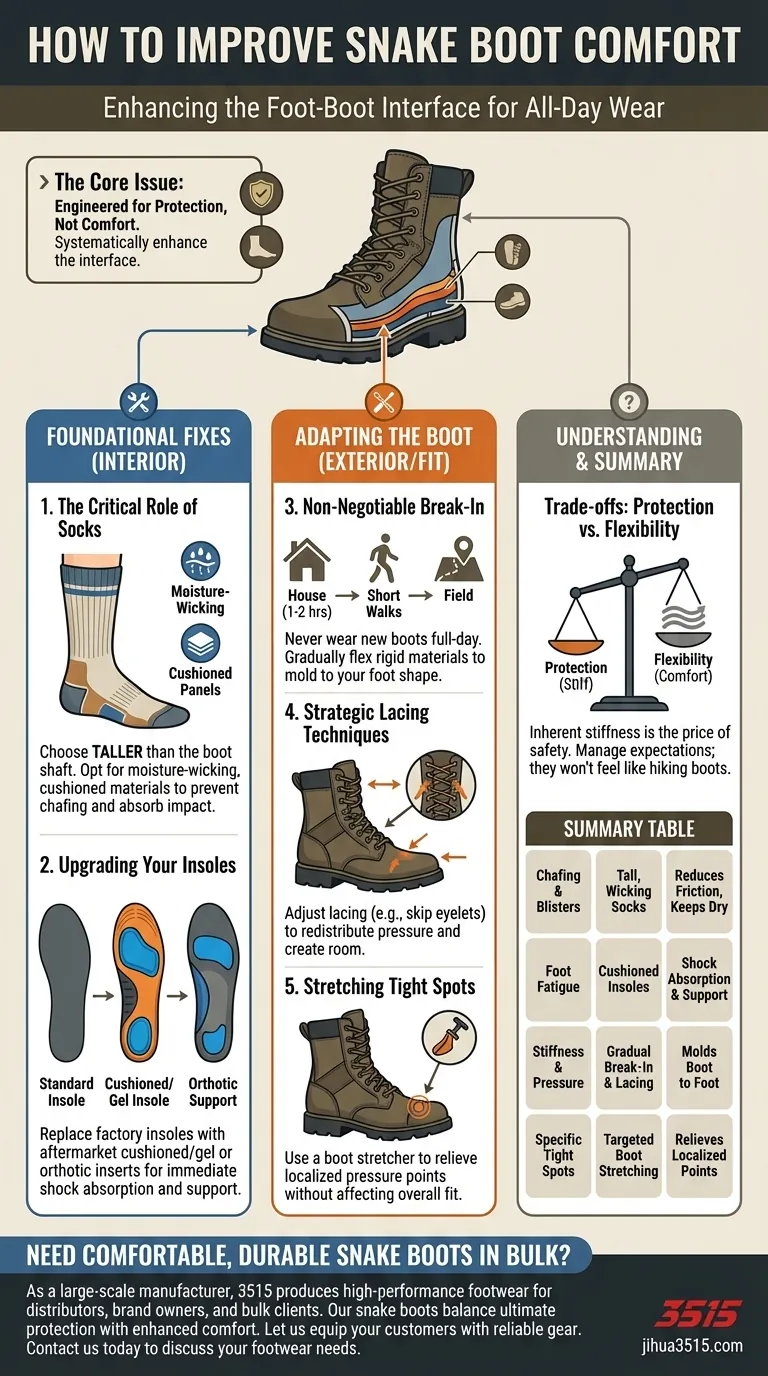
To improve the comfort of snake boots, you should focus on a few key areas: using tall, cushioned, moisture-wicking socks, replacing the factory insoles with higher-quality cushioned or gel inserts, and committing to a gradual break-in period. Adjusting your lacing technique can also relieve specific pressure points.
The core issue is that snake boots are engineered for protection first, not comfort. Therefore, achieving comfort requires you to systematically enhance the interface between your foot and the boot's rigid, protective structure.
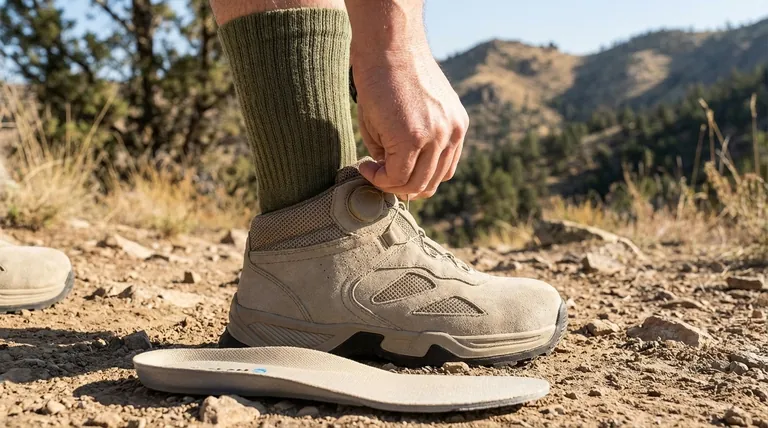
Foundational Fixes: Addressing the Boot's Interior
The easiest and most immediate improvements come from upgrading the components inside the boot that directly contact your foot.
The Critical Role of Socks
Standard cotton socks are inadequate for snake boots. The tall, stiff shaft of the boot will cause significant chafing on your calf without proper protection.
Choose socks that are taller than the boot shaft. Look for materials with moisture-wicking properties to keep your feet dry and cushioned panels to reduce friction and absorb impact.
Upgrading Your Insoles
Most boots come with basic, flat insoles that offer minimal support or cushioning. This is a primary source of foot fatigue during long days.
Replacing them with aftermarket cushioned or gel insoles provides immediate shock absorption and reduces strain. For those with specific arch issues, orthotic inserts can provide tailored support that prevents pain.
Adapting the Boot to Your Foot
Because snake boots are made from stiff, puncture-resistant materials, they do not conform to your foot easily. You must actively help this process along.
The Non-Negotiable Break-In Period
Never wear brand-new snake boots for a full day in the field. The rigid materials need time to flex and mold to the unique shape of your foot.
Start by wearing them around the house for an hour or two at a time. Gradually increase the duration and transition to short walks on easy terrain before committing to a long trek. This prevents painful blisters and hot spots.
Strategic Lacing Techniques
How you lace your boots can significantly alter pressure distribution. If you feel pinching or tightness across the top of your foot, try different lacing patterns that skip an eyelet or use specialized knots to create more room.
Stretching Specific Tight Spots
If a specific area remains stubbornly tight after the break-in period, you can use a boot stretcher to target that spot. This is an effective way to relieve a localized pressure point without affecting the boot's overall fit.
Understanding the Trade-offs
It's crucial to have realistic expectations about snake boot comfort. Their primary function dictates their design.
Protection vs. Flexibility
The materials used to prevent a snake bite are, by nature, thick and inflexible. This inherent stiffness is the price of safety and means a snake boot will never feel as flexible as a standard hiking boot.
The Limits of Modification
These comfort-enhancing strategies can make a massive difference, but they cannot fix a fundamentally poor-fitting boot. If the boot is the wrong size or shape for your foot, no amount of adjustment will make it comfortable or safe to wear. A proper initial fit is paramount.
Creating Your Comfort System
Select your strategy based on the specific issue you are experiencing.
- If your primary focus is preventing chafing or blisters: Your first and most important investment should be high-quality, tall, moisture-wicking socks.
- If your primary focus is reducing foot fatigue and aches: Immediately replace the factory insoles with cushioned or orthotic inserts that match your support needs.
- If your primary focus is relieving stiffness and pressure points: Dedicate time to a patient break-in process and experiment with different lacing techniques.
By systematically addressing these key areas, you can transform your protective gear from a necessary burden into a comfortable and reliable tool.
Summary Table:
| Comfort Issue | Recommended Solution | Key Benefit |
|---|---|---|
| Chafing & Blisters | Tall, Moisture-Wicking Socks | Reduces friction and keeps feet dry |
| Foot Fatigue | Cushioned or Gel Insoles | Provides shock absorption and support |
| Stiffness & Pressure | Gradual Break-In & Lacing Techniques | Molds boot to your foot shape |
| Specific Tight Spots | Targeted Boot Stretching | Relieves localized pressure points |
Need Comfortable, Durable Snake Boots in Bulk?
As a large-scale manufacturer, 3515 produces a comprehensive range of high-performance footwear, including snake boots designed for both ultimate protection and enhanced comfort. Our production capabilities ensure top-quality materials and construction for distributors, brand owners, and bulk clients.
Let us help you equip your customers with reliable gear. Contact us today to discuss your footwear needs and discover how we can bring value to your business.
Visual Guide
Related Products
- Durable Leather Tactical Boots Wholesale & Custom Manufacturing for Brands
- Wholesale High-Traction Camo Boots - Custom Manufacturer for Brands
- Durable Leather High-Ankle Tactical Boots for Wholesale & Custom Manufacturing
- High-Traction Suede Tactical Boots Wholesale & Custom Manufacturing
- Durable High-Ankle Tactical Boots Wholesale Manufacturer for Custom & Bulk Orders
People Also Ask
- What specialized protections do tactical boots offer? Maximize Endurance with High-Performance Footwear
- What features should law enforcement officers look for in tactical boots? Essential Guide for Safety & Performance
- Importance of Professional Tactical Boots in Loess Gully Regions: Ensure Safety and Precision for Field Monitoring
- What is rucking, and why are tactical boots suitable for it? Discover the Ultimate Footwear for Heavy Loads
- What makes the traction of tactical boots superior? Unlock the Science of Unbeatable Grip



















