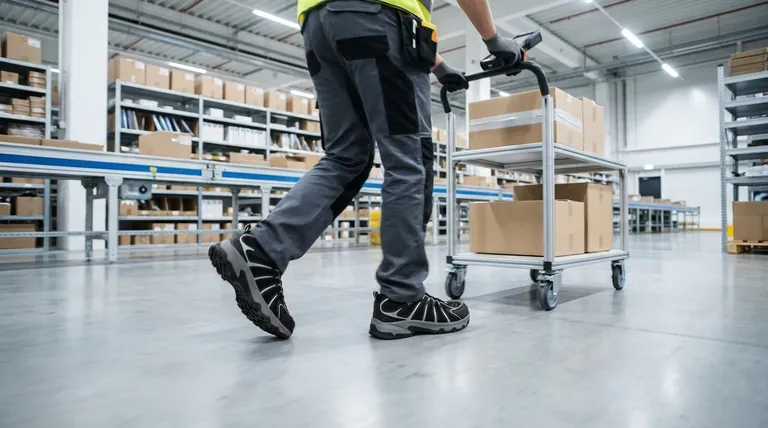
At its core, lightweight work footwear boosts productivity by reducing the physical burden on an employee. This reduction in fatigue and discomfort allows them to complete tasks faster, maintain focus for longer, and avoid the physical and mental drain caused by heavy, ill-fitting shoes.
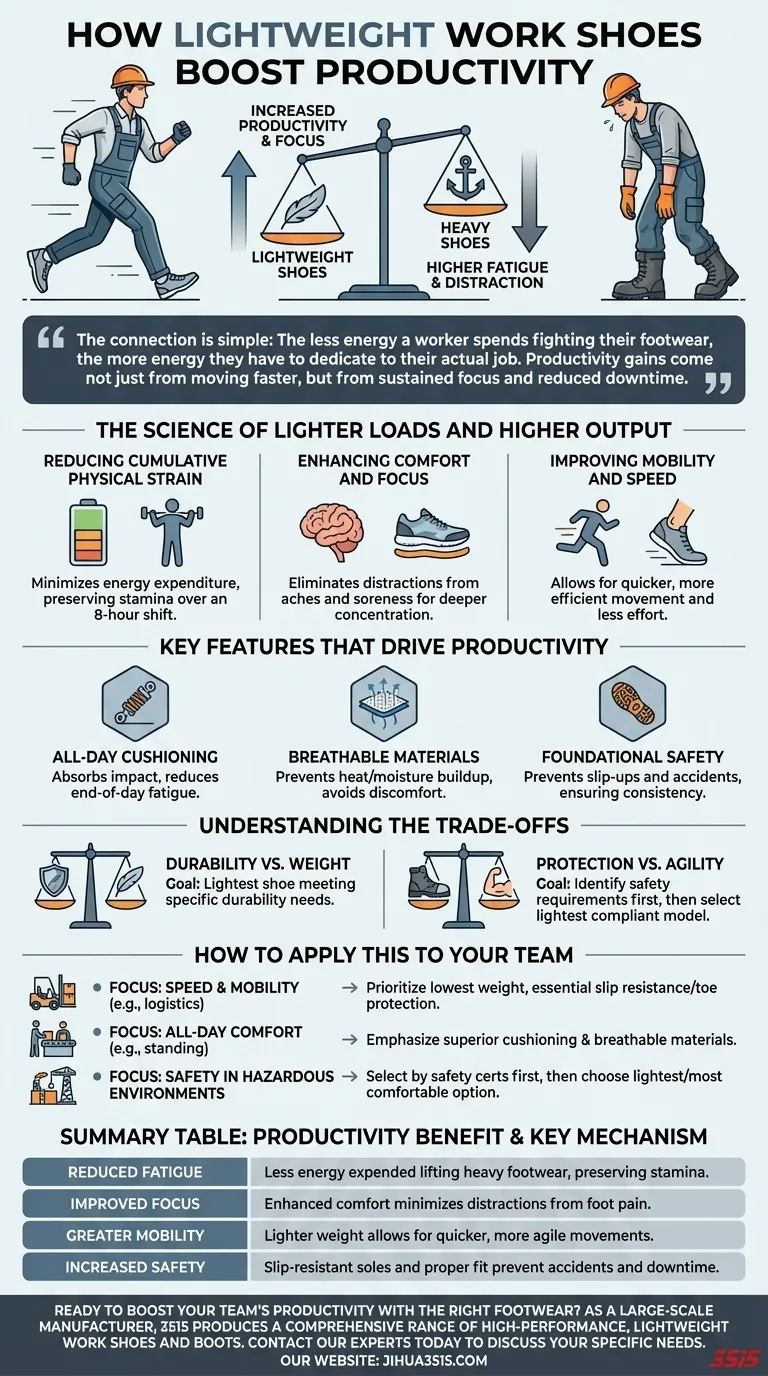
The connection is simple: The less energy a worker spends fighting their footwear, the more energy they have to dedicate to their actual job. Productivity gains come not just from moving faster, but from sustained focus and reduced downtime.
The Science of Lighter Loads and Higher Output
The impact of footwear on performance is grounded in basic biomechanics and psychology. Every ounce on the feet is mass that must be lifted and moved with every single step, thousands of times per day.
Reducing Cumulative Physical Strain
Lifting extra weight, even a small amount, requires energy. Over an eight-hour shift, the cumulative effect of heavy boots is significant, leading directly to physical fatigue in the feet, legs, and even the lower back.
Lightweight shoes minimize this constant energy expenditure, preserving an employee's physical stamina throughout their shift.
Enhancing Comfort and Focus
Discomfort is a major source of distraction. Heavy, clunky shoes can cause aches and soreness, which pulls a worker's mental focus away from their task.
By providing features like cushioned insoles and breathable materials, quality lightweight shoes eliminate these distractions, allowing for deeper concentration and fewer errors.
Improving Mobility and Speed
Less weight naturally allows for quicker, more agile movement. For jobs that require constant walking, climbing, or rapid changes in direction, lighter shoes enable employees to perform these tasks more efficiently and with less effort.
Key Features That Drive Productivity
While "lightweight" is the headline feature, it works in concert with other design elements to create a truly productive shoe.
All-Day Cushioning
Cushioned insoles are critical for absorbing the impact of walking and standing on hard surfaces. This reduces the shock transmitted to joints and muscles, which is a primary cause of end-of-day fatigue.
Breathable Materials
Healthy feet are productive feet. Shoes made with breathable materials prevent the buildup of heat and moisture, which helps avoid discomfort, blisters, and other foot-related issues that can lead to distraction or absence.
Foundational Safety
Productivity is not just about speed; it's also about consistency. Features like slip-resistant soles are essential for preventing minor slip-ups and major accidents.
Avoiding a single injury prevents lost work time, which is one of the most significant drains on overall productivity.
Understanding the Trade-offs
Choosing the right footwear is not as simple as picking the lightest option available. Objectivity is required to balance competing needs.
Durability vs. Weight
Often, the most durable materials needed for heavy industrial environments are inherently heavier. Ultra-lightweight materials may not withstand the demands of construction sites or manufacturing floors.
The goal is to find the lightest shoe that still meets the durability requirements of the specific job.
Protection vs. Agility
Necessary safety features, such as steel toes or puncture-resistant plates, add weight. You should never sacrifice a required safety standard for a lighter shoe.
The proper approach is to identify the non-negotiable safety requirements first, and then select the lightest and most comfortable model that meets those criteria.
How to Apply This to Your Team
Choosing the right work shoe is a strategic decision that should align with the primary demands of the job.
- If your primary focus is speed and mobility (e.g., warehouse logistics, delivery): Prioritize the lowest possible weight that still offers essential slip resistance and toe protection.
- If your primary focus is all-day comfort for standing (e.g., assembly lines, retail): Emphasize superior cushioning and breathable materials, with weight as a key secondary factor.
- If your primary focus is safety in hazardous environments (e.g., construction, oilfields): Begin by selecting for required safety certifications, then choose the lightest and most comfortable option within that compliant category.
Ultimately, investing in the right lightweight footwear is a direct investment in your team's energy, well-being, and operational efficiency.
Summary Table:
| Productivity Benefit | Key Mechanism |
|---|---|
| Reduced Fatigue | Less energy expended lifting heavy footwear, preserving stamina. |
| Improved Focus | Enhanced comfort minimizes distractions from foot pain. |
| Greater Mobility | Lighter weight allows for quicker, more agile movements. |
| Increased Safety | Slip-resistant soles and proper fit prevent accidents and downtime. |
Ready to boost your team's productivity with the right footwear?
As a large-scale manufacturer, 3515 produces a comprehensive range of high-performance, lightweight work shoes and boots for distributors, brand owners, and bulk clients. We combine advanced materials and ergonomic design to deliver durability, safety, and all-day comfort tailored to your industry's demands.
Let us help you enhance operational efficiency. Contact our experts today to discuss your specific needs and discover our production capabilities for all types of shoes and boots.
Visual Guide
Related Products
- Lightweight Breathable Training Shoes for Wholesale & Custom OEM Manufacturing
- Premium Lightweight Safety Shoes for Wholesale & Bulk Orders
- Lightweight Breathable Sneakers with Wet-Traction Grip for Wholesale & Private Label
- Wholesale Lightweight Cushioned Athletic Sneakers for Custom Bulk Production
- Wholesale Lightweight Tactical Boots with Dial Closure OEM & Bulk Orders
People Also Ask
- Why are lightweight training shoes often preferred over professional hiking boots in urban walking? Maximize City Comfort
- What is the primary role of specialized training or orthopedic shoes? Enhance Safety in Elderly Balance Training
- Why are professional-grade training shoes essential for physical therapy? Ensure Patient Safety and Gait Stability
- Why are the slip-resistance and stability performance of training shoes critical in gait analysis? Ensure Data Accuracy
- Why is the use of flat-soled or professional training shoes essential for WBV? Maximize Vibration Energy Transfer