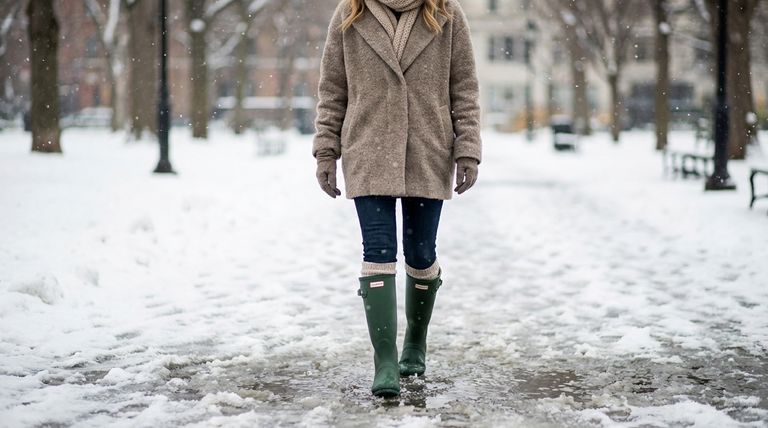
To style Hunter boots for winter, pair them with skinny jeans tucked inside or wear them with thick tights and a skirt. The key is to focus on layering for warmth, as the boots themselves are not insulated.
The central challenge is adapting a waterproof rain boot for a cold-weather environment. While stylish and excellent for wet slush, standard Hunter boots lack the insulation and traction required for true winter conditions, making your choice of socks and awareness of their limitations paramount.
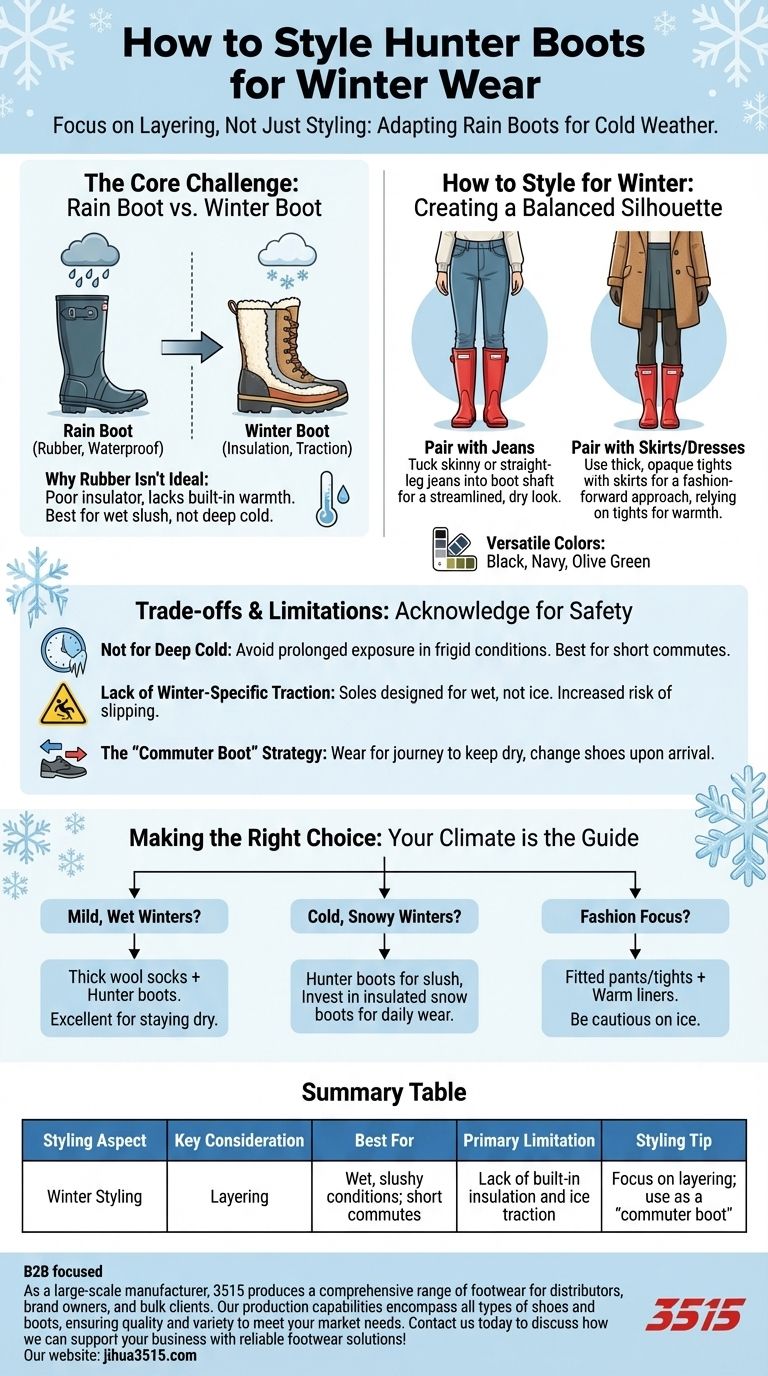
The Core Challenge: Rain Boot vs. Winter Boot
Hunter boots are fundamentally designed for rain, not snow. Understanding their material properties is the first step to wearing them successfully in colder months.
Why Rubber Isn't Ideal for Cold
The rubber construction that makes Hunter boots perfectly waterproof also works against them in low temperatures. Rubber is a poor insulator; it does not effectively block cold from getting in or retain heat from getting out.
The Missing Ingredient: Insulation
True winter boots feature a dedicated layer of insulation, such as shearling, fleece, or synthetic padding. This material is specifically designed to trap air and keep your feet warm. Standard Hunter boots do not have this built-in layer.
Where They Excel: Wet and Slushy Conditions
The primary advantage of wearing Hunter boots in winter is for navigating wet slush and melting snow. Their excellent waterproofing will keep your feet completely dry, which is a critical component of staying warm.
How to Style Hunter Boots for Winter
Styling these boots is about creating a balanced silhouette while accommodating the need for warm layers.
Pairing with Jeans
Tucking skinny or straight-leg jeans into the shaft of the boot is the most common and practical approach. This creates a clean, streamlined look that prevents your pants from getting wet.
Creating a Look with Skirts or Dresses
For a more fashion-forward approach, pair your boots with thick, opaque tights and a skirt or dress. This combination works well, but it relies heavily on the quality of your tights to provide warmth.
Choosing Versatile Colors
Classic colors like black, navy, or olive green offer the most versatility. They pair easily with a wide range of winter coats and accessories, making them a practical wardrobe staple.
Understanding the Trade-offs and Limitations
To wear Hunter boots safely and comfortably in winter, you must acknowledge their inherent limitations.
Not for Deep Cold or Prolonged Exposure
In frigid, snowy conditions, these boots will not provide sufficient warmth for extended periods. They are best suited for shorter commutes or errands in milder winter weather.
A Lack of Winter-Specific Traction
The sole of a standard Hunter boot is designed for wet surfaces, not ice. It lacks the deep, specialized lugs of a dedicated snow boot, increasing the risk of slipping on icy patches.
The "Commuter Boot" Strategy
A practical solution is to treat them as commuter boots. Wear them for your journey to keep your feet dry, and pack a different pair of shoes to change into upon arriving at your destination.
Making the Right Choice for Your Climate
Your local weather is the ultimate guide to deciding how and when to wear your Hunter boots in winter.
- If your primary focus is navigating mild, wet winters: Hunter boots paired with thick wool socks are an excellent and stylish choice for staying dry.
- If your primary focus is warmth in cold, snowy winters: Treat your Hunter boots as a short-term solution for slush and invest in an insulated, high-traction snow boot for daily wear.
- If your primary focus is fashion: Style them with fitted pants or tights, but always plan for the functional trade-offs by adding warm liners and being cautious on ice.
Ultimately, using Hunter boots effectively in winter is about leveraging their waterproofing while actively compensating for their lack of warmth and traction.
Summary Table:
| Styling Aspect | Key Consideration |
|---|---|
| Best For | Wet, slushy conditions; short commutes |
| Key Pairing | Skinny jeans tucked in; skirts with thick tights |
| Primary Limitation | Lack of built-in insulation and ice traction |
| Styling Tip | Focus on layering; use as a "commuter boot" |
As a large-scale manufacturer, 3515 produces a comprehensive range of footwear for distributors, brand owners, and bulk clients. Looking for stylish, durable boots for your collection? Our production capabilities encompass all types of shoes and boots, ensuring quality and variety to meet your market needs. Contact us today to discuss how we can support your business with reliable footwear solutions!
Visual Guide
Related Products
- Wholesale Lightweight Tactical Boots Custom Manufacturer for Desert & Combat Use
- High-Traction Suede Tactical Boots Wholesale & Custom Manufacturing
- Durable Leather Tactical Boots Wholesale & Custom Manufacturing for Brands
- Durable Military Combat Boots with Water Drainage for Wholesale & OEM
- Wholesale Tactical Boots High-Traction & Reflective for Bulk & Brand Orders
People Also Ask
- What are the common types of combat boots? Find the Right Boot for Your Mission
- What specialized protections do tactical boots offer? Maximize Endurance with High-Performance Footwear
- What are the different types of tactical boots available? Find the Right Boot for Your Mission
- What are the main construction similarities between tactical boots and tactical sneakers? Built for Performance & Durability
- How does additive manufacturing equipment reduce environmental risks? Sustainable Tactics for Modern Footwear Production