
In short, eco-friendly wellies are important because they provide a necessary alternative to traditional boots, which are frequently made from unsustainable, petroleum-based plastics like PVC or resource-intensive leather. By utilizing sustainable materials like natural rubber and focusing on ethical production, eco-friendly wellies significantly reduce the environmental harm associated with manufacturing and disposal.
The core issue extends beyond a single material. Choosing an eco-friendly welly means supporting a system of sustainable sourcing, ethical manufacturing, and responsible end-of-life planning that the traditional footwear industry often overlooks.
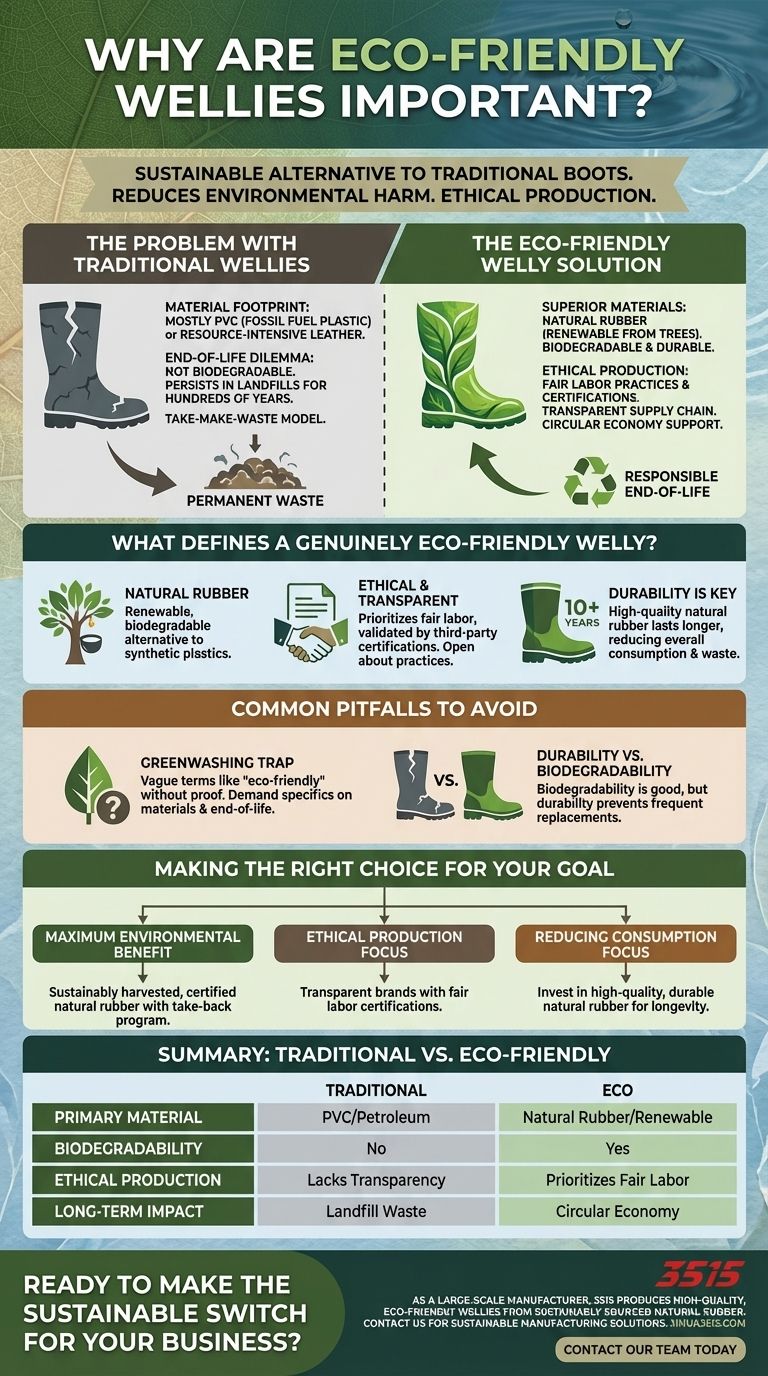
The Problem with Traditional Wellies
To understand the value of sustainable options, we must first recognize the drawbacks of the conventional approach.
The Material Footprint
Most standard wellies are made from Polyvinyl Chloride (PVC), a plastic derived from fossil fuels. Its production is energy-intensive and can release harmful chemicals.
Other boots may use leather, which carries its own significant environmental costs related to land use, water consumption, and the tanning process.
The End-of-Life Dilemma
PVC is not biodegradable. A pair of discarded PVC wellies can persist in a landfill for hundreds of years, contributing to plastic pollution.
This creates a linear "take-make-waste" model, where resources are consumed to create a product that is ultimately destined to become permanent waste.
What Defines a Genuinely Eco-Friendly Welly?
A truly sustainable welly is defined by more than just its primary material. It involves a holistic assessment of its entire lifecycle.
Superior Materials: Natural Rubber
The gold standard for eco-friendly wellies is natural rubber. This material is harvested as sap from rubber trees, a renewable resource.
When sourced from responsibly managed forests, natural rubber is a biodegradable and durable alternative to synthetic plastics.
Ethical Production and Certifications
Sustainable brands prioritize ethical labor practices in their manufacturing facilities. They often seek third-party certifications to validate their claims.
Look for brands that are transparent about their supply chain and manufacturing processes, ensuring workers are treated fairly and environmental policies are upheld.
Brand Transparency
A reliable eco-friendly brand will not hide its practices. It will openly share its sustainability reports, material sources, and any certifications it has earned.
This transparency is a key indicator that the company is accountable and committed to its environmental and ethical claims.
Common Pitfalls to Avoid
Navigating the market for sustainable goods requires a critical eye to separate genuine efforts from clever marketing.
The Trap of "Greenwashing"
Some brands may use vague terms like "eco-friendly" or "green" without substantiating their claims.
Always look for specifics. A brand should be able to tell you exactly what makes its product sustainable, from the materials used to its end-of-life program.
Durability vs. Biodegradability
While a biodegradable boot is an excellent goal, durability is also a key component of sustainability.
A high-quality welly made from natural rubber that lasts for a decade prevents the need for multiple replacement pairs, reducing overall consumption and waste.
Making the Right Choice for Your Goal
Your final decision should align with your primary motivation for seeking a sustainable option.
- If your primary focus is maximum environmental benefit: Seek out wellies made from certified, sustainably harvested natural rubber from a brand with a clear end-of-life recycling or take-back program.
- If your primary focus is ethical production: Prioritize brands that are transparent about their supply chain and can provide third-party certifications for fair labor practices.
- If your primary focus is reducing consumption: Invest in a high-quality, durable natural rubber welly known for its longevity, reducing the need for future purchases.
Ultimately, an informed choice empowers a more responsible and sustainable future for footwear.
Summary Table:
| Aspect | Traditional Wellies | Eco-Friendly Wellies |
|---|---|---|
| Primary Material | PVC (Petroleum-based) | Natural Rubber (Renewable) |
| Biodegradability | Not biodegradable | Biodegradable |
| Ethical Production | Often lacks transparency | Prioritizes fair labor & certifications |
| Long-Term Impact | Contributes to landfill waste | Supports a circular economy |
Ready to make the sustainable switch for your business?
As a large-scale manufacturer, 3515 produces a comprehensive range of footwear for distributors, brand owners, and bulk clients. We specialize in creating high-quality, eco-friendly wellies from sustainably sourced natural rubber, combining durability with environmental responsibility. Our production capabilities encompass all types of shoes and boots, ensuring we can meet your specific needs.
Let us help you provide your customers with footwear that makes a positive impact. Contact our team today to discuss your requirements and explore our sustainable manufacturing solutions.
Visual Guide
Related Products
- Lightweight Breathable Sneakers with Wet-Traction Grip for Wholesale & Private Label
- Durable Rubber Sole Outdoor Shoes Wholesale & Custom Manufacturing
- Wholesale Breathable Athletic Sneakers - Custom Lightweight Cushioned Footwear Manufacturer
- Wholesale Durable Safety Boots Manufacturer Customizable Steel Toe Work Boots
- Factory Direct Wholesale Rain Boots Durable Waterproof & Fully Customizable
People Also Ask
- Why are breathable sneakers necessary for tropical commuting? Stay Cool and Dry in High Humidity
- What role do lightweight training shoes play in urban traffic? Boost Agility and Reaction for Safer City Navigation
- How do lightweight shoes provide support? The Science of Efficient Cushioning & Stability
- What are the style advantages of lightweight shoes? Sleek, Versatile & Modern Comfort
- How do lightweight shoes contribute to healthier feet? Reduce Fatigue & Prevent Foot Problems


















