In winter cycling, gaiters and toe covers act as a critical first line of defense against the elements. They are lightweight accessories designed to seal the most vulnerable parts of your footwear—the ventilation holes and the opening around the ankle. By blocking wind and preventing water from seeping in, they help keep your feet significantly drier and, therefore, warmer than they would be otherwise.
While gaiters and toe covers are effective at blocking wind and spray, true winter comfort comes from a layered system. They are an excellent starting point, but they are part of a broader strategy that includes insulated overshoes, proper socks, and sometimes dedicated winter boots to combat severe cold.
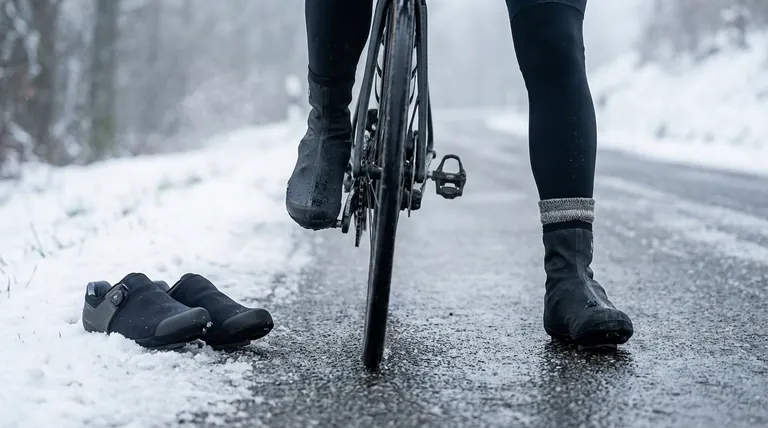
The Core Problem: Wind and Water
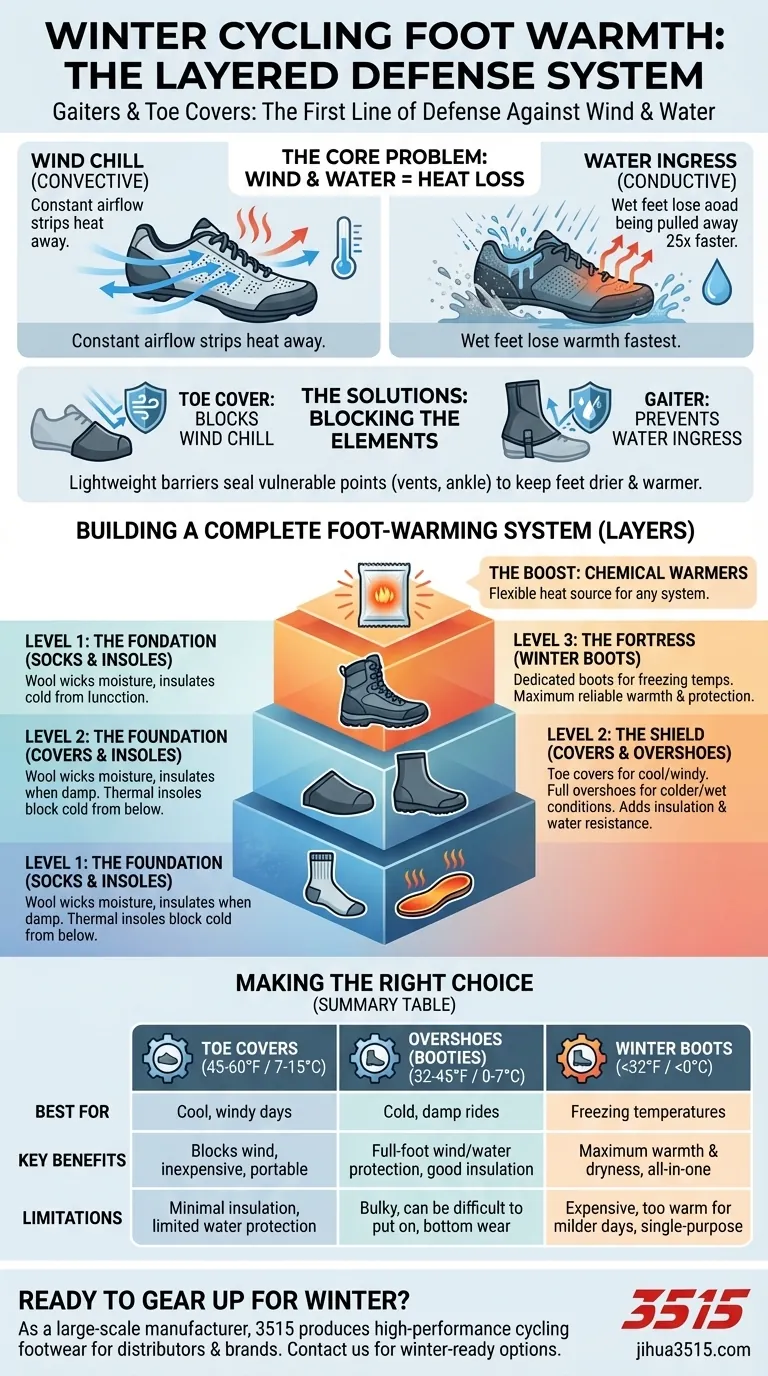
To understand how to keep your feet warm, you must first understand what makes them cold. The two primary culprits in cycling are convective heat loss (wind chill) and conductive heat loss (wetness).
How Toe Covers Combat Wind Chill
A toe cover is a small piece of material, often neoprene, that stretches over the front of your cycling shoe. Its primary job is to block the wind.
Even on a dry day, the constant airflow over your shoes rapidly strips away heat. Toe covers shield the ventilation holes common in summer shoes, creating a pocket of still air and dramatically reducing wind chill.
How Gaiters Prevent Water Ingress
Gaiters and full overshoes (booties) focus on sealing your shoe from moisture. Water is a highly effective conductor of heat, pulling warmth away from your body 25 times faster than air.
These accessories create a waterproof or water-resistant barrier. They prevent rain and road spray from soaking your socks, which is the fastest way to get dangerously cold feet.
Building a Complete Foot-Warming System
Toe covers are just one piece of the puzzle. A truly effective setup treats foot warmth as a system with several layers, allowing you to adapt to changing conditions.
Level 1: The Foundation (Socks and Insoles)
Your first layer should be a high-quality wool sock. Wool is the standard for winter cycling because it insulates even when damp and effectively wicks moisture away from your skin.
Consider swapping your standard insole for a thermal or wool insole. This adds a layer of insulation from the bottom, protecting your foot from the cold metal cleat.
Level 2: The Shield (Covers and Overshoes)
This is where toe covers fit in. They are perfect for cool, dry, and windy days.
For colder and wetter conditions, you need a full overshoe, also known as a bootie. These cover the entire shoe and ankle, providing significantly more insulation and water protection than a simple toe cover.
Level 3: The Fortress (Winter Boots)
For riding in genuinely freezing temperatures, the best investment is a pair of winter-specific cycling boots.
These are fully insulated and weatherproofed from the start, eliminating the need for layering accessories. They offer the most reliable warmth and protection for harsh conditions.
The Boost: Chemical Warmers
For any of the systems above, chemical toe warmers are an invaluable addition. These small, air-activated packets can be placed on top of or below your toes, providing hours of consistent heat. They can make the difference between a comfortable ride and cutting it short due to cold.
Understanding the Trade-offs
There is no single perfect solution; each option has its place. Your choice depends on the conditions, your budget, and your tolerance for cold.
Toe Covers: The Lightweight Option
Pros: Inexpensive, easy to put on, and small enough to store in a jersey pocket. Ideal for cool, not frigid, conditions. Cons: Offer minimal insulation and only protect the very front of the foot from light spray.
Overshoes (Booties): The Versatile Workhorse
Pros: Excellent balance of insulation and weather protection. Allows you to adapt your comfortable summer shoes for most winter conditions. Cons: Can be bulky and a bit of a struggle to get on. The bottom can wear out over time from walking.
Winter Boots: The Ultimate Solution
Pros: Maximum warmth, dryness, and convenience. Nothing to forget or put on separately. Cons: By far the most expensive option. They can be too warm for milder winter days and are a single-purpose item in your gear closet.
Making the Right Choice for Your Ride
Match your gear to the conditions you expect to face for the best results.
- If your primary focus is cool, windy days (45-60°F / 7-15°C): Toe covers combined with wool socks are often the perfect, low-bulk solution.
- If your primary focus is cold, damp rides (32-45°F / 0-7°C): A full neoprene overshoe over your regular cycling shoes provides the necessary insulation and water resistance.
- If your primary focus is riding in freezing temperatures (below 32°F / 0°C): Dedicated winter cycling boots are the most reliable investment for consistent warmth and comfort.
- If you need a flexible boost for any condition: Chemical toe warmers are an invaluable and inexpensive way to add significant warmth to any setup.
Ultimately, protecting your feet from wind and water is the foundation for comfortable winter cycling.
Summary Table:
| Gear Type | Best For | Key Benefits | Limitations |
|---|---|---|---|
| Toe Covers | Cool, windy days (45-60°F / 7-15°C) | Blocks wind chill, inexpensive, easy to carry | Minimal insulation, limited water protection |
| Overshoes (Booties) | Cold, damp rides (32-45°F / 0-7°C) | Full-foot wind/water protection, good insulation | Can be bulky, bottom may wear from walking |
| Winter Boots | Freezing temperatures (below 32°F / 0°C) | Maximum warmth & dryness, no extra accessories needed | Expensive, can be too warm for milder days |
Ready to gear up for winter? As a large-scale manufacturer, 3515 produces a comprehensive range of high-performance cycling footwear for distributors, brand owners, and bulk clients. Our production capabilities encompass all types of shoes and boots, including winter-ready options. Let us help you stay warm and dry—contact our team today to discuss your needs!
Visual Guide
Related Products
- Wholesale Safety Footwear Manufacturer for Bulk & Custom OEM Orders
- Wholesale Safety Boots Manufacturer for Custom & Private Label Orders
- Wholesale Customizable Safety Boots Durable & Protective Footwear Manufacturing
- Durable Leather Moc Toe Work Boots for Wholesale & Custom Manufacturing
- Wholesale Durable Safety Boots | Custom Steel Toe & Puncture-Resistant Manufacturing
People Also Ask
- What type of safety shoe is recommended for workers exposed to heavy machinery? Steel Toe Boots for Ultimate Protection
- Why are industrial safety boots with steel toes necessary for machine operators? Essential Foot Protection for Safety
- Is the myth about steel toe shoes cutting off toes true? Debunking the Safety Footwear Myth
- What are the recommended uses for steel toe safety shoes? Essential Protection for High-Risk Industries
- Why are steel toes popular in safety footwear? The Ultimate Guide to Heavy-Duty Protection