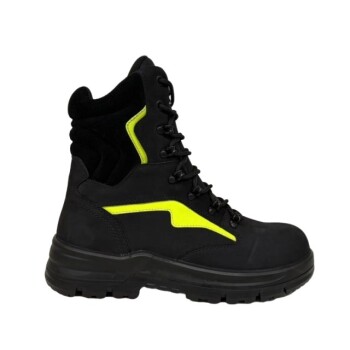
Standardized obstacle combinations serve as reproducible tactical simulations designed to rigorously stress-test the interaction between a user and their protective equipment. By utilizing specific physical barriers—such as 70 cm hurdles and 100 cm crawl-through tunnels—these tests isolate how the physical volume and surface texture of footwear impact a wearer's ability to maintain movement continuity in confined spaces.
By forcing users to navigate space-restricted environments, these protocols reveal the specific points where gear bulk and frictional resistance interfere with operational efficiency, converting subjective difficulty into objective, actionable data.
The Mechanics of Tactical Simulation
Replicating Restricted Environments
To accurately assess coordination, testing protocols must move beyond open-field movement. The use of standardized obstacles creates space-restricted environments that mimic real-world tactical challenges.
The Role of Specific Obstacles
Barriers like 70 cm hurdles force the wearer to perform vertical movements that test the weight and flexibility of footwear. Conversely, 100 cm crawl-through tunnels assess horizontal navigation, specifically targeting how the gear interacts with the ground and surrounding surfaces.
Ensuring Repeatability
The value of these combinations lies in their standardization. Because the obstacles remain constant, evaluators can attribute changes in performance directly to the footwear being tested rather than environmental variables.
Quantifying Operational Interference
Assessing Bulk and Friction
Two primary factors create interference during these tests: bulk and frictional resistance. In a crawl tunnel, excessive bulk can cause footwear to snag, while high friction can impede the smooth sliding motion required for rapid egress.
Measuring Movement Continuity
The goal is to maintain movement continuity. Standardized obstacles highlight interruptions in flow caused by the gear, allowing experts to pinpoint exactly where footwear designs fail to support the user's motor capabilities.
Converting Performance to Data
Using functional assessment scales, complex physical maneuvers—such as standing, walking, and jumping—are translated into comparable percentage data. This allows technical experts to determine the clinical relevance of a design change quantitatively.
Understanding the Trade-offs
Simulation vs. Real-World Chaos
While standardized obstacles provide excellent data on physical dimensions and friction, they are controlled scenarios. They optimize for repeatability, but may not fully capture the unpredictable, chaotic terrain found in uncontrolled field operations.
The Protection-Mobility Balance
These tests often reveal an inherent conflict: increasing protective coverage typically increases bulk. A high score in protection might lead to a lower score in operational coordination within the tunnel test, necessitating a compromise based on mission requirements.
Making the Right Choice for Your Goal
To select or design the most effective protective footwear, you must align the test results with your specific operational priorities.
- If your primary focus is Mobility in Confined Spaces: Prioritize low-bulk designs that demonstrate minimal frictional resistance during the 100 cm crawl-through tunnel assessment.
- If your primary focus is Clinical Analysis: Rely on the functional assessment scales to convert raw movement data into percentage-based metrics for objective comparison.
Effective evaluation requires looking beyond the gear itself to understand how it physically interacts with the challenging environments it was built to survive.
Summary Table:
| Test Component | Dimensions | Primary Focus | Metric Evaluated |
|---|---|---|---|
| Hurdle Clearances | 70 cm Height | Vertical movement & weight impact | Flexibility & Lift Efficiency |
| Crawl-Through Tunnel | 100 cm Length | Horizontal navigation in confined space | Bulk, Snagging & Friction |
| Functional Scales | N/A | Standing, walking, jumping | Movement Continuity % |
| Standardization | Fixed Obstacles | Repeatable tactical simulation | Objective Interference Data |
Elevate Your Fleet's Tactical Performance with 3515
At 3515, we understand that in high-stakes environments, even a millimeter of excess bulk can compromise mission success. As a large-scale manufacturer serving global distributors and brand owners, we leverage rigorous testing data to engineer footwear that balances superior protection with peak operational coordination.
Our flagship Safety Shoes and Tactical Boots are optimized for movement continuity, ensuring your users navigate obstacles without interference. Whether you require training shoes, sneakers, or professional dress shoes for bulk requirements, 3515 provides the precision engineering your brand deserves.
Ready to optimize your product line for the field? Contact us today to discuss our comprehensive production capabilities and how we can support your specific mission requirements.
References
- Suyoung Son, Yutaka Tochihara. Exploring the appropriate test methods to examine the effects of firefighter personal protective equipment on mobility. DOI: 10.1186/s40691-022-00295-8
This article is also based on technical information from 3515 Knowledge Base .
Related Products
- Premium Suede Sport Safety Shoes for Wholesale & Bulk Orders
- Premium Lightweight Safety Shoes for Wholesale & Bulk Orders
- Wholesale Customizable Safety Boots Durable & Protective Footwear Manufacturing
- Premium Waterproof Nubuck Safety Boots for Wholesale
- Wholesale Anti-Smash & Puncture-Proof Safety Shoes Custom Manufacturing for Brands
People Also Ask
- What industries have specific OSHA footwear requirements? Ensure Compliance & Protect Your Workforce
- What are the primary functions of professional safety shoes? Maximize Safety in Water Supply Confined Spaces
- What role do specialized safety shoes play in preventing falls? Engineering Stability in Industrial Environments
- Why are customized foot sensors or professional safety shoes incorporated into biomechanical testing? Precision Insights
- What are the main components of safety shoes? A Guide to Protective Footwear Design