
When choosing a heel style for motorcycle boots, your decision primarily comes down to a trade-off between the secure anchoring of a traditional 90-degree heel and the smooth maneuverability of a wedge sole. The ideal heel must provide a firm grip on the footpegs to prevent your feet from sliding forward, yet be low and wide enough to not interfere with your ability to operate the controls.
The core decision is not about which heel is "better," but which one best serves your specific needs. The 90-degree heel prioritizes a secure lock on the pegs, while the wedge heel prioritizes smooth foot movement and off-bike comfort.
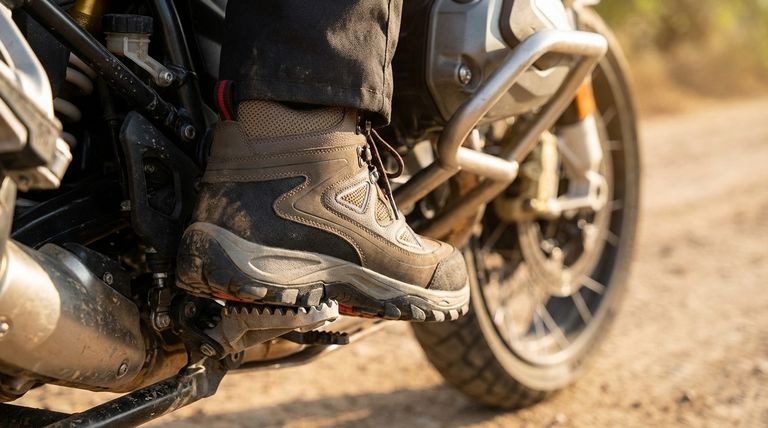
The Core Functions of a Motorcycle Boot Heel
A boot's heel is not just a stylistic choice; it's a critical component for safety and control. Its design directly impacts three key areas of your riding experience.
Function 1: Secure Grip on the Pegs
The most important job of the heel is to prevent your foot from sliding forward off the footpeg, especially during acceleration or on bumpy terrain.
A pronounced heel creates a physical stop that "hooks" onto the peg, providing a stable and secure platform for your foot. This is a fundamental safety feature.
Function 2: Maneuverability and Control
Your feet must be able to move quickly and precisely to shift gears and apply the rear brake. The shape of the heel can either help or hinder this movement.
A boot that allows your foot to slide easily along the peg can make for smoother, faster shifting. A heel that is too aggressive can sometimes catch or feel cumbersome.
Function 3: Comfort On and Off the Bike
The heel and sole dictate how weight is distributed across your foot. This affects comfort during long rides and, just as importantly, when you're walking around off the bike.
An even sole can significantly reduce fatigue when standing or walking, which is a major consideration if your rides often include destinations where you'll be on your feet.
Comparing the Two Primary Heel Styles
Understanding the distinct advantages and disadvantages of the two most common heel types is the key to making an informed choice.
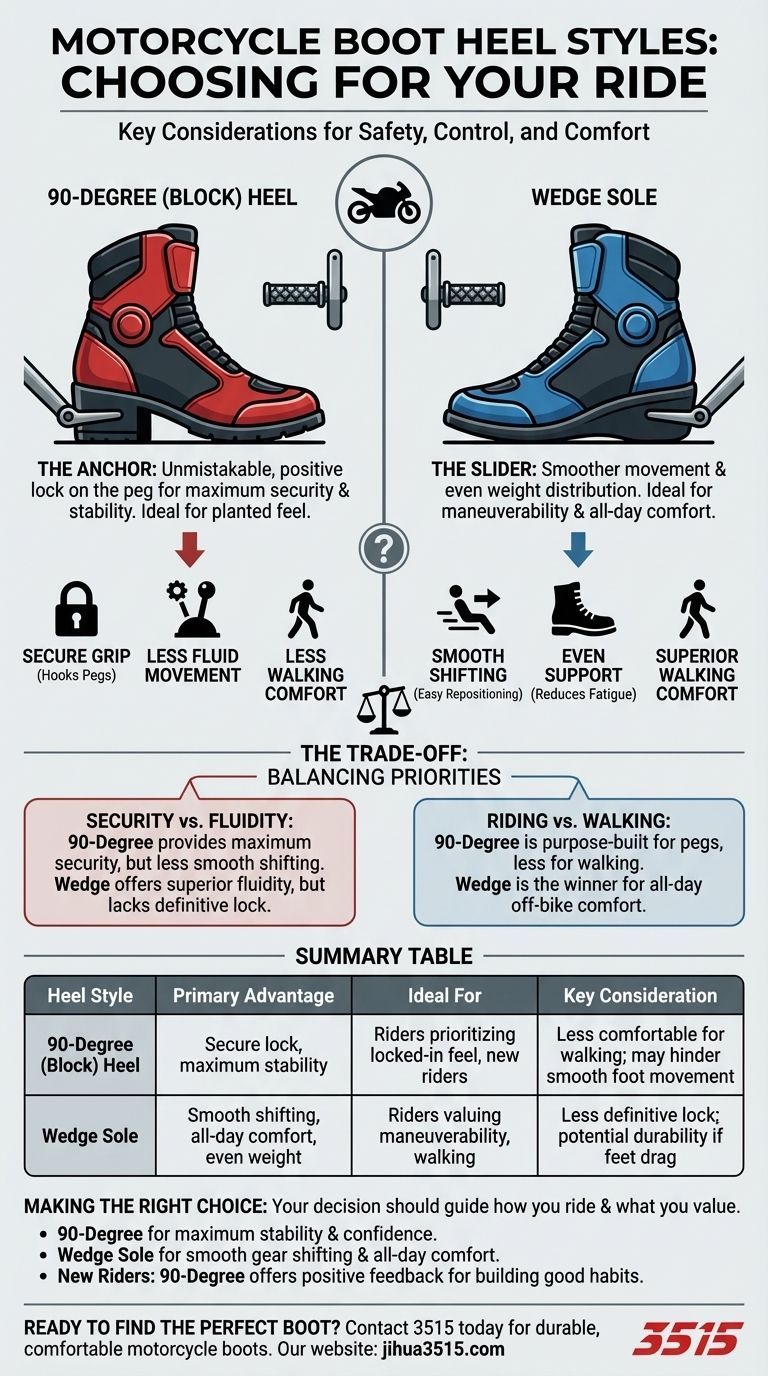
The 90-Degree (Block) Heel: The Anchor
This is the traditional boot heel, featuring a sharp, 90-degree angle where the heel stack meets the sole.
Its primary advantage is the unmistakable, positive lock it provides on the footpeg. This secure feeling can inspire significant confidence, as your feet feel planted on the bike.
The Wedge Sole: The Slider
A wedge sole features a continuous, single-piece sole that tapers from the heel to the toe with no distinct, separate heel block.
Its main benefit is smoother movement, as there is no sharp edge to catch on the peg when repositioning your foot. It also distributes weight more evenly, making it far more comfortable for walking and for riders with flat feet.
Understanding the Trade-offs
Neither style is perfect for every situation. The choice involves balancing competing priorities.
Security vs. Fluidity
The 90-degree heel offers maximum security, but that firm "hook" can sometimes make it harder to slide your foot forward and back to operate the shifter.
The wedge sole offers superior fluidity for shifting and braking, but it lacks that definitive locking point, requiring more conscious foot placement to feel secure.
Riding vs. Walking
The 90-degree heel is purpose-built for its interaction with a footpeg and is generally less comfortable for extended walking.
The wedge sole is the clear winner for all-day comfort. If your journey involves as much walking as riding, the even weight distribution of a wedge will be a significant benefit.
Durability Concerns
While both styles are durable, the references suggest a potential downside to the wedge sole. If you tend to drag your feet when stopping, the material of a wedge sole may wear down more quickly than a traditional rubber heel cap.
Making the Right Choice for Your Riding Style
Your decision should be guided by how you ride and what you value most in a boot.
- If your primary focus is a locked-in, secure feel on the pegs: The 90-degree heel is the definitive choice for maximum stability and confidence.
- If your primary focus is smooth gear shifting and all-day comfort, including walking: The wedge sole is the superior option for its easy maneuverability and even support.
- If you are a new rider learning foot placement: The positive feedback and security of a 90-degree heel can be highly beneficial for building good habits.
Ultimately, the right heel complements your riding style, providing the precise balance of stability and control you need on the road.
Summary Table:
| Heel Style | Primary Advantage | Ideal For | Key Consideration |
|---|---|---|---|
| 90-Degree (Block) Heel | Secure lock on footpegs, maximum stability | Riders prioritizing a locked-in feel, new riders learning foot placement | Can be less comfortable for walking; may hinder smooth foot movement |
| Wedge Sole | Smooth shifting, all-day comfort, even weight distribution | Riders valuing maneuverability, long rides with off-bike walking | Less definitive locking point; potential durability issue if dragging feet |
Ready to find the perfect motorcycle boot for your needs? As a large-scale manufacturer, 3515 produces a comprehensive range of durable and comfortable motorcycle boots for distributors, brand owners, and bulk clients. Our expertise ensures you get the ideal balance of safety, control, and comfort. Contact us today to discuss your specific requirements and explore our full product line!
Visual Guide
Related Products
- Wholesale Tactical Boots High-Traction & Reflective for Bulk & Brand Orders
- High Performance Fire-Retardant Waterproof Safety Boots
- Durable Goodyear Welt Leather Work Boots for Wholesale & Private Label
- Wholesale High-Traction Camo Boots - Custom Manufacturer for Brands
- Wholesale Waterproof Tactical Boots Custom Suede & High-Traction Soles
People Also Ask
- How do tactical boots protect against injuries? Discover the Integrated Safety System
- How should you break in and clean tactical boots? A Step-by-Step Guide for Peak Performance
- Who commonly uses tactical boots? From Military to Outdoor Enthusiasts
- How does creative short video content support functional footwear sales? Boost Trust and Traffic with Visual Proof
- How do combat boots and tactical boots differ in design and purpose? Choose the Right Boot for Your Mission



















