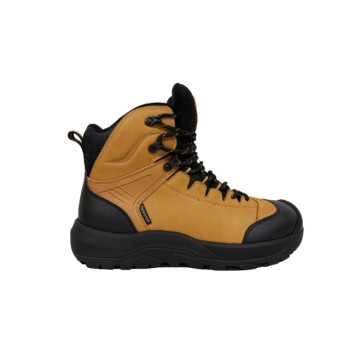
Yes, Wellington boots designed specifically for winter are widely available. The key difference from a standard Wellington is the inclusion of an insulated lining, most commonly made of neoprene, which provides critical thermal protection to keep your feet warm in cold and wet conditions.
While a standard rubber Wellington is a poor choice for winter due to its lack of insulation, a purpose-built winter Wellington with a neoprene lining offers an excellent fusion of waterproofing and warmth for wet, slushy, and moderately cold environments.
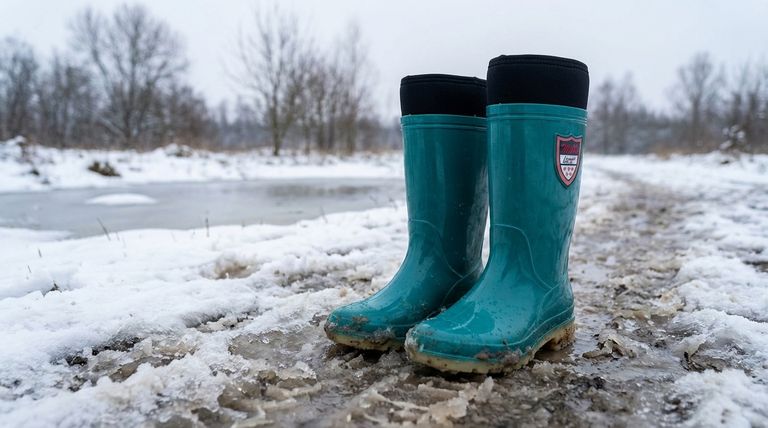
What Defines a "Winter" Wellington?
A true winter Wellington isn't just a standard boot in a darker color. It incorporates specific features designed to handle the demands of cold, slippery, and wet conditions.
The Critical Role of Insulation
The single most important feature is thermal insulation. Standard rubber offers waterproofing but has virtually no ability to block cold or retain heat. Winter Wellingtons solve this by bonding a layer of neoprene (the same material used in wetsuits) to the inner wall of the boot. This traps a layer of warm air, providing effective insulation against the cold.
Enhanced Grip for Slippery Surfaces
Winter brings ice, slush, and packed snow. A winter Wellington features a much more aggressive and deeper tread pattern on its outsole. This design is crucial for providing the necessary traction to prevent slips and falls on treacherous surfaces.
Unbeatable Waterproofing
The core strength of any Wellington boot is that it's 100% waterproof. This advantage is even more critical in winter, where melting snow, slush, and freezing rain can quickly soak through traditional leather or fabric boots, leading to dangerously cold feet.
Wellingtons vs. Traditional Winter Boots
Understanding where winter Wellingtons excel—and where they fall short—is key to determining if they are the right tool for your specific needs. They are a specialized solution, not a universal one.
When to Choose a Winter Wellington
These boots are the ideal choice for environments where wetness is the primary challenge. Think of slushy city streets, muddy farm fields in winter, or any activity that requires standing in or walking through cold water or melting snow. Their slip-on design and easy-to-clean rubber surface also make them exceptionally practical for quick trips outside.
When to Choose a Different Boot
For activities in deep, dry snow or extreme sub-zero temperatures, a traditional winter boot is often superior. A dedicated backcountry or hiking-style winter boot will typically offer thicker insulation, better breathability, and the ankle support needed for long-distance walking or hiking.
Understanding the Trade-offs
No single boot can do everything perfectly. Being aware of the inherent limitations of the Wellington design allows you to make an informed decision.
Breathability is Limited
Rubber is not a breathable material. During periods of high activity, your feet may sweat. In a Wellington boot, this moisture has nowhere to go, which can eventually make your feet feel damp and cold.
Insulation Has Its Ceiling
While neoprene-lined Wellingtons are warm, the rubber exterior itself will still become very cold in freezing temperatures. For prolonged exposure to deep cold, multi-layer insulated pac boots or specialized hiking boots will offer superior warmth retention.
Support for Demanding Terrain
The simple, pull-on design of a Wellington does not provide the snug fit or ankle support of a laced winter boot. For serious hiking or navigating uneven, frozen ground, a traditional boot is a safer and more comfortable option.
Making the Right Choice for Your Winter Needs
To select the best footwear, match the boot's strengths to your most common winter activities.
- If your primary focus is navigating wet, slushy streets or doing yard work in moderate cold: An insulated, neoprene-lined Wellington boot is an excellent, practical choice.
- If your primary focus is daily commuting or walking in freezing but drier conditions: A casual leather winter boot (like an insulated Chelsea or Chukka) may offer better breathability and style.
- If your primary focus is winter hiking, snowshoeing, or enduring deep cold for long periods: A dedicated, insulated backcountry or hiking boot with specialized traction is non-negotiable.
Ultimately, choosing the right winter footwear means matching the boot's specific strengths—insulation, waterproofing, and grip—to the reality of your winter environment.
Summary Table:
| Feature | Winter Wellington | Standard Wellington |
|---|---|---|
| Insulation | Neoprene Lined | None |
| Waterproofing | 100% Waterproof | 100% Waterproof |
| Best For | Wet, Slushy Conditions | Rain, Mud (Warmer Weather) |
| Traction | Aggressive Winter Tread | Standard Tread |
Need Durable Winter Wellingtons for Your Business?
As a large-scale manufacturer, 3515 produces a comprehensive range of insulated footwear for distributors, brand owners, and bulk clients. Our production capabilities encompass all types of winter-ready shoes and boots, including high-quality, neoprene-lined Wellington boots designed for reliable performance in cold, wet conditions.
Let's discuss your specific needs and how we can deliver the right winter footwear solution for your market.
Contact our team today for a quote
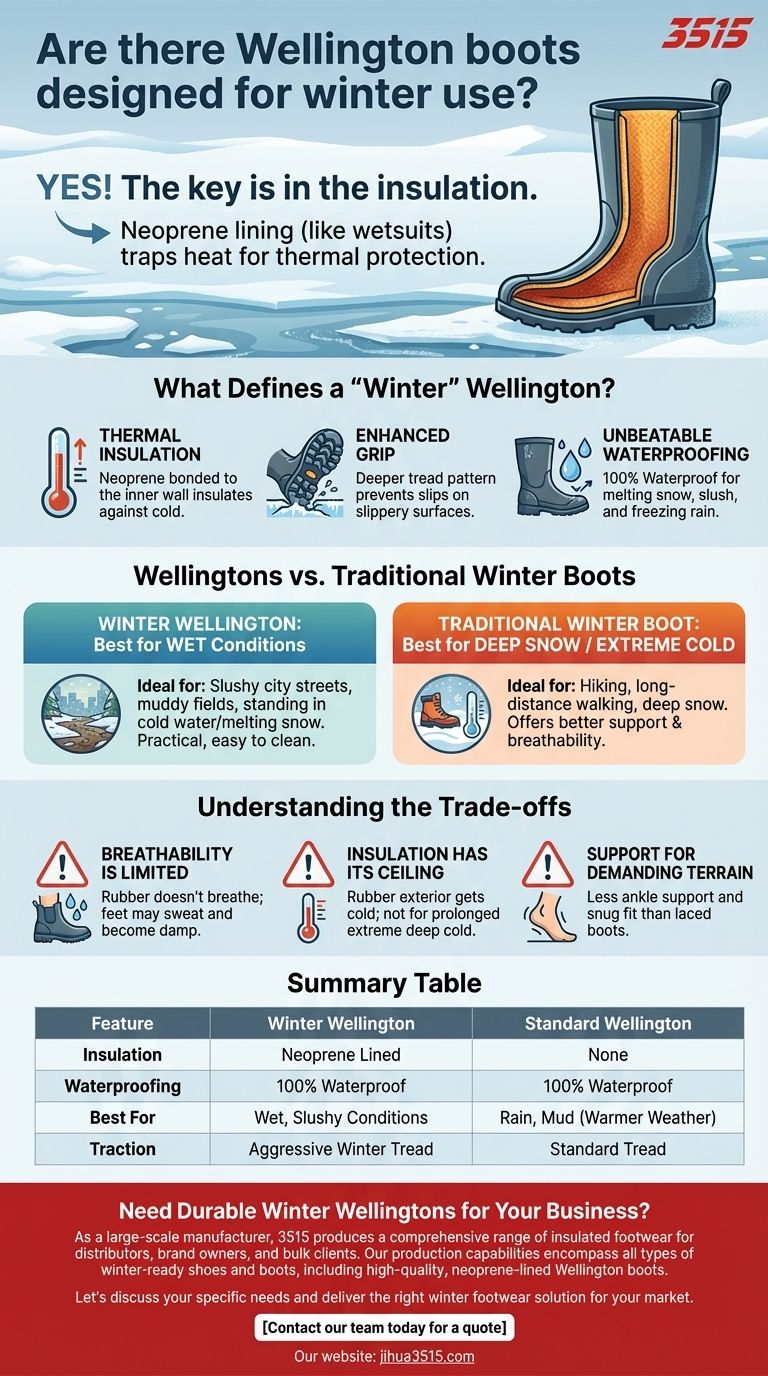
Visual Guide
Related Products
- Durable Waterproof Rain Boots | Custom Manufacturer for Wholesale & Brands
- Premium Insulated Safety Boots and Shoes for Wholesale & Bulk Orders
- Factory Direct Wholesale Rain Boots Durable Waterproof & Fully Customizable
- Durable Goodyear Welt Leather Work Boots for Wholesale & Private Label
- Wholesale Waterproof Tactical Boots Custom Suede & High-Traction Soles
People Also Ask
- What are the main materials for waterproof rain boots? Choose the Right Material for Durability & Comfort
- What is the overall recommendation for choosing rain boot materials? A Guide to Rubber vs. PVC
- How does boot height affect waterproofing? Choose the Right Height for Ultimate Protection
- Why are rain boots more flexible and comfortable than snow boots? The Key Differences Explained
- What are the best types of shoes for different gardening conditions? Find Your Perfect Match.