
From a purely financial standpoint, yes, quality shoes are an excellent investment. Their superior materials and construction mean they last significantly longer than cheaper alternatives, drastically reducing the frequency of replacement and leading to a lower overall cost-per-wear over time.
The true return on investment in quality footwear is not just measured in dollars saved, but in the combined value of long-term durability, improved physical health, enhanced safety, and personal comfort.
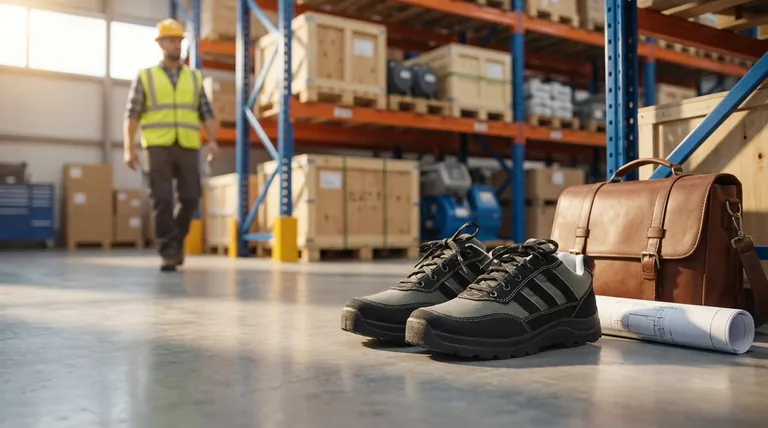
The Financial Case: Cost-Per-Wear vs. Upfront Price
The most common objection to quality shoes is the high initial price tag. However, this view overlooks the fundamental difference between a one-time investment and a recurring expense.
The Durability Dividend
High-quality shoes are built with superior materials, such as full-grain leather and resilient soles, assembled with durable construction methods.
This focus on craftsmanship means they withstand wear and tear far more effectively than shoes made with cheaper, synthetic components.
Avoiding the Replacement Cycle
Inexpensive shoes are often a false economy. Their lower-quality materials break down quickly, forcing you to buy new pairs frequently.
This cycle of repeated purchases often results in spending more over a two or three-year period than you would have on a single, durable pair.
Beyond the Balance Sheet: The Hidden Returns
While the financial argument is strong, the most significant benefits of quality footwear are often the ones you can't see on a bank statement.
An Investment in Your Health
Your feet bear the entire weight of your body throughout the day. Poorly constructed shoes can lead to discomfort and long-term health issues.
Quality shoes provide proper support and cushioning, helping to maintain foot health and prevent conditions that could lead to medical expenses down the line.
A Premium on Safety
In many professional environments, quality footwear is a critical safety tool. Slip-resistant shoes, for example, are proven to reduce workplace accidents.
The cost of a single injury—in medical bills and lost productivity—can easily dwarf the cost of proper, preventative footwear.
The Foundation of Style and Confidence
As the saying goes, it is impossible to be well-dressed in cheap shoes. Quality footwear provides a foundation for your entire appearance.
Well-crafted shoes not only look better but also hold their shape and appearance over years of use, contributing to a consistent and professional image.
Understanding the Trade-offs
An objective analysis requires acknowledging the potential downsides. The decision to invest in quality shoes is not without its considerations.
The High Initial Barrier
The most obvious trade-off is the significant upfront cost. For many, this can be a difficult financial hurdle to clear, even if it makes sense long-term.
The Requirement of Care
To realize their full lifespan and value, quality shoes—especially leather ones—require regular care and maintenance, such as cleaning, conditioning, and proper storage.
This represents an additional investment of both time and money in care products.
Price Is Not a Guarantee
Finally, a high price tag does not automatically equal high quality. It is crucial to invest in reputable brands known for their materials and construction, not just a designer label.
Making the Right Choice for Your Goal
Your "return on investment" depends entirely on what you value most. Use your primary goal to guide your decision.
- If your primary focus is pure cost savings: Calculate the cost-per-wear. A durable, classic pair that you can wear for years will almost always be cheaper than replacing a low-quality pair every few months.
- If your primary focus is workplace safety: Do not compromise. The financial and physical cost of a single accident makes specialized, high-quality safety shoes a non-negotiable investment.
- If your primary focus is long-term health and comfort: Prioritize shoes with proven support and high-quality materials, especially if you spend significant time on your feet.
Investing in quality footwear is ultimately an investment in your own daily comfort, health, and financial well-being.
Summary Table:
| Investment Aspect | Quality Shoes | Cheap Shoes |
|---|---|---|
| Long-Term Cost | Lower cost-per-wear | Higher replacement costs |
| Durability | Superior materials & construction | Prone to quick breakdown |
| Health Benefit | Proper support & comfort | Risk of foot problems |
| Safety | Enhanced protection (e.g., slip-resistant) | Limited safety features |
Ready to invest in footwear that delivers long-term value?
As a large-scale manufacturer, 3515 produces a comprehensive range of durable, safe, and comfortable footwear for distributors, brand owners, and bulk clients. Our production capabilities encompass all types of shoes and boots designed to maximize your return on investment.
Contact us today to discuss your footwear needs and discover how we can support your business with quality you can count on.
Visual Guide

Related Products
- Premium Lightweight Safety Shoes for Wholesale & Bulk Orders
- Wholesale Durable & Breathable Training Shoes for Custom Brands
- Custom OEM Training Shoes Wholesale Manufacturer Durable & Breathable
- Wholesale Durable Camouflage Canvas Shoes with High-Traction Cleated Rubber Sole
- Durable Rubber Sole Outdoor Shoes Wholesale & Custom Manufacturing
People Also Ask
- What is a recommended alternative to using hairspray for slip resistance? Ditch Unreliable Hacks for Real Safety
- What role does blockchain play in footwear supply chain transparency? Enhance Safety Shoe Traceability and Verification
- What workplace hazards indicate the need for safety shoes? Identify risks to protect your workforce.
- How is the absence of PPE (safety shoes & helmets) categorized in construction motion data labeling? Unlock Real-Time Safety Insights!
- What role do specialized safety shoes play in preventing falls? Engineering Stability in Industrial Environments
















