
Yes, absolutely. The era of one-size-fits-all, clunky safety boots is long gone. Today, OSHA-compliant safety footwear is available in a vast array of styles, materials, and colors designed to match specific job functions, workplace hazards, and even personal aesthetic preferences.
The key takeaway is that "style" in safety footwear is not just about looks; it's a direct reflection of function. Different styles incorporate specific protective features tailored to the unique risks of an environment, from construction sites to commercial kitchens.
What "OSHA Compliant" Truly Means
Before exploring styles, it's crucial to understand the non-negotiable protective features that make a shoe "OSHA compliant." Compliance is about meeting specific safety standards, which are the foundation of any design.
Impact and Compression Resistance
This is the most fundamental feature, typically achieved with a protective toe cap. These caps, made of steel, aluminum, or composite materials, must shield the foot from falling objects and crushing forces.
Metatarsal and Puncture Protection
For environments with risks from above or below, additional features are required. Metatarsal guards protect the top of the foot, while puncture-resistant plates in the sole prevent sharp objects like nails from penetrating the shoe.
Electrical and Static Control
Specialized roles require specific electrical properties. This includes shoes designed to protect from electric shock, prevent the buildup of static charge, or safely conduct static electricity to the ground to protect sensitive equipment.
Matching Shoe Style to Workplace Function
With the safety foundation established, manufacturers can innovate with designs tailored to different industries. The style of the shoe is engineered to enhance performance and safety for a specific set of tasks.
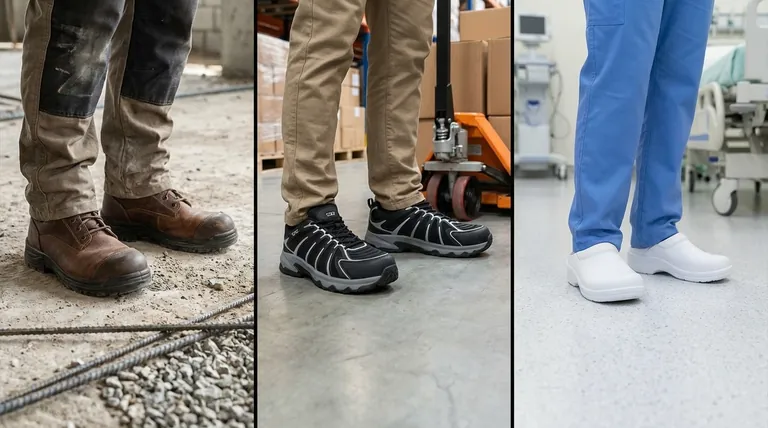
Traditional Safety Boots
Designed for maximum durability and support, boots are the standard in construction, manufacturing, and heavy industry. Their high-top design provides crucial ankle support on uneven terrain.
Athletic-Style Safety Sneakers
For roles requiring mobility and long hours on your feet, such as in logistics, warehousing, or automotive repair, safety sneakers are ideal. They offer the comfort and flexibility of a trainer while incorporating features like composite safety toes and slip-resistant soles.
Clogs and Slip-on Shoes
Prioritizing hygiene and convenience, clogs and slip-on styles are common in healthcare and food service. They are easy to clean and often feature superior slip resistance for wet or greasy floors.
The Role of Customization
Beyond these core styles, many manufacturers offer further customization. You can choose different upper materials, linings, insoles, and outsoles to create footwear that perfectly balances protection, durability, and comfort for your specific needs.
Understanding the Trade-offs
Choosing the right safety shoe involves balancing competing priorities. No single shoe is perfect for every task, and understanding the trade-offs is essential for making an informed decision.
Protection vs. Comfort
A heavy-duty steel-toed boot offers maximum impact protection but can be heavy and fatiguing. A lighter composite-toe sneaker is more comfortable for walking all day but may not offer the same level of rugged durability.
Durability vs. Flexibility
Rigid, thick-soled boots are built to withstand harsh environments and last a long time. However, that rigidity can limit the flexibility needed for tasks that require frequent squatting or climbing.
Aesthetics vs. Hazard-Specific Ratings
While many stylish options exist, you must never prioritize appearance over the specific safety rating your job requires. A sleek-looking shoe might meet basic impact standards but lack the necessary puncture or electrical hazard resistance for your role.
How to Choose the Right Safety Shoe
Your choice should be driven by a clear assessment of your workplace hazards and daily tasks.
- If your primary focus is heavy-duty protection (construction, heavy industry): Opt for a traditional safety boot with steel toes, metatarsal guards, and puncture-resistant soles.
- If your primary focus is mobility and all-day comfort (warehousing, assembly): Look for an athletic-style safety sneaker with a lightweight composite toe and a high-traction, slip-resistant outsole.
- If your primary focus is hygiene and slip resistance (kitchens, healthcare): Choose a certified slip-on or clog designed for wet environments and easy sanitization.
Ultimately, modern safety footwear empowers you to select a shoe that provides mandatory protection without sacrificing the function, comfort, or style your job demands.
Summary Table:
| Workplace Environment | Recommended Style | Key Safety Features |
|---|---|---|
| Construction / Heavy Industry | Traditional Safety Boots | Steel/Composite Toe, Metatarsal Guard, Puncture-Resistant Sole |
| Warehousing / Logistics | Athletic-Style Safety Sneakers | Lightweight Composite Toe, Slip-Resistant Sole, Enhanced Comfort |
| Healthcare / Food Service | Slip-Ons & Clogs | Superior Slip Resistance, Easy to Clean, Hygienic Materials |
Ready to equip your team with the perfect blend of safety, style, and comfort?
As a large-scale manufacturer, 3515 produces a comprehensive range of OSHA-compliant footwear for distributors, brand owners, and bulk clients. Our production capabilities encompass all types of safety shoes and boots, ensuring you get the right protective features, durability, and design for your specific industry needs.
Contact us today for a consultation and discover how we can be your reliable manufacturing partner.
Visual Guide

Related Products
- Athletic Safety Shoes with Dial Closure & Steel Toe for Wholesale & Custom Manufacturing
- Premium Lightweight Safety Shoes for Wholesale & Bulk Orders
- Premium Wholesale Tactical Style Safety Shoes Boots with Quick Lacing
- Advanced KPU Athletic Safety Shoe with Steel Toe Cap Anti-Slip Rotary Lacing System
- Premium Suede Sport Safety Shoes for Wholesale & Bulk Orders
People Also Ask
- What are the primary protective functions of safety shoes with steel toes in the automotive repair industry?
- In what ways do high-performance Athletic Shoes support stability and proprioception? Enhance Your Movement Precision
- Why are athletic shoes recommended for walking? The Key to Joint Protection and Injury Prevention
- What is the importance of grip in athletic footwear? Prevent Lower Limb Injuries with Optimal Slip Resistance
- How do specialized lightweight foam midsole materials contribute to the performance and safety of athletic shoes?

















