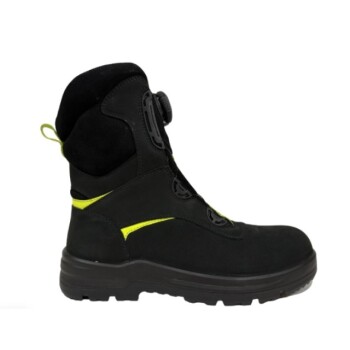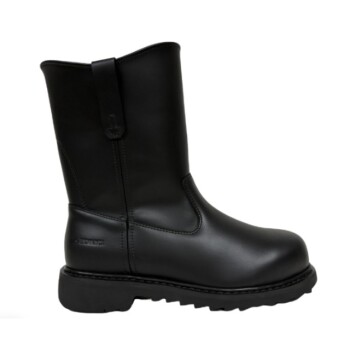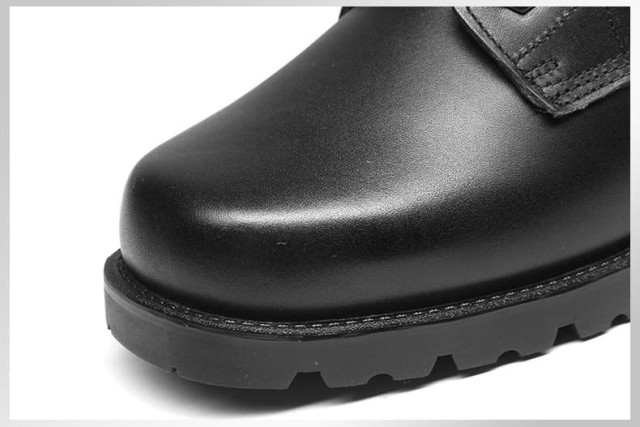
Selecting the right upper material for police boots requires balancing durability, climate adaptability, and budget constraints. This guide breaks down key considerations for procurement officers and officers in the field, helping agencies make informed decisions that maximize value without compromising safety.
Understanding Police Boot Material Priorities
Police boots must withstand high-stress environments while protecting officers' feet in various conditions. The ideal material depends on three core factors:
Durability Benchmarks in High-Stress Environments
- Leather (Full-Grain or Reinforced): Offers superior abrasion resistance and structural integrity, ideal for urban patrols or riot control. Research shows leather uppers last 30–50% longer than synthetics in high-friction scenarios.
- Synthetics (Nylon, Artificial Leather): Lighter and more flexible but may degrade faster under constant flexing or sharp impacts. Suitable for low-intensity duties like desk-to-field transitions.
Climate Adaptability and Foot Protection
- Hot Climates: Breathable mesh or perforated leather prevents overheating but may sacrifice water resistance.
- Wet/Cold Environments: Waterproof membranes (e.g., Gore-Tex) paired with treated leather or rubberized synthetics enhance insulation.
Pro Tip: Hybrid designs (e.g., leather with synthetic panels) can optimize breathability and support for varied shifts.
Cost vs. Longevity in Agency Procurement
Budget constraints often dictate material choices, but lifecycle costs matter more than upfront pricing.
Budget-Friendly Options for Routine Patrols
- PVC or Rubber: Lowest initial cost (~30% cheaper than leather) and waterproof, but stiff and less durable. Best for temporary or seasonal use.
- Synthetic Leather: Mimics leather’s aesthetics at half the price, though it cracks after 1–2 years of daily wear.
Premium Investments for Specialized Units
- Full-Grain Leather: Higher upfront cost but lasts 5+ years with proper care, reducing replacement frequency.
- Kevlar-Reinforced Uppers: Used by tactical teams; 20% lighter than steel-toe alternatives while offering cut resistance.
Case Study: Agencies replacing boots every 3 years could save ~15% long-term by switching from synthetics to grade-A leather.
Material Maintenance and Lifespan Optimization
Extend boot life with these practices:
- Leather Care: Regular conditioning prevents drying and cracking. Use silicone-based protectants for water resistance.
- Synthetic Maintenance: Clean with mild soap; avoid harsh chemicals that degrade adhesives.
- Storage: Keep boots dry and stuffed with paper to retain shape.
Final Thought: The "best" material depends on duty frequency, climate, and budget. A $200 leather boot worn daily for 5 years often outperforms a $100 synthetic replaced biannually.
Ready to Equip Your Team?
3515 manufactures duty boots tailored to your agency’s needs—whether you prioritize cost-efficiency for large-scale procurement or premium materials for elite units. Contact us to discuss bulk solutions that blend performance and value.
Related Products
- Wholesale Durable Mid-Cut Tactical Boots for Custom & Private Label Brands
- Durable High-Ankle Tactical Boots for Wholesale & Custom Manufacturing
- Durable Mid-Cut Tactical Boots for Wholesale & Private Label
- Durable Leather Tactical Boots Wholesale & Custom Manufacturing for Brands
- High-Traction Suede Tactical Boots Wholesale & Custom Manufacturing
Related Articles
- Why Your Tactical Boots Wear Out So Fast—And the Procurement Mistake Behind It
- The Agility-Protection Paradox: Deconstructing Safety in Modern Tactical Footwear
- Why Your Tactical Boots Keep Failing—And Why 'Tougher' Isn't the Answer
- More Than Just Tough: The Manufacturing Secrets Behind Military-Grade Tactical Boots
- Why Your Team's Tactical Boots Are Failing—And It's Not About 'Quality'