Every year, workplace slips and falls account for over a million injuries globally. The right footwear technology can reduce these incidents by more than half. This article breaks down how advanced sole engineering meets rigorous safety standards while addressing industry-specific hazards—from oil rigs to hospital corridors.
Slip Resistance: More Than Just Tread Depth
The Science Behind Traction: Tread Patterns and Material Chemistry
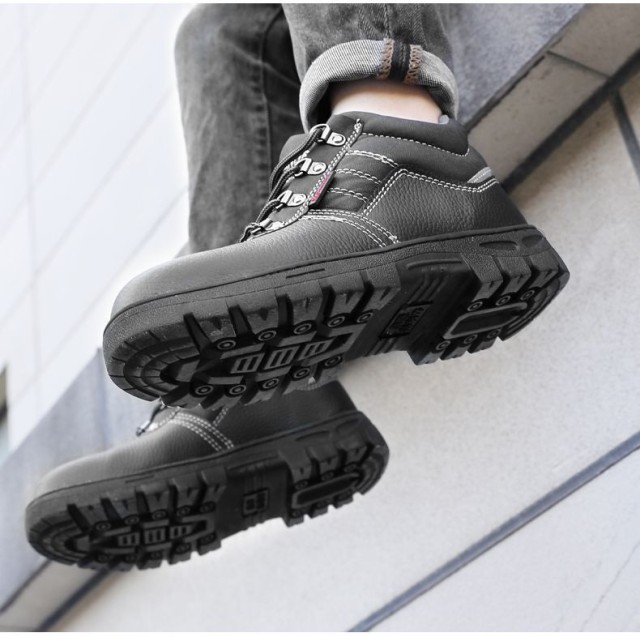
Slip-resistant soles don’t just rely on deep grooves; they use biomechanically optimized designs to channel fluids away from the contact surface. Research shows that hexagonal or circular tread patterns outperform traditional linear grooves by displacing liquids laterally, preventing the "hydroplaning" effect common on wet floors.
Two material innovations drive modern slip resistance:
- Nitrile rubber: Excels in chemical-heavy environments (e.g., oil rigs) due to its non-porous structure that repels hydrocarbons.
- Thermoplastic polyurethane (TPU): Preferred in settings requiring abrasion resistance (e.g., warehouses), offering durability without sacrificing grip.
Decoding Safety Standards: What ASTM F2913 Means for Your Worksite
The ASTM F2913 test measures static and dynamic coefficient of friction (SCOF and DCOF) to certify slip resistance. Boots meeting this standard typically achieve:
- SCOF >0.5 for dry surfaces
- DCOF >0.4 for wet/oily conditions
Compliance isn’t just about safety—it reduces employer liability. OSHA mandates ASTM-certified footwear in high-risk industries, with violations potentially costing businesses tens of thousands per incident.
Case Studies in Hazard Mitigation
Oil & Gas Rig Safety: How Non-Porous Outsoles Combat Hydrocarbon Slippage
On offshore platforms, traditional rubber soles can absorb oil, becoming slick within hours. Nitrile rubber outsoles solve this by:
- Creating a molecular barrier against petroleum-based liquids
- Maintaining traction even after prolonged exposure to diesel or crude oil
A Gulf Coast rig operator reported a 60% drop in slip incidents after switching to nitrile-soled boots.
Hospital Floors: Micro-Groove Technology for Wet Surface Stability
Healthcare workers face constant moisture from sanitized floors and accidental spills. Micro-groove soles (with channels
- 40% better wet-surface traction than standard treads
- Quieter movement—critical for patient areas
One Midwest hospital chain documented a 35% reduction in nurse falls after adopting micro-groove footwear.
Optimizing Boot Selection for Your Environment
Chemical Resistance vs. Thermal Stability: Matching Soles to Worksite Risks
| Hazard Type | Recommended Sole Material | Key Benefit |
|---|---|---|
| Oil/Grease | Nitrile rubber | Hydrocarbon repellency |
| Acid/Caustics | Vulcanized rubber | Corrosion resistance up to 180°F |
| Extreme Cold | TPU with silica additives | Flexibility below -40°F |
For mixed environments (e.g., food processing plants), hybrid soles combining nitrile’s chemical resistance with TPU’s durability are gaining traction.
Ready to Equip Your Workforce with Industry-Tailored Safety Footwear?
3515 partners with distributors and bulk buyers to deliver OSHA-compliant slip-resistant boots engineered for your specific hazards. From oil-resistant nitrile to hospital-grade micro-groove soles, our manufacturing expertise ensures your team stays protected—without compromising mobility. [Contact our team] to discuss custom solutions.
Related Products
- Factory-Direct Wholesale Canvas Boots with High-Traction Rubber Soles
- Durable Leather Moc Toe Work Boots for Wholesale & Custom Manufacturing
- Durable High-Traction Canvas Sneakers Wholesale & Custom Manufacturing
- Premium Suede Sport Safety Shoes for Wholesale & Bulk Orders
- Heavy-Duty Waterproof Nubuck Safety Boots Safety Shoes for Bulk Supply
Related Articles
- How Slip-Resistant Work Boots Prevent Industry-Specific Injuries and Compliance Risks
- How to Choose Rubber-Soled Shoes That Truly Prevent Slips
- How Slip-Resistant Boot Testing Saves Lives: The Science Behind Workplace Safety
- How to Choose Rubber-Soled Shoes That Actually Prevent Slips and Falls
- How to Choose Slip-Resistant Rubber-Soled Shoes for Maximum Safety