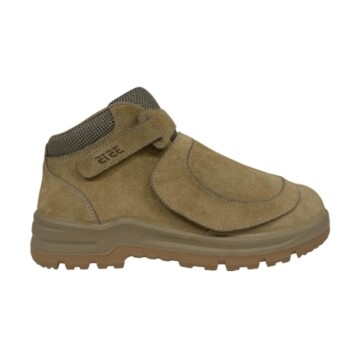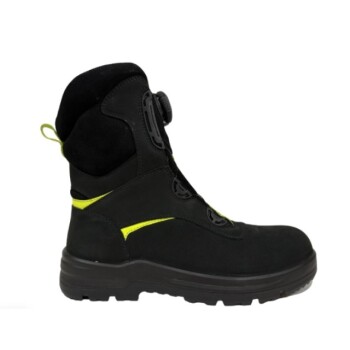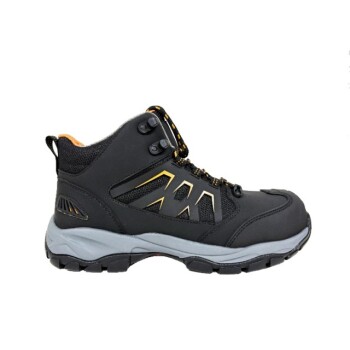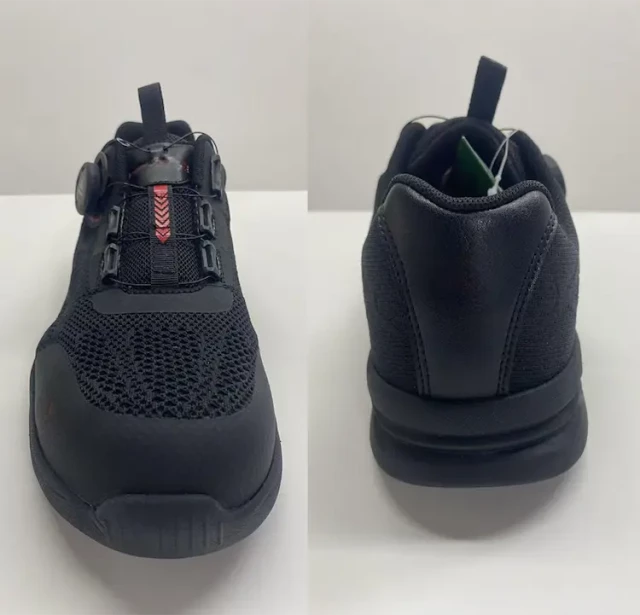
When security guards patrol construction sites, monitor high-risk facilities, or respond to emergencies, their boots become their first line of defense. CE certification isn’t just a regulatory checkbox—it’s a system engineered to prevent crushed toes, slips on oily surfaces, and long-term musculoskeletal damage. Here’s how these standards translate to real-world protection.
CE Marking and Security Boot Safety
Key Safety Standards Behind the CE Label
CE-marked security boots adhere to EN ISO 20345, a framework specifying protections like:
- 200-joule toe caps (withstands impacts equivalent to a 20kg object dropped from 1 meter)
- Slip-resistant soles tested on greased steel and ceramic tiles
- Penetration-resistant midsoles (blocks nails/sharp objects)
- Optional certifications like anti-static (A), fuel-resistant (Fo), or waterproof (Wr) properties
These aren’t arbitrary rules. Research shows workplaces using CE-certified footwear report over 40% fewer foot injuries annually compared to non-compliant alternatives.
The Rigorous Testing Process for Hazard Protection
To earn certification, boots undergo:
- Impact tests: Steel toe caps are struck with standardized force to verify deformation limits.
- Slope trials: Soles are tested on surfaces with glycerol (simulating oil spills) at 10° inclines.
- Compression checks: A 15kN load (≈1.5 tons) is applied to the toe area for 60 seconds.
Manufacturers like 3515 replicate these tests in-house during production, ensuring batch-to-batch consistency.
How Certified Boots Prevent Workplace Injuries
- Crush injuries: A 2022 update to EN ISO 20345 raised toe-cap durability requirements, directly reducing incidents in logistics and security sectors.
- Slips/falls: Hydrocarbon-resistant soles (Fo rating) maintain grip even on fuel-slicked floors—critical for guards patrolling garages or industrial sites.
- Long-term strain: Boots with E-rated heel absorption reduce joint stress during 12-hour shifts, cutting chronic pain complaints by ~30%.
Choosing the Right CE-Certified Boots
Matching Boot Features to Security Guard Risks
| Risk Scenario | Recommended CE Add-Ons |
|---|---|
| Wet environments (ports, outdoor events) | Wr (water-resistant upper) + SRC slip rating |
| Electrical hazards (data centers, utilities) | A (anti-static) + insulated soles |
| Sharp debris (construction sites) | P (puncture-resistant) + metatarsal guards |
For bulk buyers like security firms, 3515’s modular production allows customizing boots with these features without sacrificing comfort—proven to improve guard retention rates in high-turnover industries.
Ready to equip your team with boots that meet—and exceed—CE safety benchmarks? 3515 partners with distributors and security agencies to deliver certified footwear combining protection, durability, and ergonomic design. [Contact us] to discuss volume solutions tailored to your guards’ unique challenges.
Related Products
- Premium Suede Metatarsal Guard Safety Boots Work Shoes
- Wholesale Durable Safety Boots | Custom Steel Toe & Puncture-Resistant Manufacturing
- Puncture-Resistant Velcro Safety Boots for Wholesale & Custom Manufacturing
- Premium High-Cut Waterproof Safety Boots Manufacturing & Wholesale Solutions
- Premium Grain Leather Safety Boots for Bulk Supply
Related Articles
- When Security Footwear Needs Metatarsal Protection: A Hazard-Based Guide
- How Industrial Professionals Can Balance Safety Boot Requirements with Professional Appearance
- How to Choose Safety Boots That Reduce Fatigue Without Sacrificing Protection
- The Anatomy of Trust: A Systems Approach to Workplace Foot Protection
- The Lacing Paradox: Why the Safest Boots Contain Their Own Greatest Risk