The Illusion of Safety
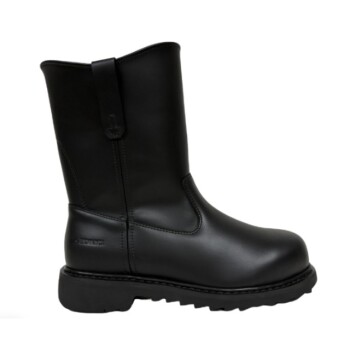
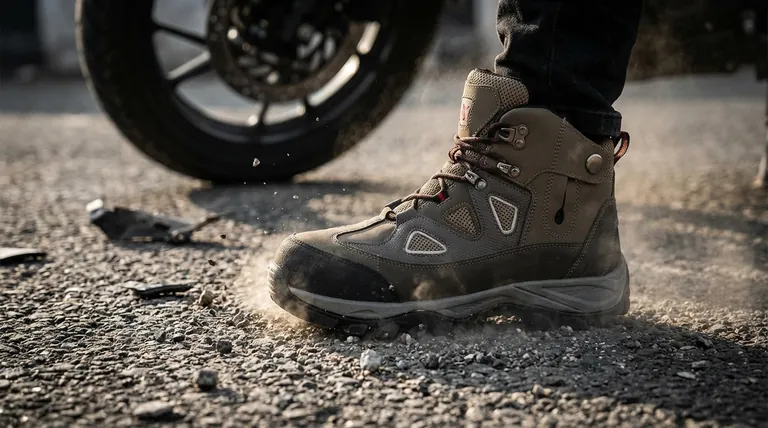
Picture a rider pulling up to a café. They might be wearing heavy-duty work boots. To our pattern-matching brains, this seems reasonable. The boots look sturdy, tough, and protective.
This is a cognitive trap.
Our intuition mistakes the appearance of durability for the engineering of safety. A work boot is designed to stop a nail from below or a falling box from above. It is utterly unprepared for the violent, specific physics of a motorcycle crash.
True safety isn't about how a boot looks; it's about the specific problems it was engineered to solve.
The Three Forces That Will Dismantle You
A motorcycle accident is a rapid, chaotic event. But the forces that injure a rider are predictable and can be engineered against. A proper riding boot is a purpose-built system designed to manage three distinct types of force.
1. The Brutal Honesty of Impact
The first and most obvious force is direct impact—your foot hitting the pavement, a curb, or the vehicle itself.
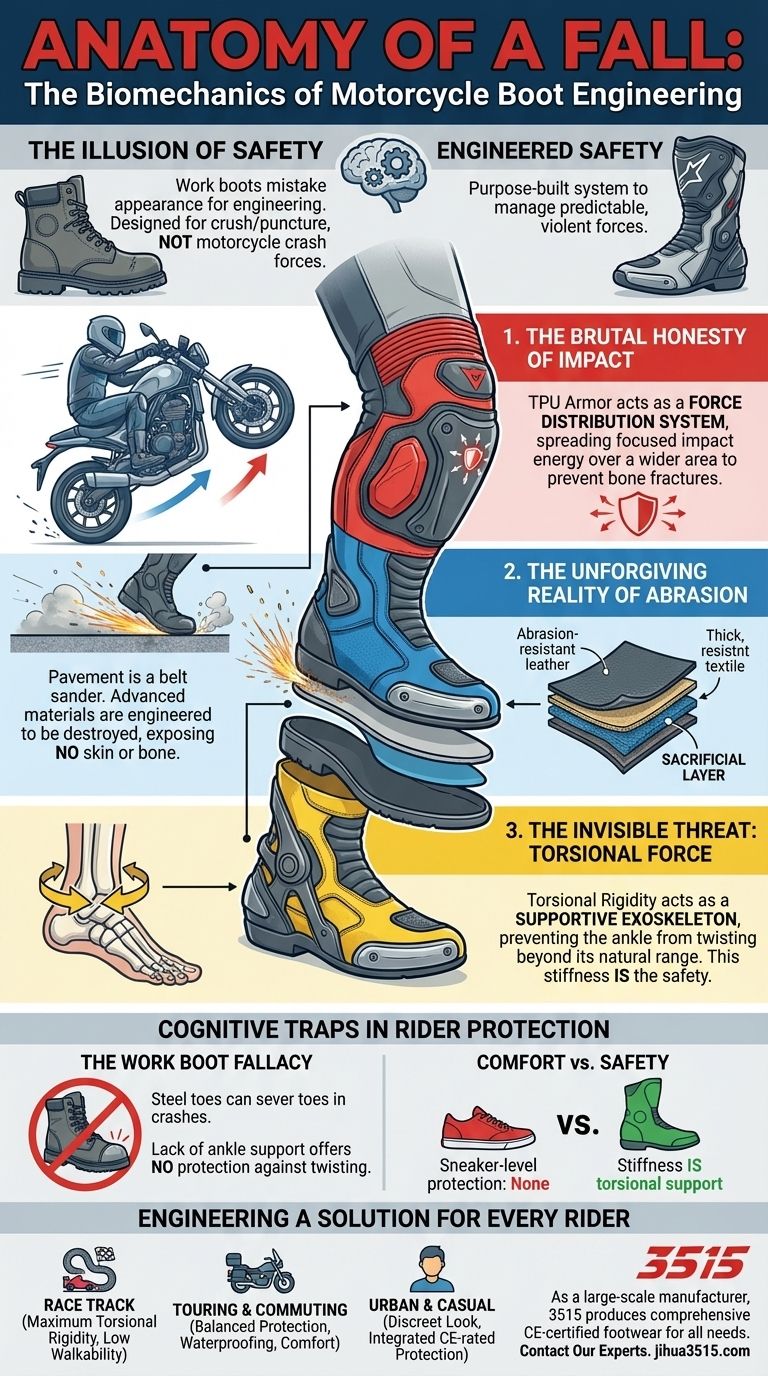
To counter this, motorcycle boots integrate rigid armor, typically made of Thermoplastic Polyurethane (TPU), over the heel, toes, and shin. This isn't just a simple shield. It's a force distribution system, designed to spread the focused energy of an impact over a wider area, preventing the bone-shattering pressures that would otherwise occur.
2. The Unforgiving Reality of Abrasion
When you fall at speed, you don't just stop. You slide. Pavement becomes a belt sander.
Jeans, sneakers, and even standard leather shoes can be shredded in less than a second, exposing skin and bone to the road. Motorcycle boots are built with thick, abrasion-resistant leather or advanced textiles that act as a sacrificial layer. They are designed to be destroyed so you are not.
3. The Invisible Threat: Torsional Force
This is the most critical and least understood function of a riding boot. Your ankle is a marvel of bio-engineering, but it is designed for a specific range of motion. It is not designed to bend sideways or twist violently.
In a crash, your body tumbles while your foot may be trapped or planted, creating immense twisting forces—torsion—that ligaments and bones cannot withstand.
A high-quality motorcycle boot provides torsional rigidity. It functions as a supportive exoskeleton, creating a stiff, reinforced structure that prevents the ankle from being forced into these unnatural, debilitating angles. This single feature is often the difference between walking away and facing months of reconstructive surgery.
Cognitive Traps in Rider Protection
The decision to wear proper gear is often derailed by simple psychological errors. Understanding them is key to making a better choice.
The Work Boot Fallacy
The belief that a steel-toed work boot is a safe substitute is the most dangerous misconception.
Work boots are designed for crush and puncture resistance, not impact and torsion. In a crash, the steel toe can bend, deform, or even sever the rider's toes. Lacking any ankle support, it does nothing to prevent the devastating twisting injuries. It's the wrong tool for the job, and in this context, a dangerously wrong one.
The False Dichotomy of Comfort vs. Safety
Riders often complain that protective boots are stiff and hard to walk in. This isn't a design flaw; it's the design working.
That stiffness is the torsional support system. A boot that is as flexible as a sneaker offers sneaker-level protection—which is to say, almost none. The engineering challenge is to find the right balance for the intended use.
Engineering a Solution for Every Rider
The specific risks a rider faces change with their environment. Therefore, the engineering solution must change, too. This is the core task for a specialized manufacturer: creating optimized systems of protection for distinct scenarios.
- Race Track: Requires maximum torsional rigidity, often with external bracing and replaceable sliders. The system is optimized entirely for protection at high speed, with walkability as a low priority.
- Touring & Commuting: Requires a balance. The boot must have certified, integrated armor and ankle support but also incorporate waterproofing and enough flexibility for all-day wear.
- Urban & Casual Riding: Prioritizes a discreet look and comfort, but still integrates fundamental CE-rated protection like reinforced ankle cups and abrasion-resistant materials that are vastly superior to any fashion footwear.
As a large-scale manufacturer, 3515 produces a comprehensive range of CE-certified motorcycle footwear precisely for these needs. We provide the specialized, engineered solutions that distributors and brand owners need to protect their riders, whatever their journey.
Understanding the physics of a fall is the first step. The next is ensuring every rider has access to the right equipment. To equip your customers with properly engineered protective gear, the solution begins with the right manufacturing partner. Contact Our Experts
Visual Guide
Related Products
- Heavy-Duty Goodyear Welted Pull-On Safety Rigger Boot
- Wholesale Tactical Boots High-Traction & Reflective for Bulk & Brand Orders
- High Performance Fire-Retardant Waterproof Safety Boots
- Wholesale High-Traction Camo Boots - Custom Manufacturer for Brands
- Wholesale Waterproof Tactical Boots Custom Suede & High-Traction Soles
Related Articles
- Beyond the Tread: The Molecular Battle for Grip on Oily Surfaces
- How to Choose Safety Boot Certifications for Your Industry's Hazards
- How Safety Boot Features Address Industry-Specific Workplace Hazards
- The True Cost of a Safety Boot: Why Your Footwear Budget Is Breaking
- How Safety Boot Engineering Protects Against Workplace Hazards: A Buyer's Guide