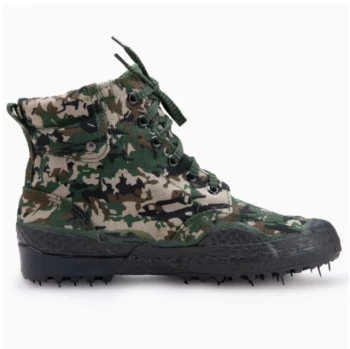
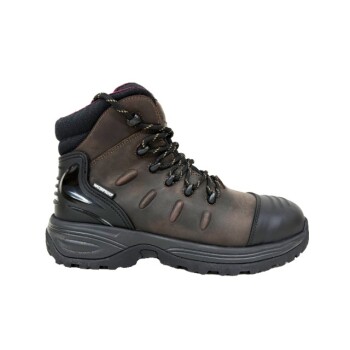
For any serious hunter, prioritizing waterproof boots is a foundational decision that directly impacts comfort, safety, and the ability to remain effective in the field. They serve as a critical barrier, protecting your feet from environmental moisture like rain, snow, streams, and marshland, which prevents the physical issues that can cut a hunt short.
Waterproofing is not merely a comfort feature; it is a crucial performance system. It protects a hunter's health by keeping feet dry to prevent blisters and dangerous heat loss, while also preserving the structural integrity and lifespan of the boots themselves.
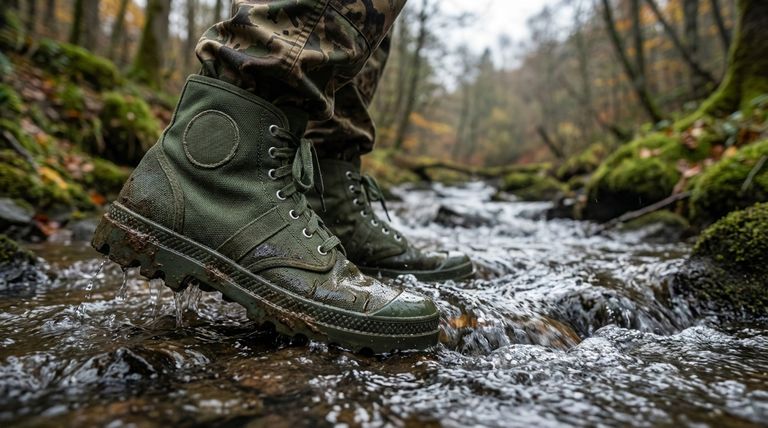
The Core Functions of Waterproofing
A waterproof boot is designed to do more than just block water. It's an integrated system that protects you from the environment and protects your gear from degradation.
Maintaining Foot Health and Comfort
Your feet are your most critical asset in the field. Keeping them dry is essential for preventing blisters, which can be debilitating on a multi-day hunt.
Prolonged dampness also creates a breeding ground for fungus and bacteria, increasing the risk of infection. More importantly, dry feet are warm feet.
Preventing Dangerous Heat Loss
Wet feet lose heat exponentially faster than dry feet. In cold conditions, this dramatically increases the risk of frostbite and hypothermia.
A reliable waterproof barrier is a key component of your thermal regulation system, ensuring you can stay out longer and safer when temperatures drop.
Blocking Environmental Moisture
Hunting rarely happens on a paved, dry path. Hunters constantly face dew-soaked grass, sudden downpours, muddy terrain, stream crossings, and snow.
Waterproof boots, often built with features like a Gore-Tex membrane and sealed seams, provide a complete and lasting defense against this moisture intrusion where water-resistant boots would fail.
Protecting Your Gear Investment
High-quality hunting boots are a significant investment. Waterproofing is essential to protecting that investment and ensuring your gear performs as intended for years to come.
Preserving Material Integrity
Moisture is the primary enemy of boot materials, especially leather. When leather becomes saturated and then dries, it can grow stiff, brittle, and eventually crack.
Waterproofing treatments repel water at the surface, preventing it from soaking in and deteriorating the material from the inside out.
Extending Boot Lifespan
Proper care, which includes both conditioning and waterproofing, is the key to durability. Conditioning nourishes the material to keep it supple, while waterproofing provides the protective shield.
This two-part approach ensures your boots remain flexible, comfortable, and structurally sound through seasons of hard use.
Common Pitfalls and Considerations
While essential for most hunters, the decision to use a fully waterproof boot is not without its trade-offs. Understanding them allows you to make a more informed choice.
The Breathability Factor
The primary trade-off for a fully waterproof boot is breathability. While modern membranes are designed to let sweat vapor escape, they are inherently less breathable than a non-waterproof mesh or leather boot.
In extremely hot and dry climates, a waterproof boot can sometimes trap sweat, leading to dampness from the inside. For these specific conditions, a highly breathable, non-waterproof boot might be considered.
Maintenance is Non-Negotiable
Waterproofing is not a permanent feature. The factory-applied durable water repellent (DWR) finish will wear off with use, and the leather or synthetic materials will require retreatment.
To maintain performance, you must regularly clean your boots and re-apply the appropriate waterproofing spray or wax. Neglecting this maintenance will cause even the best boots to eventually fail.
Making the Right Choice for Your Hunt
Your choice should be dictated by your most common hunting environment and your commitment to gear maintenance.
- If your primary focus is hunting in wet, temperate, or cold climates: A fully waterproof boot with a membrane is non-negotiable for your safety and success.
- If your primary focus is on early-season hunts in hot, arid environments: You may value maximum breathability, but a water-resistant boot is still a wise compromise for unexpected weather.
- If your primary focus is maximizing the life of your investment: Commit to a routine of cleaning, conditioning, and re-applying waterproofing treatments to your boots after heavy use.
Ultimately, choosing waterproof boots is an investment in your ability to endure the elements and stay focused on the hunt.
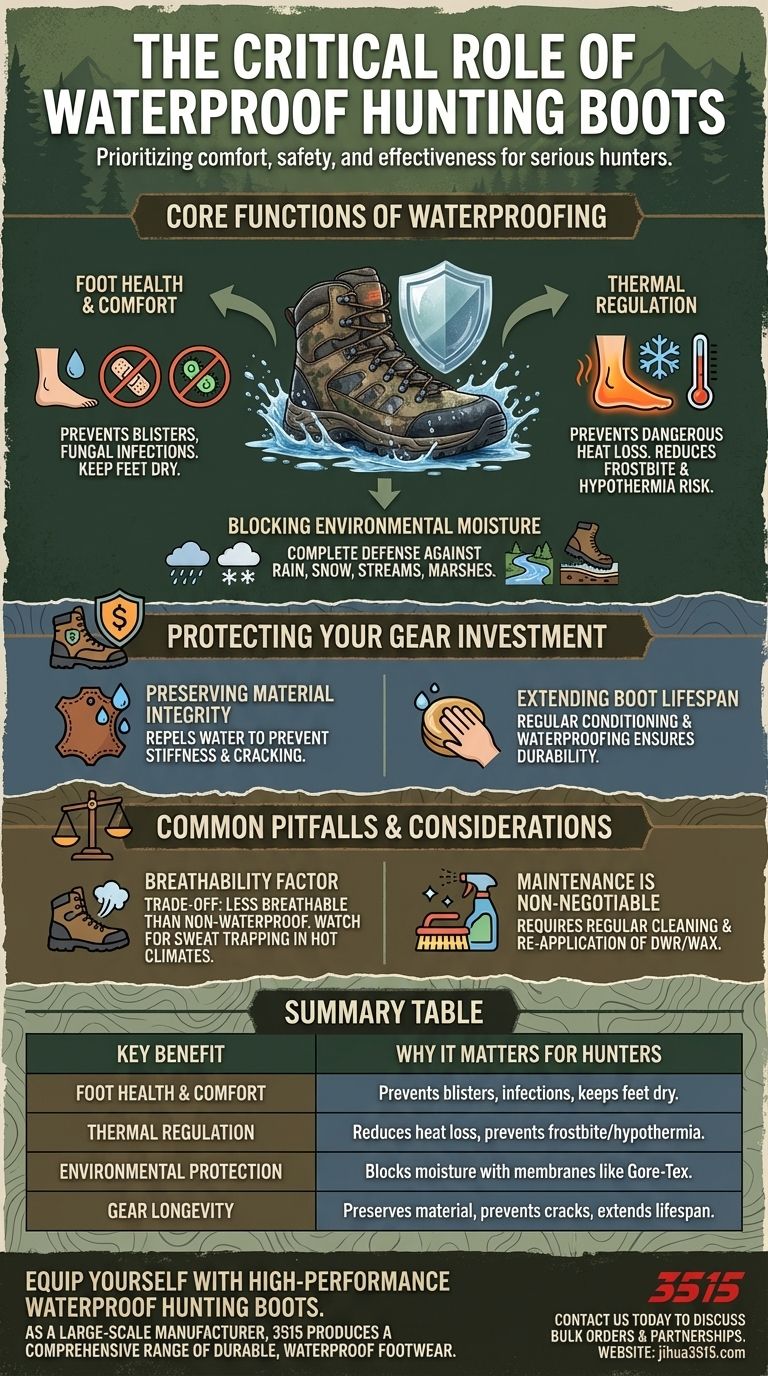
Summary Table:
| Key Benefit | Why It Matters for Hunters |
|---|---|
| Foot Health & Comfort | Prevents blisters, fungal infections, and keeps feet dry for long hunts. |
| Thermal Regulation | Reduces heat loss to prevent frostbite and hypothermia in cold weather. |
| Environmental Protection | Blocks moisture from rain, streams, and snow with membranes like Gore-Tex. |
| Gear Longevity | Extends boot lifespan by preserving material integrity and preventing cracks. |
Ready to equip yourself with high-performance waterproof hunting boots?
As a large-scale manufacturer, 3515 produces a comprehensive range of durable, waterproof footwear designed for the demands of serious hunters. Our boots are built to keep you comfortable, safe, and focused on the hunt, no matter the terrain or weather.
We specialize in providing bulk clients, distributors, and brand owners with reliable, high-quality hunting boots that combine advanced waterproofing technology with long-lasting durability.
Contact us today to discuss your hunting boot needs and discover how 3515 can be your trusted manufacturing partner.
Visual Guide
Related Products
- Wholesale Waterproof Tactical Boots Custom Suede & High-Traction Soles
- High Performance Fire-Retardant Waterproof Safety Boots
- Premium Flame-Retardant Waterproof Safety Boots and Shoes
- Premium Wholesale Waterproof Safety Boots High Performance Protection for Industrial Markets
- Premium High-Cut Waterproof Safety Boots Manufacturing & Wholesale Solutions
People Also Ask
- What waterproof technology is used in tactical boots? Unlock All-Weather Performance & Protection
- What are the advantages and disadvantages of waterproof tactical boots? A Guide to the Key Trade-Offs
- What is the significance of waterproof functionality in tactical boots? Essential for Health & Performance
- What is the role of professional 3D medical imaging software in optimizing tactical boot design and performance?
- What features enhance breathability and comfort in tactical boots? A Guide to Superior Footwear Performance